...

By Micah McCartney
Reporter
0
Share
Newsweek is a Trust Project member
See more of our trusted coverage when you search.Prefer Newsweek on Googleto see more of our trusted coverage when you search.
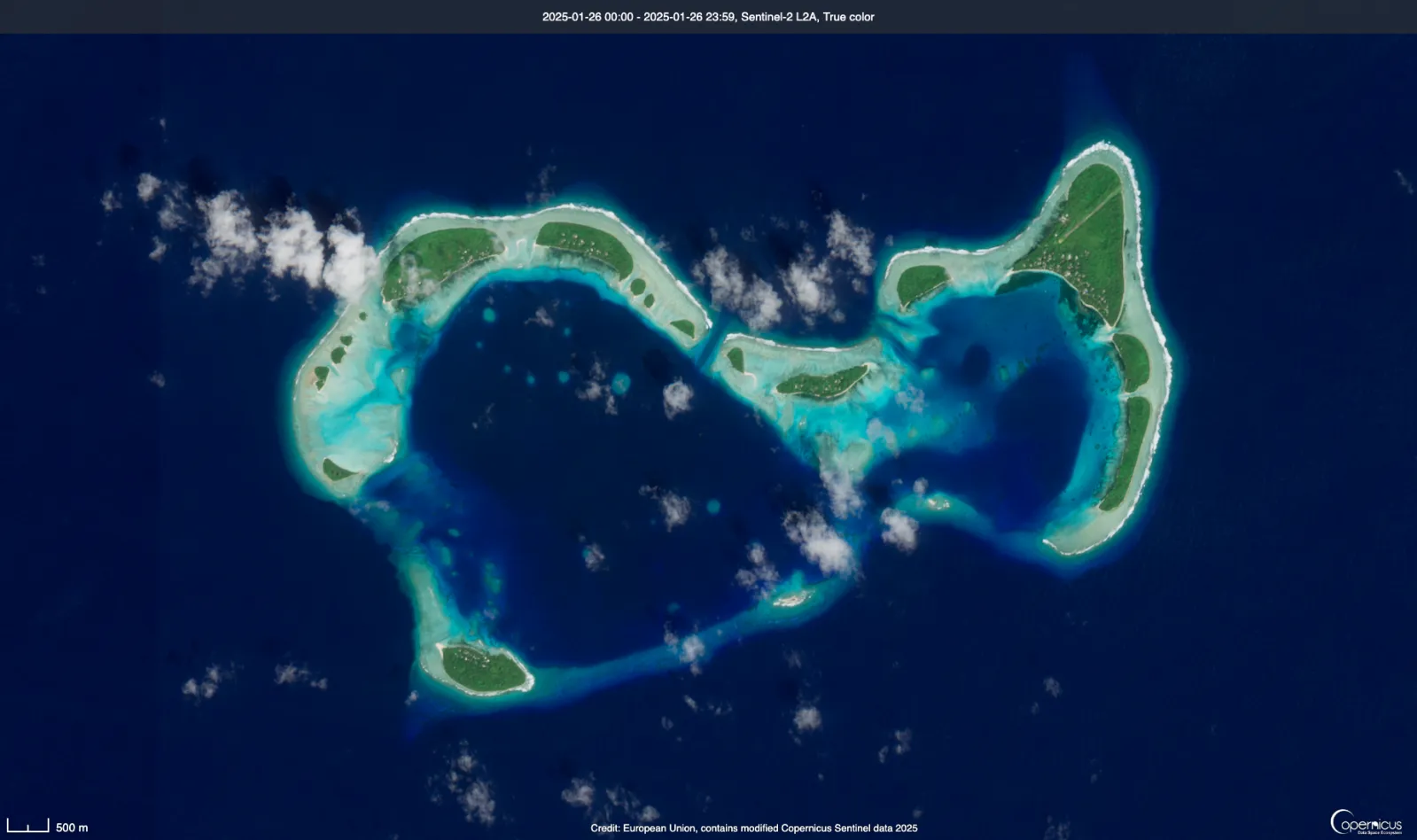
A groundbreaking ceremony held on a remote Pacific island marked the start of a project—spearheaded by a Chinese state-owned company—to revive a World War II-era airfield.
The project, launched on the atoll of Woleai in the Federated States of Micronesia, is approximately 400 miles south of Guam, a U.S. territory and military hub considered key to Washington's ability to project power in the Asia-Pacific.
Why It Matters
Micronesia is one of the South Pacific's Freely Associated States—along with Palau and the Marshall Islands—whose defense and broader stability is guaranteed by Washington. But with the U.S. prioritizing funding elsewhere, China has made inroads in this region through infrastructure projects.
Read More on World
The islands lie along the so-called Second Island Chain, a string of islands Washington has long viewed as strategically important to containing a rising China in the event of a wartime scenario. Western analysts have raised concerns Chinese-controlled infrastructure could blunt U.S. military power in the Pacific, given Beijing's policy of military-civil fusion that enables the People's Liberation Army to co-opt dual-use facilities.
Newsweek has reached out to the U.S. State Department and Chinese Embassy in Micronesia with written requests for comment.
...
What To Know
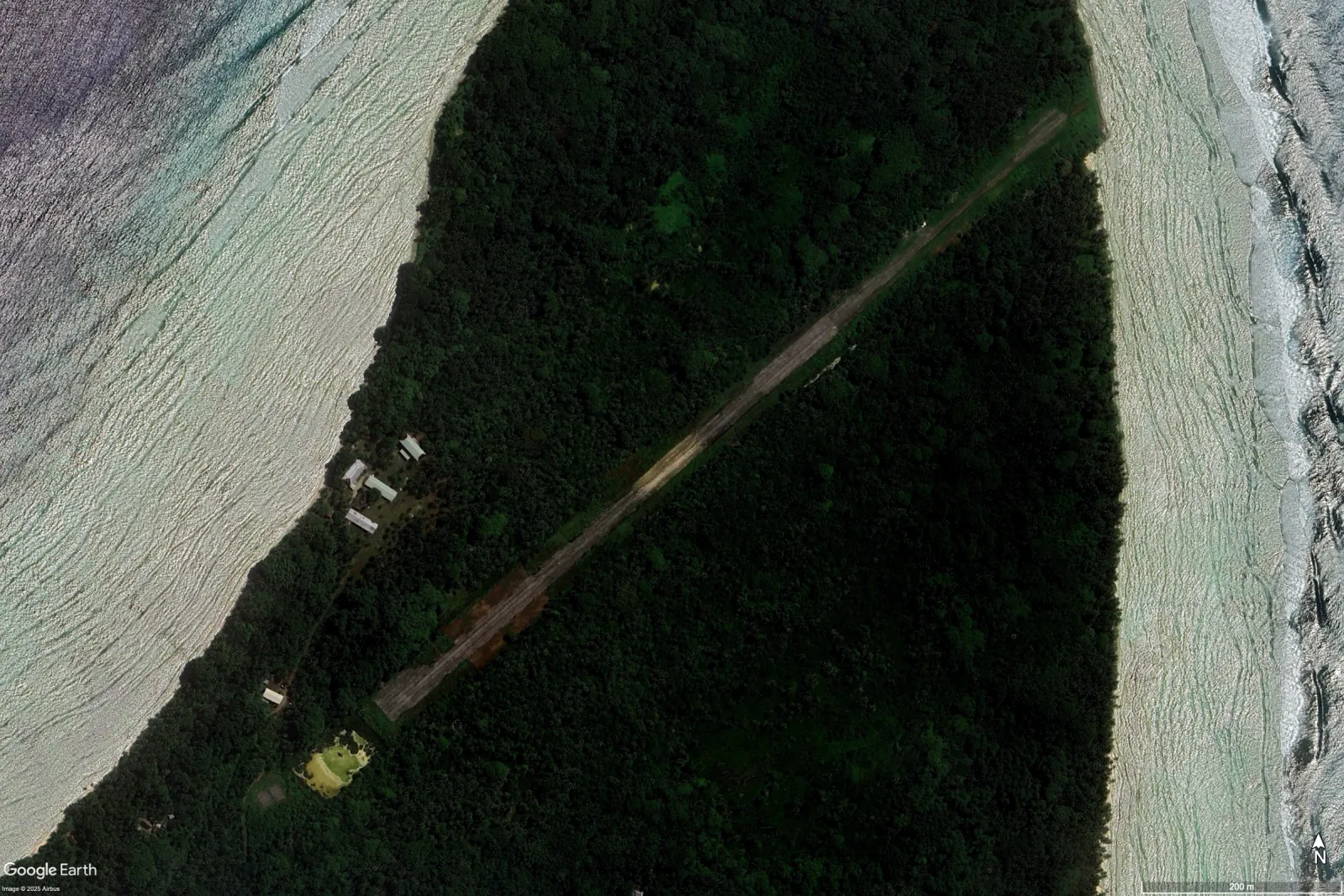
The Woleai runway was built by Imperial Japanese forces during World War II, but has long fallen into disrepair due to lack of funding.
The project was launched with fanfare Monday in a joint effort by China's Shandong Hengyue Municipal Engineering and Micronesia's Department of Transportation. Micronesian President Wesley Simina traveled in person to attend the ceremony.
The airfield will be a major boon to locals, who currently rely on dayslong boat trips to reach the nearest airstrip.
It's also expected to support health care, business development, and education in the region. Charles Chieng, governor of the Micronesian state of Yap, which includes Woleai, said in 2023 the airport would be crucial to the overall development of the state and community.
...
In recognition of Micronesia's strategic importance, the Pentagon has announced $2 billion in infrastructure investments to better accommodate U.S. forces.
This includes $400 million in Air Force funding for Yap International Airport—"essential because there are very few divert or contingency airfields available as potential United States defense sites in the region," according to the service's 2023 budget request.
Yet outer Yap state islands like Woleai remain neglected, said Cleo Paskal, a non-resident senior fellow at Washington, D.C.-based think tank the Foundation for Defense of Democracies.
"Getting to the groundbreaking of the Woleai runway reconstruction was only possible by traveling for four days on a transport ship from Yap—a ship provided by China aid, she wrote in a social media post. "The president arrived on a patrol boat provided by Australia. The U.S. was nowhere to be seen,"
"Tomorrow is Woleai's high school graduation. Don't expect to see any U.S. government representatives there either," Pascal added. "The Chinese will be there though. Showing up is (more than) half the battle."
What People Are Saying
Domingo I-Kwei Yang, assistant research fellow at Taiwan's Institute for National Defense and Security Research, wrote in a recent report: "China aims to establish a Southern Link, connecting Asia and South America via Pacific strategic infrastructure hubs. Control over Pacific ports, airstrips, and ICT systems could serve dual-use purposes, enabling transit, logistics, and expanded influence in the U.S. backyard."
The Pentagon said in its 2024 report on Military and Security Developments Involving the People's Republic of China [PRC]: "Since 2015, the PRC has probably viewed engagement and deliberate corruption in the Pacific Island countries as an opportunity to expand its regional influence, press countries to switch diplomatic recognition from Taipei to Beijing, increase influence with regional security forces, and advance the PRC's responsible great power narrative."
What's Next
Elsewhere in the Pacific, the U.S. military is reclaiming another World War II-era airfield on the island of Tinian in the Northern Mariana Islands, part of efforts to bolster the Second Island Chain as its Chinese rival closes the power gap.
Update 5/27/2025, 9:10 a.m. ET: This article has been updated with additional information.
View 0 Comments
Submit Correction
View Editorial & AI Guidelines