...

By Micah McCartney
Reporter
0
Share
Newsweek is a Trust Project member
See more of our trusted coverage when you search.Prefer Newsweek on Googleto see more of our trusted coverage when you search.
Beijing and Moscow have separately condemned the U.S.'s indictment of Cuba's former President Raúl Castro and voiced solidarity with the Caribbean nation amid Washington's pressure campaign.
The U.S. must stop wielding the "big sticks" of judicial proceedings and sanctions and cease its threats of force against Cuba, Chinese Foreign Ministry spokesperson Guo Jiakun told reporters at a regular press briefing in Beijing on Thursday.
Guo said China opposes unilateral sanctions that lack basis under international law or approval by the United Nations Security Council.
Read More on World
...
Russia echoed China in a separate statement, strongly condemning what it called "gross interference in the internal affairs of a sovereign state, intimidation, and the use of illegal unilateral restrictive measures, threats, and blackmail," its Foreign Ministry spokesperson Maria Zakharova said at a press conference.
Russia would "continue to provide the most active support to the fraternal Cuban people," she said.
Newsweek has reached out to the U.S. State Department for comment.
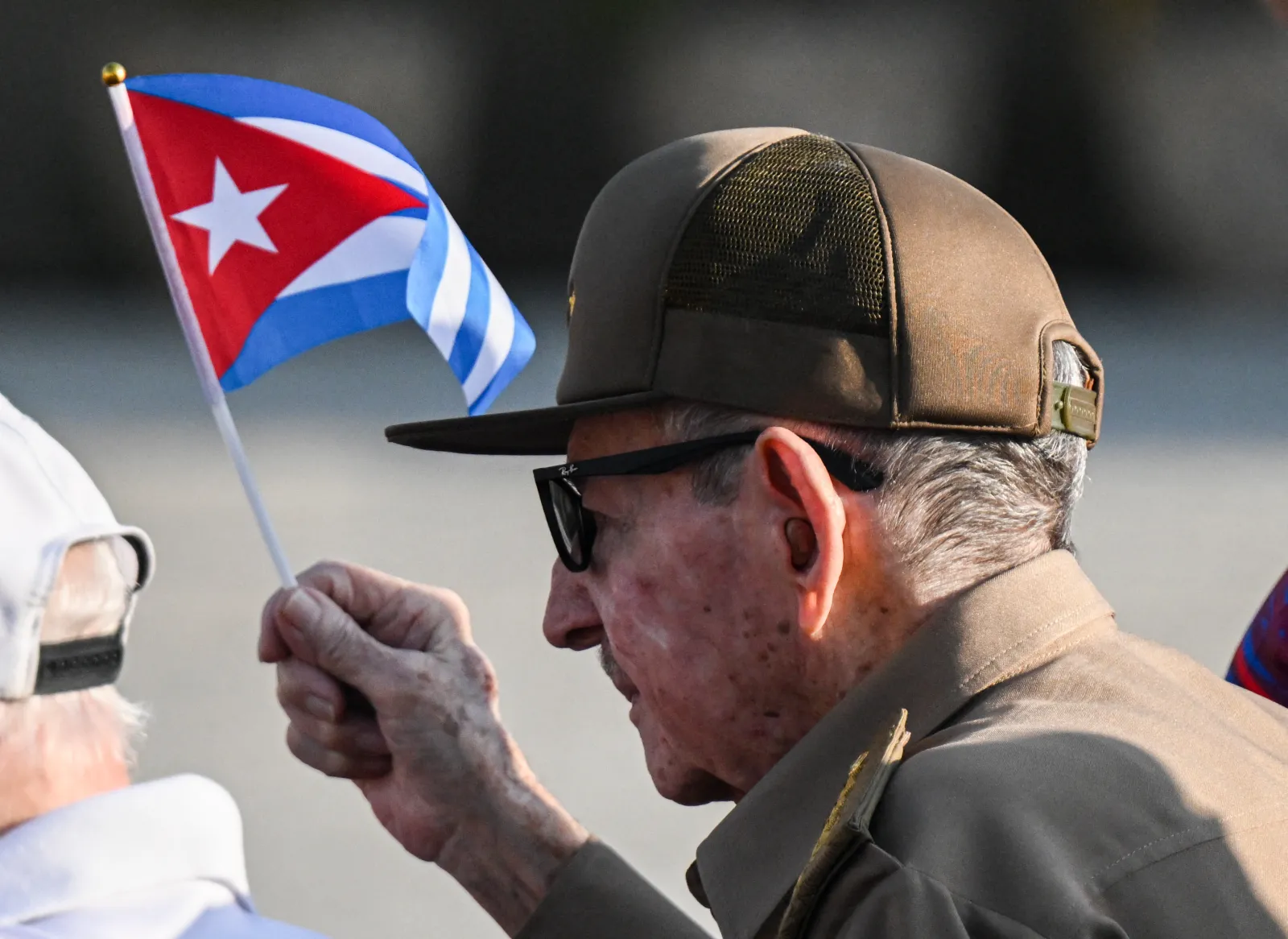
Castro and several other Cuban nationals were indicted by the U.S. Justice Department on Wednesday for their alleged role in the 1996 shootdown two civilian aircraft operated by an activist group tied to exiled opposition forces.
Castro stepped down from the presidency in 2018 after a decade in office, but the 94-year-old remains influential in the country's politics.
The indictment has fueled speculation that the White House could pursue similar action against the Cuban leadership to that taken during its January operation against Venezuelan President Nicolás Maduro.
Maduro was seized in a U.S. military raid that killed dozens of Cuban personnel and then transported to New York, where he faces "narco‑terrorism" charges brought forward during Trump’s initial term.
Cuba is among a group of long‑time U.S. adversaries Trump has targeted this year, alongside Venezuela—previously Havana’s main energy supplier—and Iran.
U.S. military action against those countries, coupled with an ongoing oil blockade on Cuba, have raised questions about whether Havana could be next.
China and Russia have long opposed U.S. sanctions on Cuba. Washington has maintained a sweeping sanctions regime and trade embargo since Cuba’s Communist government came to power in 1959.
Trump has stepped up his rhetoric against the country in recent months.
"Taking Cuba in some form would be a big honor," he told reporters at a March Oval Office event. "I mean, whether I free it, take it—I think I can do anything I want with it. You want to know the truth."
View 0 Comments
Submit Correction
View Editorial & AI Guidelines