...

By Micah McCartney
Reporter
0
Share
Newsweek is a Trust Project member
See more of our trusted coverage when you search.Prefer Newsweek on Googleto see more of our trusted coverage when you search.
China has developed a device capable of cutting reinforced undersea cables thousands of feet below the ocean's surface.
The innovation comes amid concerns that Chinese vessels are targeting subsea infrastructure—threatening not only civilian but also military communications during a crisis.
Newsweek reached out to the Chinese embassy in Washington, D.C. with an emailed request for comment.
Read More on World
Why It Matters
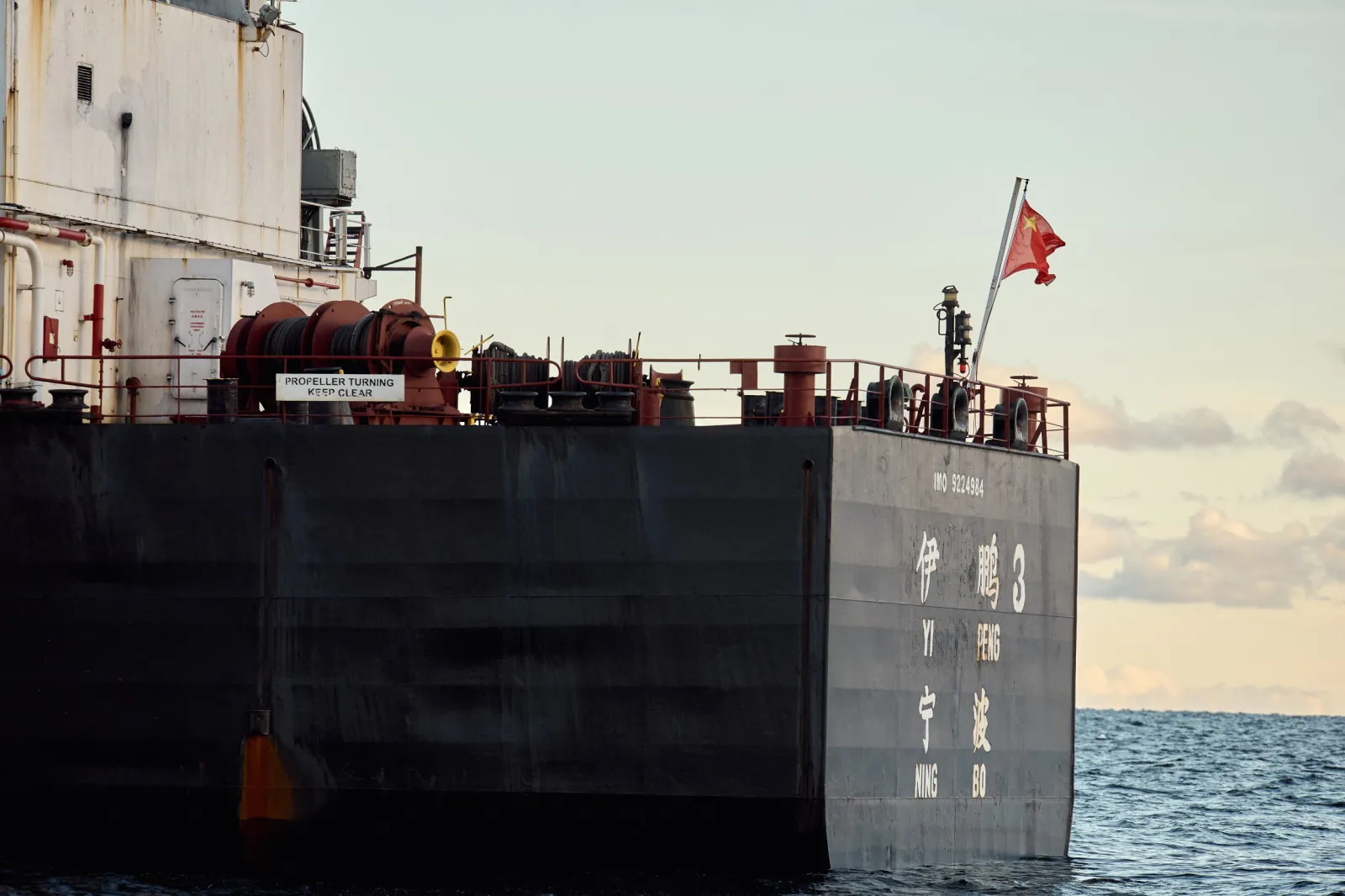
Since early 2024, Chinese ships have been implicated in several cases of suspected cable sabotage, including in the Baltic Sea and around Taiwan, the self-ruled island claimed by China. The vessels were discovered to be in the area when the damage occurred, with investigators citing evidence such as anchor dragging as a likely cause.
Meanwhile, China has seen a rise in patent filings for tools designed to cheaply and efficiently sever submarine cables—vital infrastructure that carries more than 95 percent of global communications.
What To Know
The new invention was designed by the China Ship Scientific Research Center and its partner, the state-owned Laboratory of Deep-Sea Manned Vehicles, the South China Morning Post reported Saturday.
It can reportedly slice cables at depths of up to 4,000 meters (13,123 feet)—twice as deep as the deepest underwater cables currently in use.
The tool was first made public last month in the Chinese-language journal Mechanical Engineer.
...
The report marks the first time this capability has been unveiled by any country, despite its stated purpose of enabling civilian salvage and mining operations on the ocean floor.
Developed specifically for deployment on submersible vehicles such as the Fendouzhe and Haidou-1, the device's titanium alloy covering and specialized seals can withstand the intense pressures of that depth for long periods, Interesting Engineering cited the authors as saying.
A grinding wheel covered in diamond edges, spinning at a rapid 1,600 revolutions per minute, gives the device the ability to make short work of the protective steel layer encasing a cable.
The device has put China watchers on alert over its potential for more aggressive use, as well as the Chinese government's legal ability to compel cooperation from private companies—raising fears about the disruption of U.S. military communications across the network of Pacific bases including Guam, SCMP wrote.
What's Been Said
Bonnie Glaser, the managing director of the U.S. Indo-Pacific Program's German Marshall Fund, wrote on X, formerly Twitter: "Beijing insists it isn't responsible for cutting undersea cables. So why did it just unveil a powerful deep-sea cable cutter that can sever lines at depths of up to 4,000 meters?"
Theresa Fallon, founder and director of the Centre for Russia Europe Asia Studies in Brussels, wrote on X: "Beijing's underwater deep-sea, cable-cutting device makes explanations of 'it was just an accident' far harder to swallow."
Chinese embassy spokesperson Liu Pengyu told Newsweek: "We oppose unfounded attacks and smears against China. This tool, developed by China independently, is used in marine scientific research. The U.S. and some European countries also have similar technology. China attaches great importance to protecting undersea infrastructure and has been and will continue to work with the international community to protect undersea cables."
What's Next?
Investigations into suspected Chinese cable sabotage are ongoing, including a recent incident involving a Chinese-crewed vessel sailing under a Togo flag of convenience.
The ship was detained by Taiwanese authorities in February near where a cable linking Taiwan's main island with outlying Penghu County had been damaged.
Update 3/25/25, 1:10 p.m. ET: This article has been updated with a comment from the Chinese embassy.
View 0 Comments
Submit Correction
View Editorial & AI Guidelines