10
Loading video...

By Steve Mollman
News Editor
0
Share
Newsweek is a Trust Project member
See more of our trusted coverage when you search.Prefer Newsweek on Googleto see more of our trusted coverage when you search.
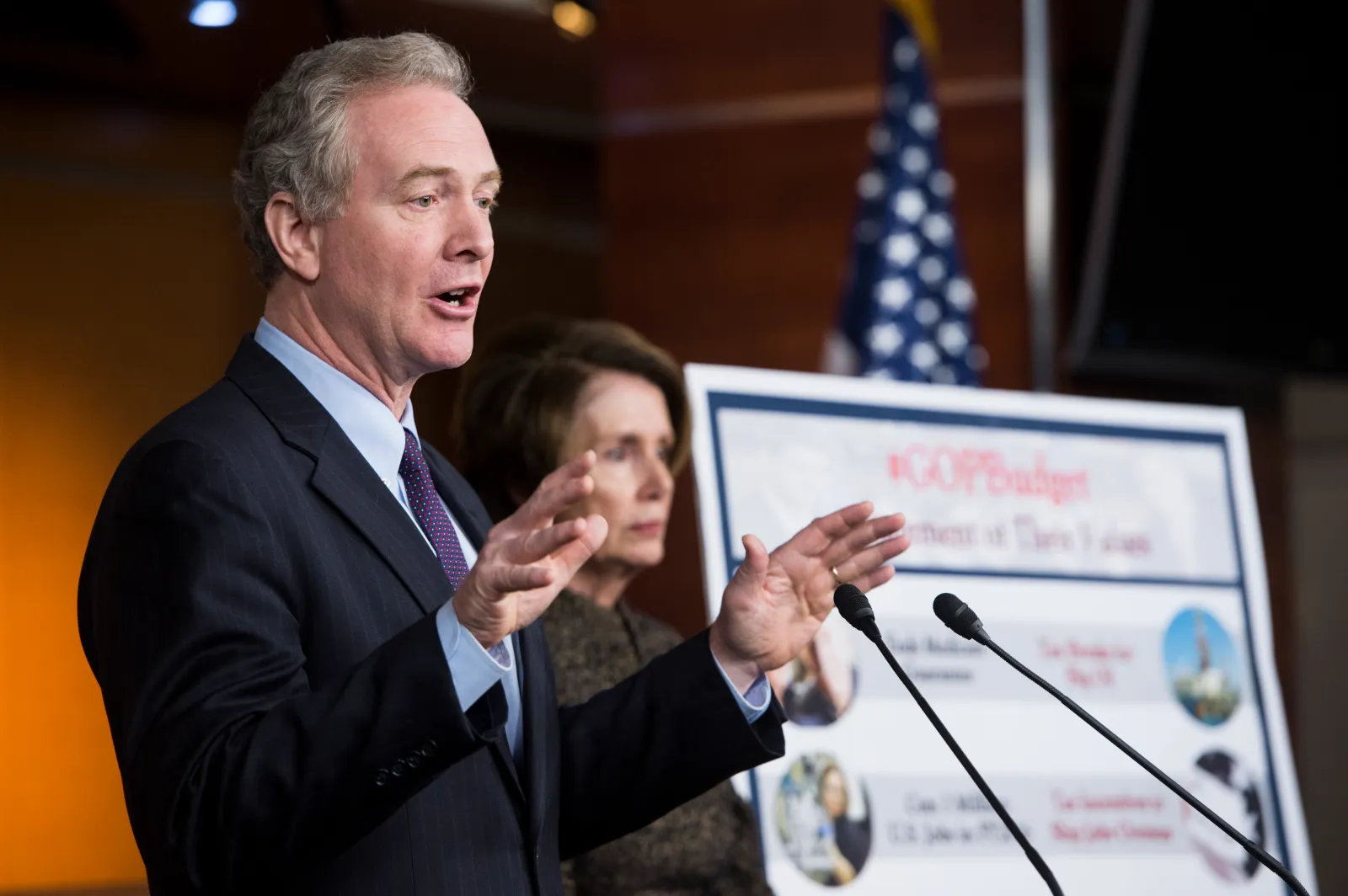
Senator Chris Van Hollen said Sunday that members of the Democratic Socialists of America (DSA) have a place in the Democratic Party, inserting himself into a growing debate over the party's direction following a string of victories by progressive and DSA-aligned candidates in Democratic primaries ahead of November's midterms.
The Maryland Democrat made the remarks during an appearance on NBC News' Meet the Press where he was asked by host Kristen Welker about criticism of DSA and whether democratic socialists belong in the party.
"Yes, they do, as part of the debate," Van Hollen said. He also said he would not reject an endorsement from certain individuals affiliated with DSA, though he added that he is "certainly not seeking the endorsement from the DSA."
Read More on Politics
The comments come at a pivotal moment for Democrats as recent primary contests have exposed growing tensions between the party's establishment and an ascendant left wing energized by candidates backed by DSA and progressive organizations.
The debate has intensified following a series of high-profile victories by left-leaning candidates, including Michigan Democratic Senate nominee Abdul El-Sayed and several DSA-affiliated House candidates. At the same time, moderates have warned that some positions associated with democratic socialism could hurt Democrats in competitive general election races.
Newsweek reached out to the DSA and Van Hollen for comment on Sunday.
...
Contrast With Hakeem Jeffries
Van Hollen's comments came a week after House Minority Leader Hakeem Jeffries, a New York Democrat, distanced himself from the democratic socialist movement, saying on Meet the Press that the caucus is a broad one that encompasses progressives, moderates, and Blue Dog Democrats, but stated that he doesn't "support the DSA agenda as has been articulated by the DSA itself."
Jeffries also rejected Medicare for All, a cornerstone of the progressive wing, and distanced himself from calls to abolish U.S. Immigration and Customs Enforcement (ICE), saying that Democrats are instead "committed to dramatically reforming" the agency.
Earlier this year, Jeffries and Senate Minority Leader Chuck Schumer released a list of proposed changes to ICE operations, including the banning of face coverings for immigration agents, requiring visible identification, restricting enforcement near schools and churches, expanding body-camera requirements and imposing additional use-of-force standards.
The contrast highlights an increasingly visible divide within Democratic politics. While leading figures such as Jeffries have attempted to reassure moderate and swing voters, others argue that the party needs to welcome a wider ideological spectrum as it searches for a winning message after its losses in 2024.
Newsweek also reached out to Jeffries for comment on Sunday.
Related Story

Democratic Socialists’ Favorability Rating Compared to Trump and MAGA
Van Hollen Embraces Debate
Van Hollen argued that Democrats should not shy away from ideological disagreements and said party leaders risk missing the mood of voters if they refuse to engage in broader discussions about the party's future.
"I think that those in the Democratic Party who are afraid of a healthy debate are missing the point," he said. "Because voters, including Democratic voters, they don’t want to simply return to the pre-Trump status quo. They want Democrats who are going to stand for something. And I can strongly disagree with one set of Democrats, but I think that debate is healthy."
Van Hollen said some DSA positions go too far for him. Asked about the organization's platform proposal to abolish the Senate, he responded: "Yes, of course they do, for me. And I think a lot of the folks who are running, regardless of where they are on the Democratic spectrum, have rejected those ideas."
Still, he said members of the party should be willing to debate those ideas rather than exclude people advancing them.
Many Democrats have sought to distance themselves from the DSA as Republicans increasingly portray the broader Democratic Party as moving sharply left.
In a previous statement to Newsweek, White House spokesperson Allison Schuster wrote: “The Democrats’ full-blown embrace of socialism and communism is a mortal threat to American liberty. President Trump will never allow America to become a socialist or communist country.”
What Polls Say About DSA
The debate has intensified as polling has painted a complicated picture of democratic socialism in America.
Recent surveys have found that several policies associated with the progressive movement, including Medicare for All and higher taxes on wealthy individuals and corporations, enjoy majority support among many voters.
At the same time, the DSA brand itself remains significantly less popular.
A recent Marquette Law School poll found DSA had a net favorability rating of -30, with 24 percent viewing the organization favorably and 54 percent viewing it unfavorably. A recent Ipsos/Washington Post survey found a majority of Americans would not consider voting for a democratic socialist candidate.
That gap has become central to Democratic arguments over electability. Supporters of the movement argue that voters often support individual policies associated with democratic socialism even if they view the label negatively. Critics contend that Republicans will weaponize the DSA brand in battleground races.
Looking Toward 2028
When asked directly on Sunday about a possible White House run in 2028, the senator acknowledged he has been "kicking the tires" and "testing the waters." He noted visits to New Hampshire and Iowa, which are two states traditionally associated with presidential politics.
Van Hollen stopped short of announcing a candidacy but said Democrats need to develop a clearer vision for the future rather than focusing exclusively on opposition to President Donald Trump.
"I think Democrats need to be very clear not just what we're against, but what we're for," he said.
Contact Newsweek editor for this story: Anthony Murray.
View 0 Comments
Submit Correction
View Editorial & AI Guidelines