...

By Newsweek Editors
0
Share
Newsweek is a Trust Project member
See more of our trusted coverage when you search.Prefer Newsweek on Googleto see more of our trusted coverage when you search.
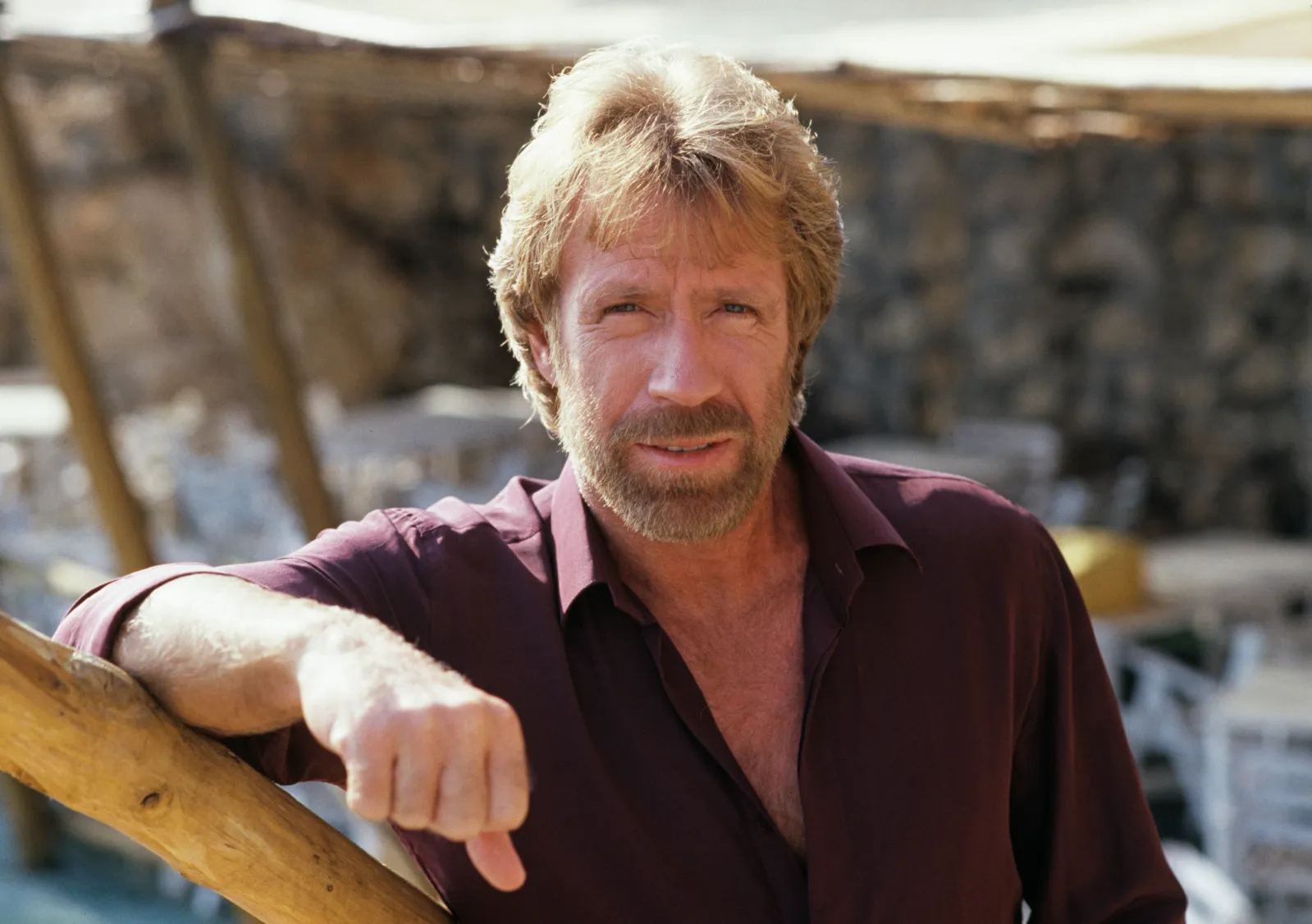
Chuck Norris’ death at 86 will be met with tributes that span generations, not only because he was a bona fide action star, but because his second life as a cultural figure arrived through the early internet.
It introduced him to millions of younger fans as one of the first universally recognizable meme icons.
Long before memes became a primary language of politics and culture, Norris was among the first public figures to be transformed into something novel: A digital myth.
Read More on Analysis
That myth worked because it had an unusually strong foundation in reality.
Norris arrived in Hollywood with a real-life origin story rooted in Cold War America.
He served in the U.S. Air Force as an air policeman, discovered martial arts while stationed in South Korea, and then built a competitive résumé that gave his screen toughness a credibility most action stars could only imitate.
His toughness was more than performance. It was hard-earned and well-documented. That distinction mattered later, because the most durable myths have a kernel of truth.
From Real Fighter to Screen Proof
Before Norris became a household name, he was already a legitimate figure in martial arts. He was a champion who parlayed competitive success into Hollywood, not just some actor with muscles and a performative roundhouse.
This authenticity is why he was such an easy template for the internet to work with. A meme needs a recognizable signal, and Norris’ signal was simple: This guy seems like he could actually do it.
His path into martial arts also carried the kind of narrative arc Americans instinctively read as character‑building. He was a serviceman discovering discipline abroad and returning home with purpose.
Accounts of his Air Force years repeatedly point to Osan Air Base in South Korea as the place he first trained seriously, moving from judo into Tang Soo Do.
The earned toughness storyline became part of his public identity, later reinforced by retrospectives that emphasize his depth across multiple disciplines.
Hollywood didn’t invent Norris’ credibility, it merely packaged what was already there.
His early film work helped audiences see what the tournament circuit already knew, but one role crystallized his image as a credible human obstacle: His appearance as Bruce Lee’s antagonist Colt in The Way of the Dragon (1972).
Lee’s stature elevated everyone around him. But for Norris in particular, it established him as a rare American performer who looked like a legitimate peer in martial arts, not just a prop.
'Walker, Texas Ranger' and Moral Certainty
If Bruce Lee gave Norris credibility, television gave him a constant presence on Americans’ screens, and that sense of permanence is how icons are made.
By 1990s, “Walker, Texas Ranger” had fixed Norris’ image as a weekly ritual.
He was the lawman who restores order through discipline rather than doubt. Cordell Walker functioned as moral shorthand. The community is threatened, the threat is confronted, and by the final act the world makes sense again.
The show’s tonal simplicity made Norris legible as a cultural symbol. He didn’t have to lean on irony or self-aware humor to soften his persona. His appeal rested on straight-faced seriousness.
It was a quiet certainty, physical competence, and the sense that authority, properly embodied, was stabilizing rather than suspect.
In other words, Norris wasn’t just tough. He was reassuringly tough. And that is exactly the kind of cultural object the early internet loved to explode.
The stronger and more earnest the original signal, the funnier the exaggeration. A straight line is easier to bend into a perfect curve.
Mythmaking Memes
The digital transformation came in the mid‑2000s, when online communities seized on Norris’ unblinking certainty and exaggerated it into absurdity as “Chuck Norris facts.”
These were fun, endlessly replicable claims of invincibility rooted in his tough guy image, elevating it to a comical level of mythology. They were miniature pieces of folklore engineered for copy and paste in a digital age.
Chuck Norris does not sleep. He waits.
Chuck Norris has two speeds: walk and kill.
The flu gets a Chuck Norris shot every year.
The format arrived early, before “meme” was even a universal term as we use it today, and helped establish the grammar of internet humor.
Short lines, repeated structure, escalating exaggeration, and collective authorship all played well online. The internet was using Norris as a symbolic unit of power.
Crucially, the myth never fully detached from the man, even as it transcended him from tough guy to a Herculean deity.
Norris remained recognizable and consistent—an action figure of moral certainty—while the internet wrapped him in layers of ironic omnipotence.
The meme was globally portable. You didn’t need to know his filmography to get the joke. You only had to recognize the archetype.
Digital Immortality
The meme, though long past its peak, never really went away. It will survive his death and give Norris an afterlife in the endlessly repeating imagination of the web.
Because as we all know from the facts, the immortal Chuck Norris can’t really die.
Hey gang, Carlo Versano here. I hope you enjoyed this article. As Newsweek's Director of Politics and Culture and editor of the 1600 newsletter, I'm keen to hear what you think. Now, Newsweek is offering a new service to allow you to communicate directly with me in the form of a text message chat. You can sign up and get a direct line to me, as well as the reporters who work for me. You can shape our coverage.
As a Newsweek member, we're offering this service to you for free. You can sign up below, or read more about how it works here. Let's talk!
View 0 Comments
Submit Correction
View Editorial & AI Guidelines