...

By Newsweek Editors
0
Share
Newsweek is a Trust Project member
See more of our trusted coverage when you search.Prefer Newsweek on Googleto see more of our trusted coverage when you search.
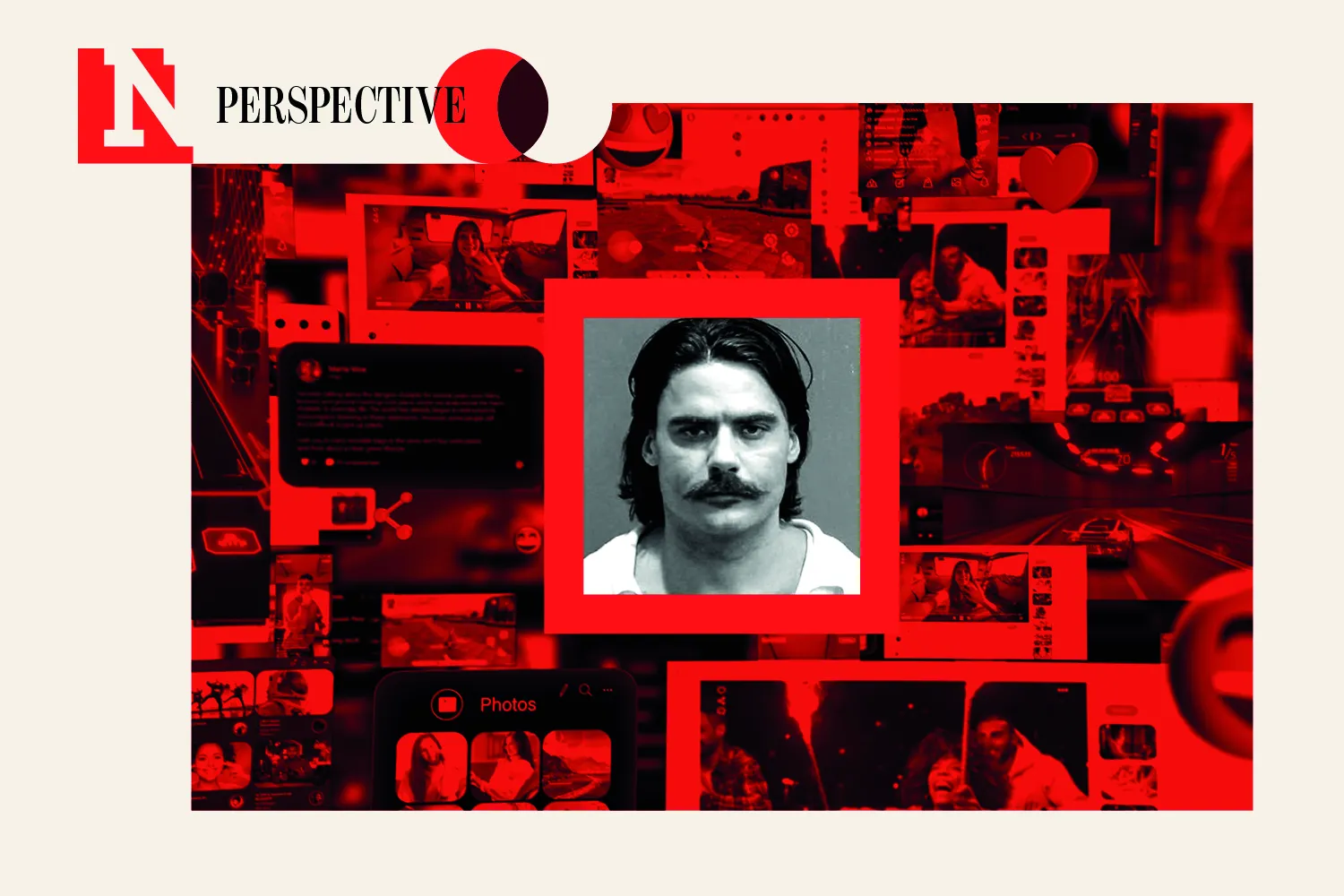
There was a grim predictability to the shooting this week outside the County Courthouse in Clarksville, Tennessee, involving streamer "Chud the Builder."
"Chud," real name Dalton Eatherly, has found infamy these past few months by racially abusing Black people on video and goading them to do something about it, generating millions of views, fiery discussion, and plenty of money.
Eatherly contends that he's a free speech martyr. His critics see him somewhat less profoundly: an attention-seeking racist.
Read More on Analysis
What happened in the Clarksville confrontation remains to be determined by the courts. Eatherly stands charged with attempted murder, but says he was acting in self-defense.
Fortunately, nobody died in the gunfire. But Eatherly's story was primed for a much darker ending than this.
His case symbolizes the digital hell in which we all now must live, where the online world increasingly manufactures our physical reality, two spheres of existence fused into an appalling hybrid.
The grim incentive structures of social media algorithms, geared to feed and manipulate the worst impulses of human psychology, have reached beyond the written post and into our mortal realm through the rise of streaming and video content.
The competition for our attention is a war of escalation whose logic pulls content creators toward the extremes, mitigated only by the willingness of platforms to actually police what their nihilistic algorithms are serving up to users.
Our slack-jawed doomscrolling into the abyss has creators and platforms laughing all the way to the bank, funded by amoral advertising, merch, and anonymous donations from those who see Chuds as outlets for their own taboo views.
There's an unholy trinity of philosophers that explains how the gates of hell have opened, releasing digital demons like Chud the Builder upon us: Aristotle, Guy Debord, and Michel Foucault.
Aristotle Saw the Habit Before the Algorithm Did
Let's start in Ancient Greece with Aristotelian habituation.
Aristotle's ethics puts habit at the center of virtue formation. Character is shaped by repeated practice and by what we learn to take pleasure in.
In the Nicomachean Ethics, Aristotle argues that virtue and vice are formed around pleasures and pains, so what we learn to enjoy, endure, laugh at, and excuse becomes part of our character.
Repeated exposure to cruelty, humiliation, gore, or rage can lower the threshold of what feels normal, funny, justified, or exciting.
This warning feels newly practical in the digital age, where extremity is rewarded both through the attention of social media engagement and financially.
Our persistent exposure is normalizing behaviors, attitudes, and content that only a few years ago were entirely unacceptable.
The Chud case is grotesque because it shows a vice economy using the same machinery Aristotle reserved for moral education: repetition, reward, audience feedback, and a gradual dulling of disgust.
Even backlash feeds the beast. Yale researchers who studied Twitter found evidence that some users learned to express more outrage over time because likes and shares rewarded them.
A 2025 audit published in the PNAS Nexus journal found that Twitter’s engagement-based ranking amplified emotionally charged, out-group-hostile political content compared with a reverse-chronological feed.
A public cruelty routine is now a career path.
Debord, But Never Bored
The French Marxist philosopher Guy Debord helps us understand how the camera became the crowd, and is instructive about our modern hybrid digital lives.
The camera isn't merely recording the confrontation. It's helping produce it. The audience is present before the event begins, as an imagined crowd, a future clip, a revenue stream.
Debord wrote in The Society of the Spectacle that "the spectacle is not a collection of images, but a social relation among people, mediated by images."
On social platforms, the shocking image becomes the social relation. People bond, fight, signal virtue, and form identity through these mediated spectacles.
Eatherly’s livestreamed real-world racial confrontations, accusing Black people of "chimping out" and calling them the N-word, and the internet’s fevered reaction to them—horror, joy, hate, disgust, amusement—capture Debord’s spectacle perfectly.
Foucault's Identity Machine
The post-structuralist philosopher Michel Foucault, also a Frenchman, explains how we are then filtered into our new tribes through subjectivation.
Foucault’s useful point here is his account of power as a force that categorizes people, attaches them to identities and "makes individuals subjects," as he wrote in The Subject and Power.
His theory explains how platforms classify, rank, nudge, and normalize users into identities: the red-pilled guy, the doomer, the boomer, the incel, the tradwife, the woke millennial, and so on.
Power works by shaping what kinds of subjects people become. Platforms do this less like old censors and more like modern sorting machines. They don’t just show users content, they invite them to become kinds of people.
Their algorithmic recommendation systems rank, label, suggest, and reward conduct before users experience these nudges and internalize them as identities.
Eatherly's online role worked because "free speech patriot," "rage-bait streamer," "anti-woke provocateur," and "persecuted creator" are identities that his audience can fund, defend, and share—or define themselves against.
Digital Damnation
The same incentive grammar appears in the sexual-content stunt economy, best exemplified by the porn star Bonnie Blue, who claimed to have had sex with 1,057 clients in 12 hours.
She has made millions by raising her profile through shocking stunts calibrated to go viral on social media, via outrage and arousal, and then leveraging the attention into paying subscribers and sponsorship opportunities in the vice economy.
This type of streamer and influencer is everywhere now, delivered into your hands by social media platforms that know the content will provoke you into spending your attention in their digital economies.
They thrive on confrontation, provocation, performative cruelty—whatever shocks or titillates you. Every day, all the time.
These streamers feed off each other, blending their followings in mutual promotions, podcast appearances, collaborations, beefing and baiting each other into indulging their worst characteristics for content and cash.
A culture that pays for transgression will eventually get specialists in transgression, and a platform order that treats attention as proof of value will keep manufacturing personalities who confuse being watched with being right.
This cannot be solved by viewer discipline alone. Platforms decide what is recommended, monetized, clipped, boosted, and made profitable.
Advertisers decide what ecosystems they are willing to fund. Payment processors, streaming platforms, and social networks may not create the appetite for cruelty, but they decide how easily it can become a business model.
Escape for us viewers is not impossible. But in a world where we live a large portion of our lives online, it’s very hard. Watch even one video, and the platform will serve you more.
You have to overwhelm your subconscious to resist the temptations of the devil. It’s the best way to avoid digital damnation.
View 0 Comments
Submit Correction
View Editorial & AI Guidelines