...

By Hannah Millington
Health Reporter
0
Share
Newsweek is a Trust Project member
See more of our trusted coverage when you search.Prefer Newsweek on Googleto see more of our trusted coverage when you search.
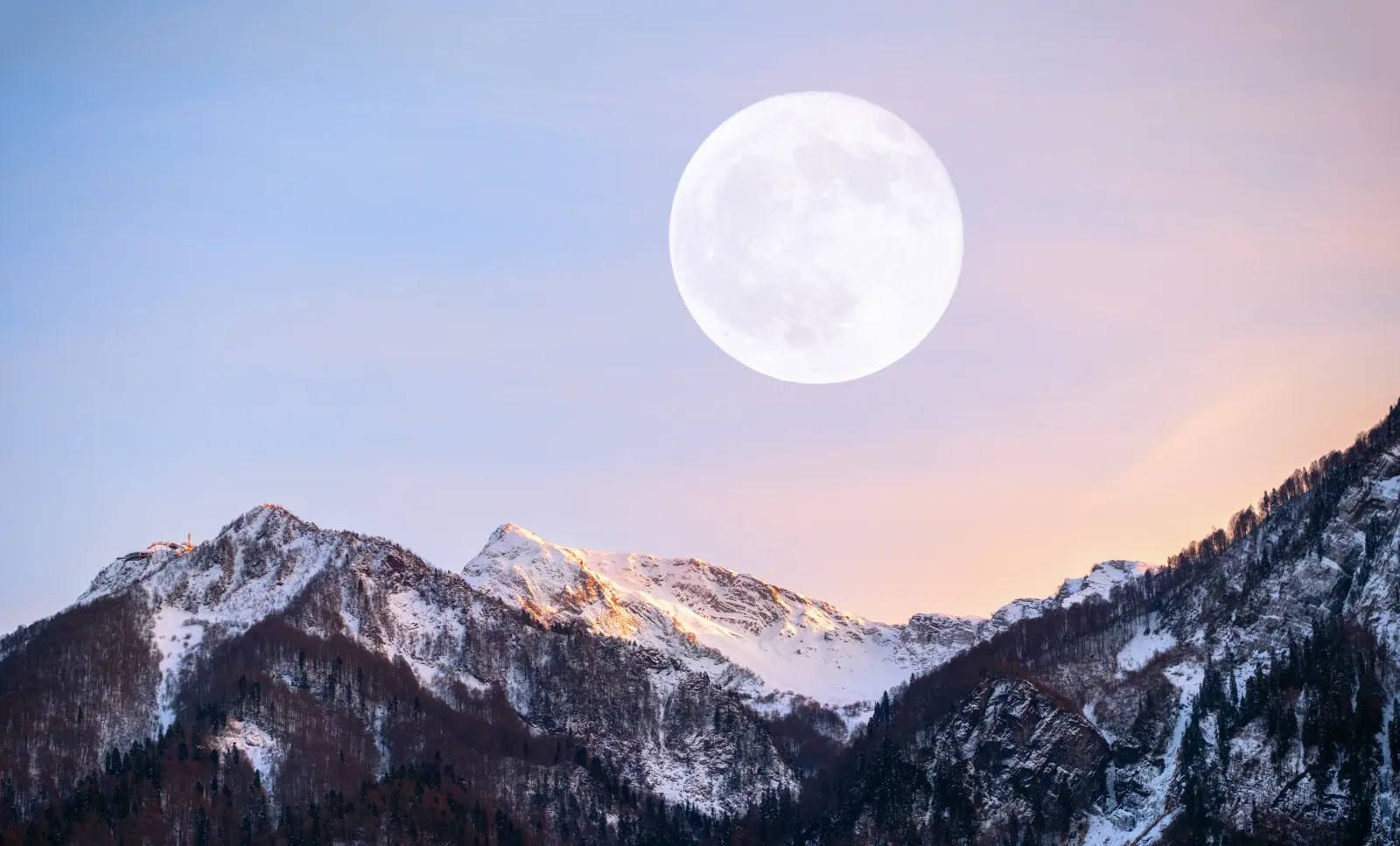
The last full moon of the year—the aptly named "Cold Moon"—will illuminate the skies on Thursday December 4, reaching peak illumination at 6:14 P.M. EST.
The Cold Moon is also 2025’s last supermoon of the year. A supermoon occurs when a full moon coincides with the moon’s closest approach to Earth in its orbit, a point known as perigee, making it appear larger than usual.
“‘Supermoon’ isn’t an official astronomical term, but typically it’s used to describe a full moon that comes within at least 90 percent of perigee,” explains NASA.
Read More on Science
Also known as the "Long Night Moon," the Cold Moon follows the Harvest Moon in October and the Beaver Moon in November.
Spiritually, the Cold Moon is thought to symbolize turning inward, slowing down, reflecting and growing quietly.
...
Where To See the Cold Moon
It may be dark enough to see this year’s full moon at its peak time, but it will still remain full and visible (depending on conditions) at night.
You might prefer to view it just after moonrise when the moon appears larger near the horizon, known as the “moon illusion.”
On December 4, sunset in New York will be around 4:28 P.M. EST and moonrise will be around 3:54 P.M. EST, while in LA sunset will be around 4:43 P.M. PST and moonrise will be 4:22 P.M. PST.
Generally, evening times with dark skies is a safe bet. If you can, find a spot away from city lights with a clear view.
You should be able to spot the wintry moon without any equipment—just look up to soak in its full and bright presence. However, a telescope or binoculars may help you observe it in a little more detail.
Don’t forget to wrap up warm and bring any snacks or hot drinks if you’re planning on perching up for a while.
When Is the Next Full Moon?
When you receive your 2026 calendars, mark January 3 as the date to expect the first one of the year—the Wolf Moon.
While it may be in the new year, it’s also the second full moon of winter, with its name representing the howling of active wolves who don’t hibernate during these months.
Do you have a tip on a science story that Newsweek should be covering? Do you have a question about supermoons? Let us know via science@newsweek.com.
View 0 Comments
Submit Correction
View Editorial & AI Guidelines