10
Loading video...


By Joe Edwards and Anna Skinner
0
Share
Newsweek is a Trust Project member
See more of our trusted coverage when you search.Prefer Newsweek on Googleto see more of our trusted coverage when you search.
Colorado officials have declared the tiny town of Hartman abandoned, meaning it ceases to exist under state law, in a bid to solve months of political paralysis and a water crisis.
The Colorado Department of State issued the formal determination on July 28, saying Hartman had no Board of Trustees or town clerk, could not hold a town election and owned infrastructure needed to treat or deliver water to residents.
“In July 2026, the Colorado Secretary of State determined the Town of Hartman abandoned, enabling Prowers County to take control of the water system,” Shannon Gray, spokesperson from the Colorado Department of Local Affairs (DOLA), told Newsweek. “The declaration of abandonment allows Prowers County to assume control of the water infrastructure, find a new water operator, and seek emergency funding from the State to repair and stabilize the infrastructure.”
Read More on News
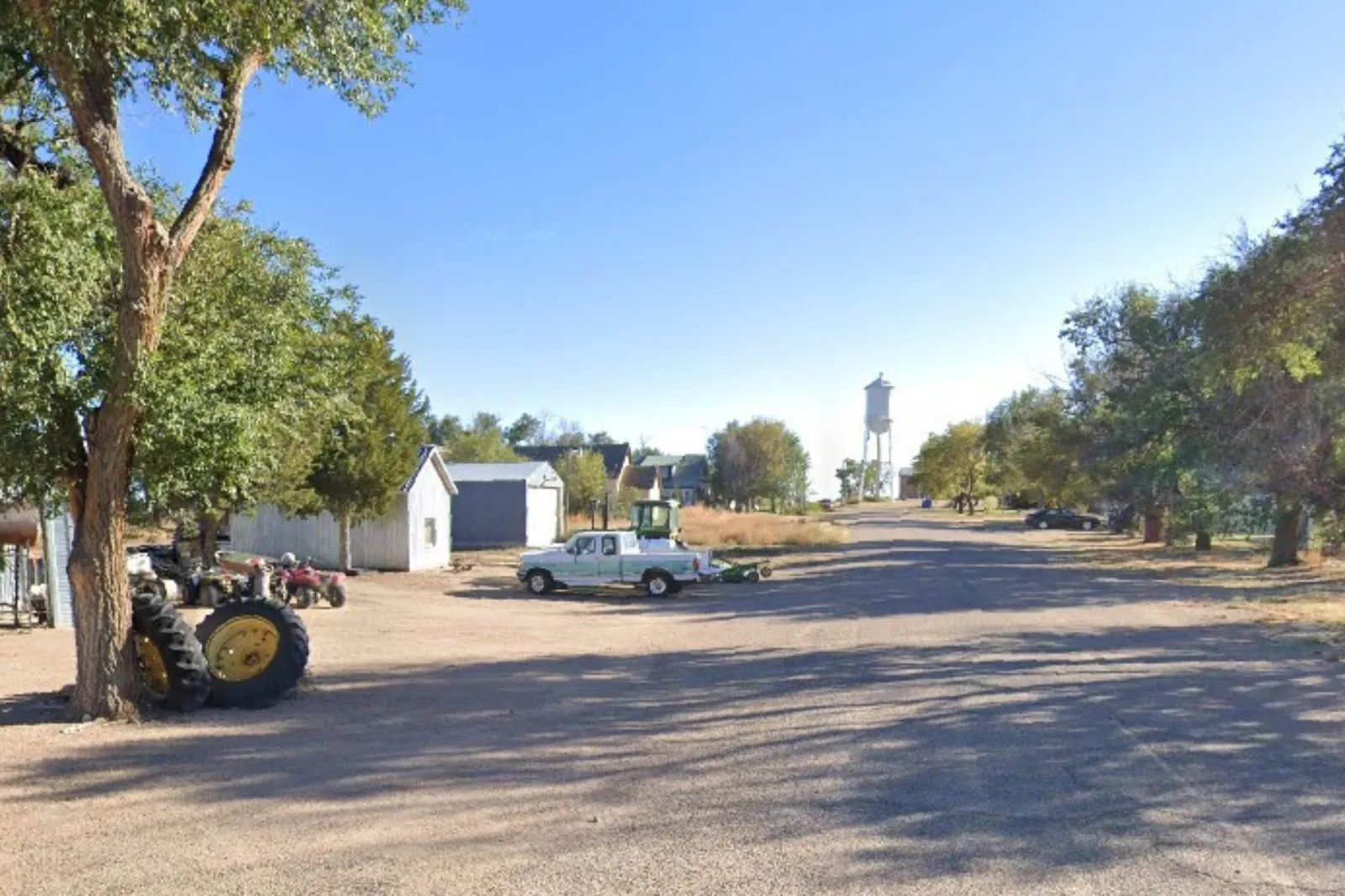
Hartman, which has 30 residents, is in southeastern Colorado. It had been without elected leadership since January, when its trustees resigned, leaving no officials authorized to approve contracts, spend money, appoint replacements, certify elections or make decisions about its water system, according to testimony noted by Deputy Secretary of State Andrew Kline in the abandonment order.
...
The crisis was not just administrative. State testimony cited in the order said Hartman had been under a boil advisory since October 2025, that its water needed testing and chlorine, and that its tank was compromised and needed repair or replacement. Prowers County Administrator Don Wilson also testified that the town’s water system delivers to about 40 homes and that Hartman had been on a boil order for more than a year.
The Denver Post reported that the move followed "petty" disputes, fraud allegations and a physical altercation after a Board of Trustees meeting, and that the town’s "combative reputation" made nearby authorities and potential water operators wary of stepping in.
The state’s order described abandonment as the legal path out of Hartman’s governing stalemate, saying that rejecting the petition would leave residents in "legal limbo" during a health hazard, with no authority able to conduct town business, hold elections or fix the water system.
It cited testimony that DOLA had spent years helping Hartman with elections, resignations, audits, budgets and grants, but said DOLA could not appoint officials or operate the water system, the Colorado Department of Health and Environment (CDPHE) regulates water systems but does not run them, and Prowers County "is not the governing body of Town and cannot hold an election on its behalf or take over the water system."
Related Story

Timeline Shows How Lakes Powell, Mead Hit Lowest Combined Level
The order also noted that CDPHE had cited Hartman for water problems for years, including failures to monitor and report contaminants, maintain a certified operator, and address holes in the storage tank.
The state’s decision follows a hearing on July 13 and an application filed on June 17 by resident Jessie Simmons, who alleged the town lacked a board, clerk and election capacity, and said the water had gone without chlorine for more than a month and "smells horrible." Kline acknowledged that some residents objected and were "present, active, and willing to serve," but concluded Hartman was not deserted. Rather, he wrote, all elected officials’ resignations had left residents unable to elect a new government.
Colorado State Representative Ty Winter and State Senator Byron Pelton told Newsweek: "The abandonment process was necessary to prevent a public health crisis in the town of Hartman. The resignation of the last three trustees plunged the Town into paralysis. There were no staff and no operator for the town’s water system, which was already under a compliance order from the state health department and on the verge of failing. There was no ability under state law for the county or the state to hold an election for the town to restore governance.
"Stabilizing the town’s water supply was our primary concern. In accordance with the legislation that we sponsored, the state is currently doing water testing, adding chlorine to the system and ensuring that the pumps stay on while the expedited abandonment process is underway."
They added: "Once the abandonment proceedings are concluded, Prowers County will be able to temporarily take ownership of the water system, with plans to transfer operations to a neighboring jurisdiction or a new water authority. The state has agreed to reallocate grant funds to repair the water system once it has been stabilized and ownership transferred to a new entity."
A spokesperson for Colorado Secretary of State Jena Griswold declined to comment further.
What Being Declared 'Abandoned' Means
In plain terms, Hartman is not empty. People still live there. The "abandoned" label is a legal technicality that appears to be being used to treat the town government as nonfunctioning and move its public responsibilities elsewhere.
Before this year, Colorado law generally required a town to go five years without elections, officers or government before it could be declared abandoned. Senate Bill 26-157, signed into law on May 27, created a faster process for towns with critical water infrastructure if they have no board or clerk and cannot hold elections.
For Hartman, that means its streets, alleys and town-owned property, including its water infrastructure, now vest in Prowers County.
Kline wrote that rejecting abandonment would have left residents in "legal limbo" during a health hazard, with no authority to fix the system, and said abandonment was the only legal path in Colorado statute for residents to receive clean water.
Prowers County is currently searching for a water operator for Hartman who can manage the water infrastructure and oversee any necessary improvements.
“Hartman doesn’t have a real good reputation with the struggles they’ve had, and the feedback from a lot of water operators is they’re not interested,” Wilson told Newsweek.
If a water operator isn’t found in the next few days, Wilson said officials will then look for a private engineering firm to help manage the water situation. “It’s a little challenging right now, but I think in the long run, they’ll have a water district like most communities do.”
Wilson added that Hartman has struggled with their water for years, long before the trustees resigned.
“Those are things that, as a municipality, they never took care of,” he said.
Although the situation is unique to Hartman, Wilson added that as water systems nationwide are required to follow more regulations, similar challenges may be experienced by other small water systems.
“It’s getting and going to continue getting more expensive and more difficult to run those small systems,” he said. “That cost is going to be higher than what’s possible.”
Wilson added that if a small water system must complete a big upgrade or follow a new EPA regulation, “the only option” is to raise rates, which could equate to as much as $200 added to rates for a single fee for the water system.
“Small systems will struggle in the future as we continue to more regulations,” he said.
Several other Colorado towns have been abandoned but did not face similar issues with their water systems, Gray said.
“We have seen other discontinuance/abandonment events in Colorado, but Hartman’s water situation makes it unique,” Gray told Newsweek. “The towns of Bonanza and Carbonate were effectively abandoned, but neither had centralized water systems to consider. Both towns are still technically in existence and are eligible for abandonment proceedings, but the respective counties have not petitioned the Secretary of State for an abandonment finding.”
The towns of Watkins and Keota were discontinued after a citizen vote and abandonment proceedings, but each town was able to work with its county to find a solution for the water systems prior to the towns’ discontinuations.
What Daily Life Looks Like in Hartman
For some of Hartman's remaining residents, the legal abandonment of the town has done little to change day-to-day life.
Shawna Casey, one of the residents who opposed the abandonment petition, said many people are still relying on bottled water for drinking and cooking while waiting for a long-term solution. Casey told Newsweek that some elderly and disabled residents face particular challenges obtaining safe water, with some dependent on family members, caregivers or delivery services to transport cases of bottled water and five-gallon jugs. She said concerns about the odor and condition of the water have left some residents reluctant to use it for everyday activities.
“It has been left to individuals to supply their own water,” Casey said. “I have a bad back and cannot lift the five-gallon jugs, so I am forced to go to Walmart pickup and have them load my vehicle with a case of water, and when I get home, I take a few bottles in at a time.”
Casey added that she is recovering from recent surgery and has not been able to recover at home because the water is not safe for her to use.
Casey said she believes communication from authorities has been insufficient since the abandonment process began and said that residents were promised assistance that has yet to materialize. She also said she reached out to the Red Cross in an effort to obtain clean water.
Casey argued that Senate Bill 26-157 created legal obligations for state and local governments to maintain essential services after a town is declared abandoned but failed to establish a clear mechanism for delivering those services in practice. She contended that Hartman residents have continued to struggle to obtain safe drinking water despite the law being promoted as a solution for communities facing this type of crisis.
“When a law assigns responsibility but provides no enforcement, no funding and no operational pathway, the residents end up in a worse position than before,” she said.
Contact Newsweek editors on this story: Tobias Meyjes, Tony Phillips, Sam Wilson.
Update 8/1/26 11.45 a.m. ET: This article was updated with a statement from Colorado State Representative Ty Winter and State Senator Byron Pelton.
View 0 Comments
Submit Correction
View Editorial & AI Guidelines