Getty Images

By Alex J. Rouhandeh
National Political Correspondent
0
Share
Newsweek is a Trust Project member
See more of our trusted coverage when you search.Prefer Newsweek on Googleto see more of our trusted coverage when you search.
Standing center stage on the evening of March 3, microphone in hand, with several foot tall, glowing letters reading “TX Tough” behind her and a screen with her face and the words “WATCH PARTY” above her, Texas Democratic Congresswoman Jasmine Crockett delivered a message of anger and frustration: “I can tell you now that people have been disenfranchised! The polls were supposed to stay open until 9:00, according to a court order. The Supreme Court, just a few minutes ago, just said, ‘shut it down.’ The Supreme Court also said that they are to separate any votes out that came in after 7:00 p.m.”
Crockett’s race was running in the Democratic primary for U.S. Senate against state Representative James Talarico, the night’s eventual winner. But first there was confusion because in late December the Republican chairs of Dallas and Williamson counties—the heart of Crockett’s base—announced a move to precinct-based primary elections. However, many voters were not aware of the shift, so come election night, they turned up at the wrong place. To add to the disarray, local courts extended polling hours only to be overruled by the state supreme court.
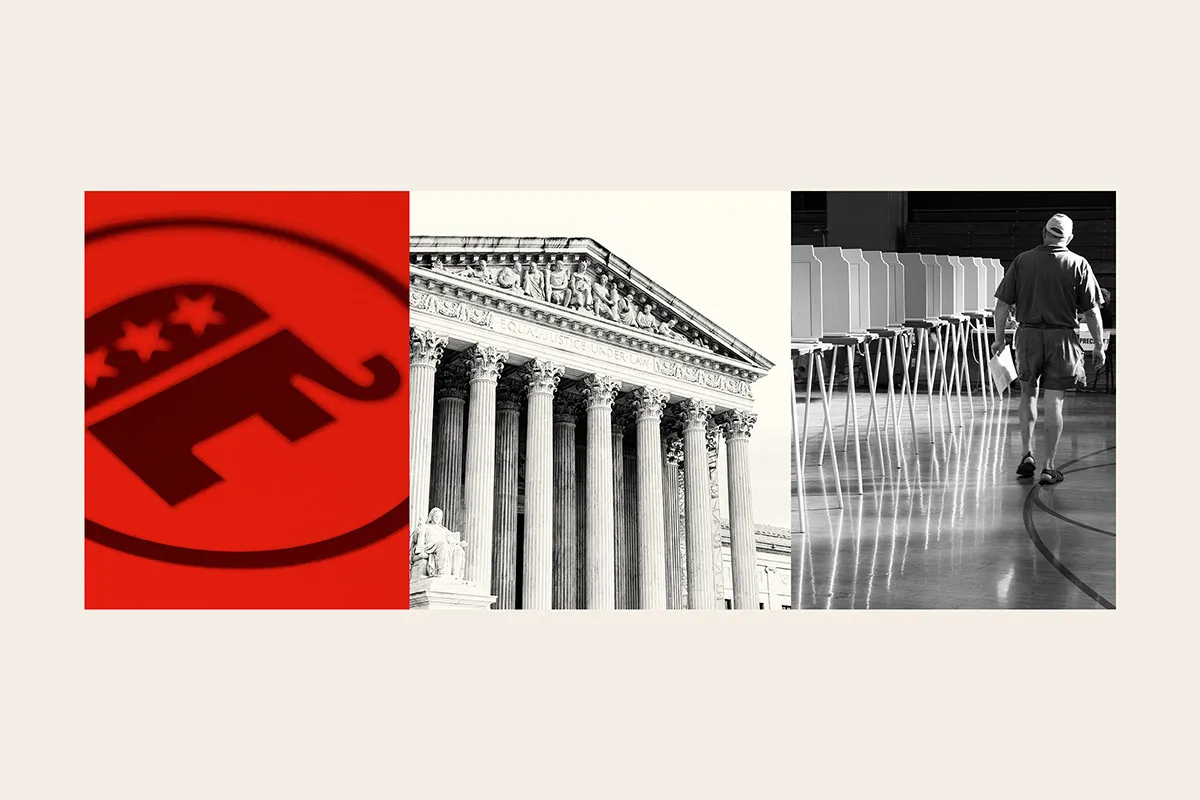
Last month’s confusion in Texas could be a taste of what’s to come in November when voters will decide which party they want controlling Congress, as a wave of expected election rules could overhaul how millions of Americans vote. During oral arguments before the U.S. Supreme Court on March 23 in Watson v. Republican National Committee, the court's conservative majority seemed sympathetic to the RNC’s demand to bar state laws validating mail-in ballots postmarked but not received by officials on election day.
Read More on Politics

...
If the RNC’s argument proves winning in the court’s decision, which is expected before its term wraps in late June, millions of Americans accustomed to voting by mail will need to learn the new rules before this fall’s midterms. Texas and 13 other states currently allow postmarked ballots to be counted, even if they’ve only been received by couriers on Election Day. Twenty-nine states also offer the same privileges to military and overseas voters. Those rules could be terminated by the Watson ruling.
“Any of these kinds of policy changes are always borne by the local election officials who are already quite stretched,” Daniel Thompson, an election expert at the University of California, Los Angeles, told Newsweek. “If it is the case that states are forced to change these deadlines before the fall, that’s a pretty tight turnaround.”
Yet, this case is just one of the hundreds of lawsuits being litigated by Republicans that could change how the upcoming election is administered. Since President Donald Trump took office, the RNC has focused its time and resources litigating issues in America’s election laws they believe will make the system more secure and more trustworthy. In conversations with Newsweek, half a dozen RNC officials tasked with advancing these efforts described their goal in terms of restoring Republican voters’ faith in the electoral process and pushing America’s judiciary branch to answer long unsettled questions on contradicting election laws.

...
“In 2025, the Republican National Committee led 115 legal cases to support voter ID, stop non-citizens from voting, secure mail-in ballots, clean voter rolls and other commonsense steps,” RNC chairman Joe Gruters told Newsweek in a statement. “This isn’t a one-cycle effort; success means stronger protections, clean rolls, and higher voter confidence in our elections. President Trump was clear: Secure elections and protect every legal vote. And Republicans are committed to that mission long-term.”
Much of this work is framed by the RNC as a matter of good governance. They’re optimistic those on the ground will be able to adequately alert voters to changes and stave off confusion. In contrast, many Democrats view the RNC’s actions as being oriented toward nonissues and fear the lawsuits could lower turnout, their definition of a poorly run election.
“While the RNC claims to care about ‘election integrity,’ they are actively trying to disenfranchise American citizens, including military service members, seniors, and disabled Americans by demanding states throw out ballots delayed in the mail,” Democratic National Committee spokeswoman Hannah Muldavin told Newsweek in a statement. “Voters will hold them accountable in the midterms, and the DNC will keep fighting every day to protect free and fair elections from the RNC’s attempts to rig the vote in their favor.”
With partisan distrust and vitriol running rampant, neither side is interested in seeing the other’s perspective, leaving America’s most sacred civic tradition in the crossfire to be tested this cycle in a way it never has been before.
Getting to SCOTUS

...
The issue at question in the Watson case centers on when mail-in ballots should be voided. Mississippi Secretary of State Michael Watson, a Republican, represents the view of his office that ballots count as long as they are postmarked by Election Day. The RNC—coming off a win in the Fifth Circuit—believes mail-in ballots received after Election Day should be invalidated.
“When you're putting something in the mail, regardless of if it's a ballot or a birthday party invitation, there's a risk involved, so what we're trying to do is create a system where election day doesn't basically turn into just this rolling election,” an RNC official, who like others requested anonymity to speak candidly, told Newsweek. “If voters are concerned about their ballot getting lost in the mail, there's always an option to vote in person.”
The Republican focus on election laws traces back to the 2020 presidential election and Trump’s insistence that Joe Biden was not the lawful winner. Soon after Michael Whatley replaced Ronna McDaniel as RNC chair during the 2024 presidential election, he formed an “election integrity” unit. After Trump’s victory, as campaign-side officials migrated over to the administration, the effort was elevated as an organizational priority.
The RNC describes the election integrity unit as a project endowed with “significant resources” that involves members of its communications, field organizing and legal teams, the latter of which is headed by Mandy Lester, a Wake Forest University School of Law alumna. Unlike in 2020, when such issues struggled to gain support in the legal community, these efforts have attracted some of the GOP’s leading legal minds.

...
Alongside Paul Clement, former Solicitor General under President George W. Bush, who is representing the RNC in the Watson case, also arguing on behalf of Republican-aligned election law efforts is Noel Francisco, Trump’s former Solicitor General, who is arguing National Republican Senatorial Committee (NRSC) v. FEC which challenges the federal limits on coordinated spending between candidates and political parties.
The RNC is also petitioning for two more cases to be heard before the court, RNC v. Mi Familia Vota—litigating proof of citizenship laws—and RNC v. Eakin, which could reinstate a Pennsylvania law requiring mail-in ballot return envelopes be dated by the voter. The latter case is being argued by John Gore, a partner at Jones Day and former Acting Assistant Attorney General for the Civil Rights Division at the Department of Justice (DOJ).
Employing such legal minds demonstrates the intellectual and financial commitment the RNC and its allies have thrown behind this effort, as RNC officials see these moves as a vital investment in MAGA turnout.
“In order to make sure that our elections are secure and voters have confidence that their vote is going to count, that they show up to the polls, you have to address all these issues,” one RNC official said. “That's why it is very much a very valid and good use of money to make sure that we're fighting this on all fronts.”
Getty Images
The Strategy
The RNC officials who spoke to Newsweek described their election integrity efforts as a four-part strategy: combatting noncitizen voting, ensuring enforcement of mail-in ballot laws, promoting enforcement of voter ID laws, and litigating issues that arise around noncompliance with the National Voter Registration Act of 1993.
Non-citizen voting is perhaps the most prevalent matter, as large portions of the MAGA coalition remain adamant significant numbers of non-citizens swayed the 2020 presidential election and others. However, according to the Bipartisan Policy Center “there is no evidence that noncitizen voting has ever been significant enough to impact an election’s outcome,” and the center’s analysis of The Heritage Foundation’s Election Fraud Cases database found only 77 instances of noncitizen voting between 1999 and 2023.
Nonetheless, the issue remains a concern and Republicans point to municipalities in California, Maryland, Vermont and Washington, D.C., which allow noncitizens to vote in certain local elections. Litigation on this issue has focused on laws changing the requirements for voters to prove they are U.S. citizens. In Wyoming, for instance, the RNC was involved in a lawsuit defending a state law enacted in 2025 requiring documentary proof of citizenship rather than attestation under penalty of perjury.
A second area of focus is mail-in ballots. In states that allow it, the RNC aims to ensure protocols are being followed, whether that pertains to signature verification, receival deadlines, or other laws. In Arizona, the RNC is suing to overturn a law allowing U.S. citizens stationed overseas to vote in the state if they have a parent who is a registered voter in Arizona.
...
The third focus centers on promoting and enforcing laws requiring voters to show ID at polling sites. The majority of states now require or request some form of identification to vote, and the RNC has put personnel on the ground to make sure these laws are followed. In Montana, the RNC sought to defend a law eliminating the option for voters without ID to sign a declaration form in order to vote, while in Indiana, the RNC has urged courts to dismiss challenges to a law barring students from using their college IDs to vote.
Fourth, the RNC has launched an array of lawsuits related to the National Voter Registration Act of 1993, many of which concern maintenance of voter rolls, lists of citizens who are entitled to vote in specific elections in specific jurisdictions. The RNC has sued North Carolina over missing information on voter registration forms and reached a settlement in the state to reject registration applications where voters didn’t supply government ID numbers. The RNC has also filed lawsuits related to the maintenance of these lists in Arizona, Maryland, New Jersey, Hawaii, and other states.
Beyond enforcement, the RNC’s ground presence also extends to “Get Out the Vote” campaigners who are tasked with informing voters of legal changes and helping them adjust to changing rules and voting deadlines. These are the people the RNC views as essential to preventing any chaotic consequences that could come as fallout to these rulings. “My assumption is that people are going to be even more clear on when the deadline is, as opposed to usual cycles,” an RNC official said regarding concerns about how individuals may adjust to changes.
“Our role in this is basically to say we fight on behalf of Republican candidates,” an RNC official said. “We should have secure elections in this country, and the people who administer those elections should adhere to the laws and the rules of those states.”
From DC to the States
While the RNC has been leading the GOP effort to remake election laws in the judicial lane, Congressional Republicans have also been at work attempting to advance the agenda legislatively. Their chief vehicle for doing this—the Safeguard American Voter Eligibility (SAVE) Act.
While all states require U.S. citizenship in order to register to vote and generally confirm information provided on registration forms against state databases, the bill would require voters to provide documentary proof and stipulate which documents are acceptable, such as a U.S. passport, a certified birth certificate with accompanying photo ID or a naturalization certificate. Forms of ID that do not indicate a place of birth, such as driver’s licenses, including those complying with standard REAL ID rules, would not be acceptable. The law also requires documentary proof to be provided in person, which would disrupt online and by-mail voter registration.

...
In addition, the law would require states to create programs to identify individuals who are not U.S. citizens and remove them from voter rolls. Election officials who register voters without proof of citizenship can be held liable for their error, as new civil and criminal penalties would be introduced under the law.
If there’s a state that best reflects what writers of the SAVE Act would like the American electoral system to look like, the model can be found in Tennessee which has been ranked number one on the conservative Heritage Foundation’s Election Integrity Scorecard over the past four years.
“We do three things: No drop boxes, a photo ID, signature verification on absent ballots, and we don't mail out ballots to people that haven't asked for a ballot,” Tre Hargett, who has served as Tennessee’s Secretary of State since 2009, told Newsweek. “We [also] probably built one of the most successful poll worker recruitment programs in the country, and when we were hearing that other states were having trouble recruiting them, we literally were having to turn them away.”
Despite the enthusiasm among Tennesseans to participate in that program, the state also ranks among the nation’s lowest in turnout, with the seventh lowest turnout percentage. Hargett said it’s because the state is firmly red, leaving voters to feel their vote matters less.
Democrats view the situation differently. Senate Minority Leader Chuck Schumer has labeled the requirements mandated by the SAVE Act, which are modest compared to the laws in Tennessee, as "nothing more than Jim Crow 2.0," arguing it will purge eligible voters from rolls. The bill passed in the House with four Democratic votes but remains stalled in the Senate due to the 60-vote filibuster threshold.
Infuriated with the lack of movement, Trump has stated he won't sign any bills until the SAVE Act passes, while Elon Musk and other MAGA faithful have pushed for its passage. He and other Republicans have pressured Senate Majority Leader John Thune to nuke the filibuster in order to pass the bill. However, as was the case when Democrats tried to kill the filibuster to pass a voting rights bill in 2022, moderates oppose such an effort.
Trump has attempted to shape election requirements via executive orders, like one to end birthright citizenship, but ultimately these are impermanent and may not amount to much. Thus, for change to happen in the realm of election law, it appears state governments are ground zero. It’s there where secretaries of state argue that state-level, rather than federal, changes are needed to reach the ideals national Republicans and the RNC are aspiring toward.
Chief Election Officials

...
The U.S. Constitution assigns states the role of regulating the “time, manner, and place” of elections, but with many exceptions, including amendments barring rules that would limit voting rights by race or sex, outlawing poll taxes and lowering the voting age to 18. While the Beltway debates election law with its typical partisan rancor, the job performance of secretaries of state is generally assessed on their record of administering smooth elections. Historically, this has made keeping voting rules out of the hands of Washington a bipartisan priority. And at the moment, 30 states—Democratic and Republican—are embroiled in a lawsuit with the Trump administration over the demand for voter roll information, which includes driver’s license numbers and partial Social Security numbers, as part of the DOJ’s investigation into perceived fraud.
Kentucky, a state which Trump won by 31 points in 2024, was among those that the DOJ sued. Secretary of State Michael Adams, a Republican, told Newsweek his position in the suit is about seeking answers because it’s “not clear to us what exactly the federal role is.” He added the last major federal law reforming election rules was the Help America Vote Act (HAVA) of 2002, at the dawn of the internet. Since then, he noted, many states have been updating their laws, creating room for discrepancies between state laws and what Trump’s DOJ may prefer.
An RNC legal official rejected his premise the national rules are uncertain. “The federal law has existed, and it's been there for everybody to see,” the official said. “These state laws run afoul of it, and we're just trying to bring everybody back in line with the federal law.”
Ultimately, though, Adams believes it's better for states to enact their own elections laws, tailored to their own unique cultures, and for the federal government to stay out. “The best way Congress can help us is to simply give us money without strings,” Adams said. “We're running federal elections. We're running state elections and local elections at the same time, so it makes sense for Congress to pony up some of that money, and when they do, we can modernize things.”
Adams said funding from HAVA grants and the Coronavirus Aid, Relief, and Economic Security (CARES) Act of 2020 played a critical role in helping Kentucky adapt to the challenges his office faced amid the COVID-19 pandemic. During that time, Adams implemented excuse-free absentee voting and three weeks of open polls, resulting in the highest primary turnout since 2008.
After that election, Adams worked with Governor Andy Beshear, a Democrat, to make some of the changes permanent, despite death threats and opposition from some in his own party. For this, Adams was awarded the John F. Kennedy Profile in Courage in 2024. “There's no Democratic way to vote. There's no Republican way to vote. It's like getting your driver’s license renewed,” he said.

...
After years of stoking doubt in the electoral process, it remains to be seen whether headlines about Supreme Court decisions can go beyond soothing the current Oval Office occupant’s past grudges and actually restore the faith of MAGA voters. Democrats reject the notion these moves will restore trust and instead see them as a costly project to placate Trump. They believe courts will largely view the matter similarly.
“The RNC has spent years and millions of dollars building a litigation machine aimed at making it harder to vote and easier to undermine election results,” Elisabeth Frost, litigation chair for Elias Law Group—the Democrat’s most prominent legal ally in this arena—told Newsweek in a statement. “The Watson case is a great example of what they mean when they say ‘election integrity.’ If the Supreme Court adopts their legal theory, hundreds of thousands of eligible Americans nationwide could be disenfranchised this fall. Not because those voters did anything wrong or missed any deadlines, but simply because of postal service delays outside their control. Thankfully, more often than not, courts see the RNC’s extreme, anti-voter legal theories for what they are: a strategy to shrink the electorate and keep the boss happy.”
Nonetheless, RNC officials realize they’re stuck with a problem—MAGA remains distrustful of elections. With no signs Trump will declare America’s election system trustworthy in the near future, Republicans see these efforts as a means of getting the system closer to MAGA-approved. MAGA turnout remains fickle when Trump’s name is not atop the ballot, however, and it may be even less inclined to show up at the polls should the Supreme Court rulings make voting more confusing.
Beyond the confusion those rulings could bring on Election Day, though, Thompson remains skeptical these rulings will have a significant effect on voter trust and thus their likelihood to turn out. However, he concedes only time will tell whether the RNC's election integrity investment proves worthy.
“Most of these fights are over things that have very relatively small impacts,” he said. “And I'm not sure that these things will influence trust all that much, but sometimes these things blow up in ways that are hard to anticipate.”
View 0 Comments
Submit Correction
View Editorial & AI Guidelines