10
Loading video...

By Peter Roff
Newsweek Contributing Editor
0
Share
Newsweek is a Trust Project member
See more of our trusted coverage when you search.Prefer Newsweek on Googleto see more of our trusted coverage when you search.
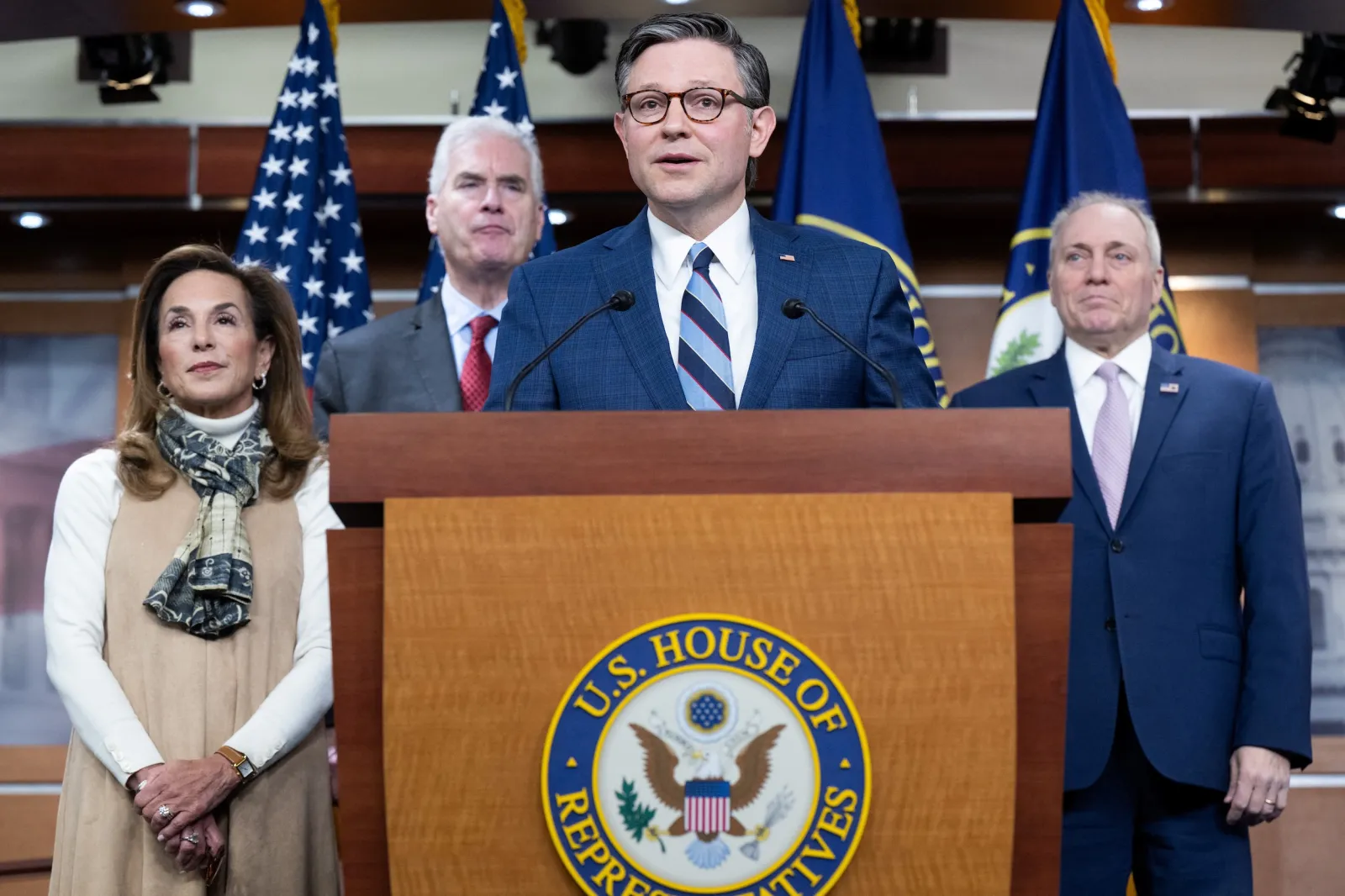
The clock is ticking. Republicans in Congress, led by Speaker Mike Johnson (La.) and Senate Majority Leader John Thune (S.D.), have had to work at a frantic pace to get all 12 appropriations bills to the president’s desk before time runs out at the end of the month.
They probably won't make it. Events in Minneapolis have the Democrats threatening to block the bill that funds the Department of Homeland Security, even though Immigration and Customs Enforcement was already funded by previous legislation. Doing so risks a partial shutdown, which, sadly, has become a regular component of the federal budgeting process.
It’s disappointing to think, yet easy to believe, that Congress’ sudden focus on budget discipline and commitment to regular order stemmed from fear rather than any sense of responsibility to the public. The last shutdown, the longest in U.S. history, was politically damaging to both parties.
Read More on Opinion
...
Shutdowns are costly and disruptive to the economy. A 2019 Senate report found the 2013, 2018 and 2019 shutdowns cost taxpayers nearly $4 billion. Blue-chip analysts at Goldman Sachs estimate that each week of a shutdown decreases quarterly GDP by approximately 0.2 percent. That may not seem like much in a $30 trillion economy, but it’s a significant amount of money.
This issue is compounded by all the finger-pointing. Congressional leaders could use shutdowns as an opportunity to enforce fiscal restraint, as former House Speaker John Boehner did in his deal with President Barack Obama. Instead, budgeteers and their allies usually exploit closures to gain short-term political advantages and to push spending initiatives through that would never be enacted otherwise.
Democrats often claim they are fighting for the common man and blocking Republican attempts to cut what they deem “critical” programs, like the temporary federal Obamacare subsidies that now end up in the coffers of insurance companies. The GOP, meanwhile, presents itself as the guardian preventing impending fiscal disasters, resisting the Democrats’ tendency to spend freely.
The posturing is foolish. The Democrats like to spend the people’s money. So do a few Republicans. The real difference is on what and how much. Commitment to the public’s business is too often measured by how much they are willing to allocate to various sectors, from health care to defense. The more you are willing to spend, the more serious your commitment.
What many in politics fail to recognize is that such brinkmanship and constant name-calling not only undermine public trust but also hinder the efforts of some in Congress who work tirelessly to reduce federal spending.
Fortunately, a few in Congress are looking beyond the current temporary crisis for a better way of doing things. Rep. Andy Barr (R-Ky.) has introduced a measure to allow parts of the government left unfunded under the current process to continue operating automatically if the fiscal year ends without Congress completing its appropriations work.
As Barr put it to me, “Neither party should be allowed to hold the people’s business hostage every time it doesn’t get its way.”
The End Government Shutdowns Act, Barr says, “protects national security and keeps government services running while Congress works toward a long-term budget solution.” The bill amends U.S. law to automatically continue funding any unfunded part of the government through a 30-day continuing resolution set at 99 percent of the prior year’s funding level. After the first 30 days, if no funding bills pass, funding would be renewed for another 30 days at 98 percent of the previous year's level, with an additional 1 percent reduction applied every 30 days thereafter until all appropriations bills are enacted.
This simple but brilliant measure represents the kind of bold thinking needed to extricate the country from the fiscal hole that free spenders on both ends of Pennsylvania Avenue have dug. Paying off $30 trillion in debt—where Joe Biden left us—is no easy task.
The economy is improving, but there is still much work to be done. Those in Congress seeking even to restrain the rate at which spending grows, let alone cut it, find themselves continually undermined by continuing resolutions, omnibus bills and last-minute budget deals.
The current reality of how spending decisions are made impedes the work of the few in Congress who strive to be prudent stewards of the taxpayers’ interests. Rep. Barr's plan would significantly limit the ability of presidents, congressional leaders and appropriators to use shutdowns to advance spending initiatives that Congress hasn’t had a chance to scrutinize, and members would likely not approve of if given proper time to consider them before voting. It’s a positive step forward that Johnson and Thune should incorporate into whatever omnibus or minibus bill is crafted to end the next shutdown. Whenever it does occur, the success of Barr’s initiative would make it the last one.
Peter Roff is a Newsweek contributing editor, experienced journalist and commentator who has contributed to various media outlets. He has produced highly-regarded analyses of U.S. politics and public policy for a quarter of a century. He appears regularly on U.S. and international media platforms, can be followed on social media @TheRoffDraft and can be reached via RoffColumns@Gmail.com.
The views expressed in this article are the writer's own.
View 0 Comments
Submit Correction
View Editorial & AI Guidelines