
Photo-illustration by Newsweek/Getty

By Anna Rahmanan
0
Share
Newsweek is a Trust Project member
See more of our trusted coverage when you search.Prefer Newsweek on Googleto see more of our trusted coverage when you search.
Menopause has finally made it to Congress, which is impressive when you consider that women have been dealing with it for quite some time.
On September 16, the Senate Special Committee on Aging held the first congressional hearing devoted to menopause. Senators gave it the rather perfect title, "Half the Country, Zero Hearings," and spent the afternoon discussing gaps in research, physician training and care.
There is something faintly absurd about the timing: menopause is one of the more predictable events in human biology and yet in 2026, Congress is still asking fairly fundamental questions about how the federal government studies it and how doctors are trained to treat it.
Read More on News
Sens. Kirsten Gillibrand, a New York Democrat, and Rick Scott, a Florida Republican, followed the hearing with a bipartisan request for the Government Accountability Office to examine how federal agencies fund and coordinate menopause research and care.
But…research? We’re still researching menopause? Women have had it for…ever?
Perhaps, that tells us something about the strange moment that the inescapable, inevitable biological stage has reached in America as public conversations about it have raced ahead (just land on the right algorithm and you’ll spend hours hearing about women’s takes on the topic) while medicine and government are only now trying to catch up.
Washington Is Catching Up to Women
The hearing arrives alongside a broader congressional push. Sens. Patty Murray, a Washington Democrat, and Lisa Murkowski, an Alaska Republican, reintroduced the Advancing Menopause Care and Mid-Life Women’s Health Act this year, a proposal that would authorize $275 million over five years for menopause and midlife health.
The package would authorize $25 million annually for NIH research and innovation focused on menopause and midlife health, while also funding clinician training, public education and health programs. It would establish Centers of Excellence in Menopause and Mid-Life Women’s Health and seek better coordination of federal research.
Related Story

The Tooth Fairy Isn’t Real. I’m Not Ready to Tell My Daughter What Is
Related Story

Who Will Win the Midterms? Just Ask DAD
Related Story
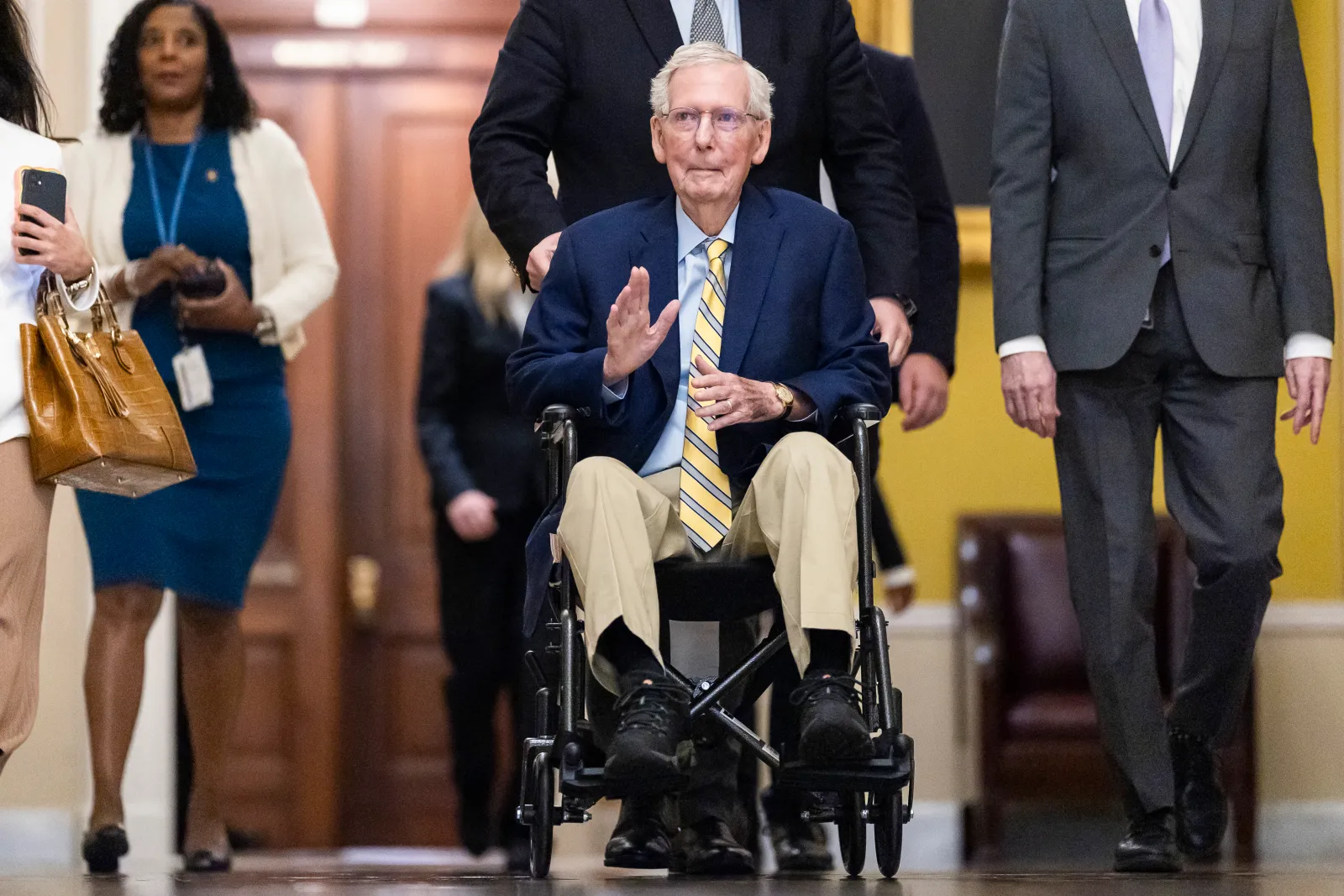
Midlife Lessons: I’m Worried About Falling Over—Look at Mitch McConnell
For a sense of the existing research landscape, NIH estimates it spent $78 million on menopause research in fiscal 2025. In the same year, it reported $314 million for prostate cancer research and $768 million across its much broader "Men’s Health Research" category.
Those figures can be misleading, so to note: NIH says its research categories overlap, and "men’s health" covers far more than a single condition or biological transition. Still, the contrast is there: a bill proposing a dedicated $25 million-a-year research effort for menopause is arriving at a moment when NIH estimates its entire existing menopause research portfolio at less than one-quarter of what it spends on prostate cancer alone.
Those provisions sound surprisingly foundational for a condition that is hardly new. And that, presumably, is the point.
The federal government is confronting a problem women have known from experience for generations: recognizing menopause exists is very different from having a medical system organized to understand it.
The gap extends into the doctor's office. Supporters of the legislation say menopause education for physicians remains inadequate, which means the research question and the care question are connected. Congress can fund another study, but it matters considerably less if the findings never reach the clinician sitting across from a patient.
Meanwhile, Women Have Moved On
Something else has changed while Washington has been getting organized: menopause itself has become much more visible, courtesy of hormone therapy, which is one of the main treatments used to relieve common menopause symptoms (think night sweats, hot flashes and the like).
The FDA has already made one of the most consequential changes in menopause medicine in years. In February, the agency approved labeling changes removing references to cardiovascular disease, breast cancer and probable dementia from the boxed warnings on six hormone-therapy products.
To be clear, the FDA has not suddenly declared hormone therapy risk-free. Instead, the agency concluded that warnings rooted largely in the Women's Health Initiative had been applied too broadly. That landmark study helped transform menopause care after it raised concerns about breast cancer and cardiovascular disease, but its participants were, on average, 63 years old—considerably older than many women who now begin hormone therapy around menopause. Later evidence has made the picture more nuanced, with risks differing according to age, timing, formulation and how the hormones are delivered.
Cardiovascular and breast cancer risks remain elsewhere in the labeling for systemic treatments, while systemic estrogen used alone in women with a uterus retains a boxed warning about endometrial cancer.
So the FDA was not erasing risk, just acknowledging that a warning powerful enough to reshape a generation's attitude toward hormone therapy no longer reflected the evidence with enough precision.
And that may be the clearest explanation for why Congress is still talking about research. Menopause has gone mainstream faster than the medical system built around it. The question now is whether Washington can close that gap before another generation of women has to figure it out for themselves.
View 0 Comments
Submit Correction
View Editorial & AI Guidelines