10
Loading video...

By Jennifer Radcliffe
0
Share
Newsweek is a Trust Project member
See more of our trusted coverage when you search.Prefer Newsweek on Googleto see more of our trusted coverage when you search.
Students at roughly 80 colleges across the country are expected to participate in coordinated "Take Back the Night" events on Sunday as activists say the fallout from Cornell University's sexual assault controversy has reignited a decades-old debate over fraternity culture, campus safety, "rape culture," and university accountability.
The National Campus Take Back the Night Rally will begin with an 8 p.m. EST national livestream on Sunday, before hundreds of students gather on campuses across the country for rallies, marches, and readings of a five-point reform mandate directed at university leaders. To view the livestream, registration is required at takebackthenight.org.
The effort comes as Cornell, which is located in Ithaca, New York, faces mounting criticism over its handling of sexual assault allegations tied to the Chi Phi fraternity, a case that has prompted protests, donor pressure and a faculty no-confidence vote while renewing broader questions about how colleges oversee fraternities, investigate misconduct and protect students.
Read More on News
"Cornell enabled us to have an entry point and a larger audience for this conversation," Katie Koestner, executive director of Take Back the Night, a more than 50-year-old nonprofit, said.
A 2024 survey conducted by research firm Westat for the Higher Education Sexual Misconduct and Awareness (HESMA) Survey Consortium found that 18.9 percent of undergraduate women reported experiencing nonconsensual sexual contact involving force or an inability to consent since enrolling in college. The rate was 6.5 percent among undergraduate men.
Liana Mirvis Galper, an 18-year-old first-year student at Yale University, was still learning their way around campus when they felt compelled to act on behalf of Cornell's Jane Doe and countless other students. Galper got on the phone with organizers within hours and was soon named national rally campus coordinator.
"In this month of organizing, we have collaborated with incredible speakers and student organizers as we plan the national event, and I have gotten a glimpse into what it takes to make change," Galper, a Massachusetts native studying art and English, told Newsweek via email.
Related Story
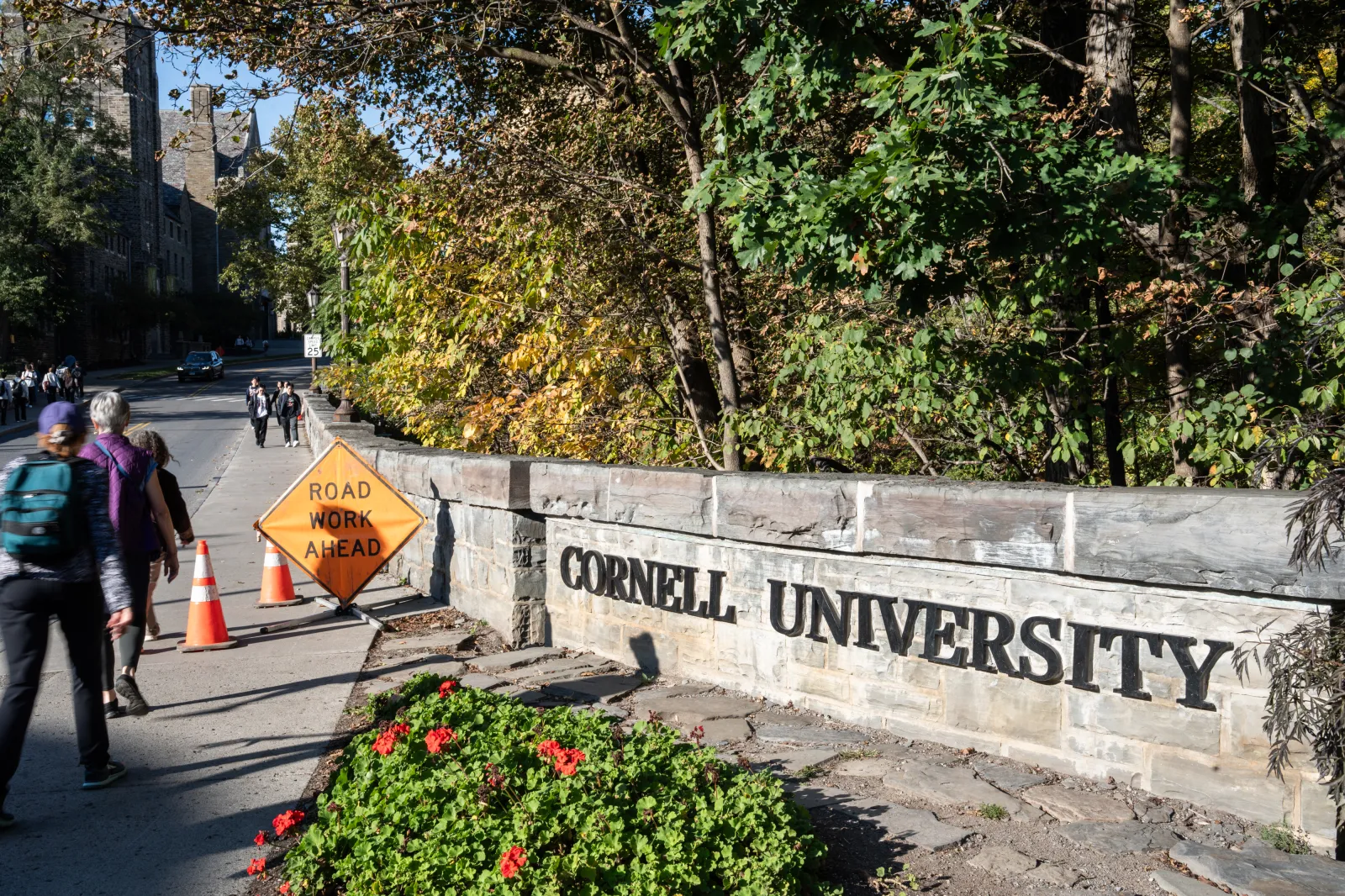
Cornell University Bans Frat Parties After Campus Rape Allegations

...
From Cornell to a National Movement
What followed was a rapid mobilization effort that organizers say expanded to 79 participating campuses, including schools on the East Coast, West Coast, and even Hawaii.
"We can't just have a few campuses," Koestner said. "We have to invite all the campuses."
Organizers originally envisioned local marches through campus spaces where sexual assaults had occurred or where students believed administrators had failed to act. But as planning progressed, some campuses imposed restrictions on demonstrations while others faced logistical challenges, prompting the addition of a national livestream component intended to allow broader participation.
The result is what organizers describe as one of the largest coordinated anti-sexual-violence actions on college campuses in recent years.
Why Cornell Resonated
For activists, Cornell has become more than another campus controversy.
The lawsuit filed last month by Jane Doe alleging she was gang raped by members of the Chi Phi fraternity in 2024 has touched on many of the themes that have driven campus sexual assault debates for years: fraternity culture, alcohol, university discipline, transparency and institutional responsibility.
The accused students have denied any wrongdoing.
In a video released October 3, Cornell President Michael Kotlikoff acknowledged criticism of the university's response but said Cornell was committed to determining what happened.
"We don't have all the answers, but we are committed to investigating and finding the answers our community deserves," he said, adding that the university "must do better."
New York Governor Kathy Hochul on Thursday said state police would take over sexual assault complaints at Cornell. Under the partnership, university police will give any complaints to state police to investigate unless the victim chooses a different agency.
"I will continue to do everything in my power to make sure survivors are treated with the dignity and respect they deserve, and that justice and accountability are pursued,” the governor said in a statement.
Koestner said the case managed to grab and hold the public's attention because of its complexity and its involvement of one of the country's most prominent universities.
"And it's good that it also highlights the power and control structure that has been existing in the cover up and the non-transparency and everything else," she said. "It's got everything. It's a really complicated case."
That visibility has coincided with growing scrutiny of how colleges handle sexual misconduct complaints nationwide.
Recent controversies have also surfaced at institutions including Louisiana State University and the University of Chicago, where allegations involving sexual misconduct have generated renewed questions about university oversight and student safety.

...
A Debate More Than 50 Years Old
While Cornell provided the immediate catalyst, the issues at the center of the protests have shaped campus life for generations.
"Take Back the Night" emerged during the 1970s, when women at newly coeducational colleges began organizing around issues including access to healthcare, campus lighting and the ability to walk freely at night without fear of violence. Over time, the movement's focus expanded beyond stranger assaults to questions of so-called date rape, fraternity culture, consent and institutional accountability.
Few people embody that evolution more than Koestner.
As a freshman at William & Mary in 1990, Koestner publicly accused a fellow student of rape, becoming one of the first women in the country to speak nationally about what was then widely described as "date rape." Her case became a national story, appearing on the cover of Time magazine and later becoming the subject of an HBO film.
Koestner told Newsweek that many of the concerns raised by today's students are strikingly similar to those she encountered more than three decades ago. It's disappointing that colleges haven't done more to protect students, she said.
"If you have a problem where you know one quarter of the female population and one in 16 of the male population is going to be affected, you need to do something," Koestner said. "But because the majority are women, it's still not taken seriously."
She recalled that after a school disciplinary proceeding, the student she accused was ordered to write a paper and stay away from her residence hall. That same punishment is still given out today, she added.
The Role of Fraternities
One of the central disputes emerging from the Cornell controversy is whether colleges should fundamentally rethink their relationship with Greek life.
Koestner argues universities have long known where elevated risks exist but have often failed to confront them effectively. She pointed to fraternity houses and other male-dominated social spaces that have repeatedly surfaced in campus sexual assault investigations.
"These protected spaces have harbored hundreds of rapes over the last 100 years," she told Newsweek.
Newsweek reached out to the North American Interfraternity Conference for comment.

...
The national Chi Phi fraternity, whose Cornell chapter remains barred from campus, has argued that it acted swiftly after the allegations surfaced. In a September statement, interim executive director Trey Robb said the chapter voted within days of a police report to remove the accused members and recommend their permanent expulsion from the fraternity.
"Chi Phi condemns sexual assault and drug and alcohol abuse in the strongest possible terms. Neither has any place in our fraternity or on college campuses," he said.
Some higher education experts caution that simply eliminating fraternity oversight may create new problems.
Peter Lake, a higher education law and policy specialist who studies student safety and Title IX compliance, told Newsweek that colleges may be approaching "a potential pivot point" in their relationship with Greek organizations.
At the same time, he warned that banning fraternity parties or withdrawing university recognition could push activity into less regulated settings where institutions have even less visibility.
"If you cancel the fraternity parties, where does the socializing go?" Lake said.
He described colleges as caught between competing pressures: demands for stronger oversight on one hand and concerns about driving risky behavior off campus on the other.
That tension has become increasingly visible in recent weeks. Cornell suspended fraternity social events, while other institutions continue to evaluate how much supervision they should exercise over student organizations.
Five Demands of Sunday's Event
The "Take Back the Night" campaign is built around a five-point mandate calling for:
- Evidence-based prevention education for all students
- Trauma-informed investigations and independent oversight
- Twenty-four-hour emergency response systems and protections for students seeking help
- Monthly transparency reporting and annual campus climate surveys
- Greater use of university expertise to modernize sexual assault laws
Koestner acknowledged the demands are only a starting point.
"It's barely scratched the surface," she said.
But she argued that any reforms must be practical enough to attract support across political and ideological lines. They must also be proven to produce results, she said.
Whether the protests produce lasting changes remains an open question.
Campuses have spent decades cycling through waves of reform, litigation, federal guidance and public controversy. Title IX enforcement standards have shifted repeatedly across administrations, while universities continue to face competing demands for stronger disciplinary action, greater due process protections and more effective prevention programs.
For Koestner, the challenge is ensuring that the attention generated by Cornell results in something more durable than another burst of headlines.
"Solving rape culture does not take an hour," she said. "Right. It takes determination and commitment."
Newsweek*’s* reporters and editors used Martyn, our AI assistant, to produce this story. Learn more about Martyn here. Contact Newsweek editors for this story: Anthony Murray and Jennifer Radcliffe.
View 0 Comments
Submit Correction
View Editorial & AI Guidelines