...

By Robert Alexander
Senior Crime & Court Reporter
0
Share
Newsweek is a Trust Project member
See more of our trusted coverage when you search.Prefer Newsweek on Googleto see more of our trusted coverage when you search.
A new lawsuit in federal court may help define how far artificial intelligence companies can go in using copyrighted music to train their systems. Country singer Tony Justice and his label, Knoxville-based 5th Wheel Records, have filed a proposed class action against Cambridge-based Suno Inc., alleging that the AI music startup copied his recordings without permission in order to build its generative-music model.
The case could become a pivotal test of how U.S. copyright law applies to the fast-growing field of AI-generated art, just a year after Tennessee introduced the ELVIS Act, specifically designed to protect artists.
Newsweek contacted Justice for comment via email outside of normal office hours on Tuesday.
Read More on U.S.
Why It Matters
At its heart, Justice v. Suno asks whether artificial intelligence companies can legally “learn” from copyrighted music without permission—a question with sweeping implications for artists, tech firms and the future of creative work.
The outcome could determine if generative-AI systems like Suno’s must license the songs they use to train their models or if such use qualifies as “fair use” under U.S. copyright law. For independent musicians like Tony Justice, who rely on royalties and licensing to make a living, the case represents a fight for economic survival in an industry being reshaped by automation.
For the broader public, it tests how society will define originality and ownership in an era when machines can convincingly create art of their own.
...
What To Know
Artist Accuses Suno Of Illegal Music Copying
Tony Justice, a Knoxville-based independent artist who says he has sold more than 100,000 albums and earned over 21 million YouTube views, claims Suno’s system “scrapes and duplicates tens of millions of publicly available, copyrighted songs” to train its algorithms.
His suit comes just over a year after Tennessee became the first state to pass a law protecting artists from unauthorized AI-generated imitations.
In his amended complaint filed on September 22, 2025, Justice alleges that Suno went beyond passive collection by “unlawfully ‘stream ripping’” music from platforms like YouTube—circumventing digital protection measures to ingest recordings into its AI models.
The plaintiffs argue that Suno’s actions violate the Copyright Act and the Digital Millennium Copyright Act, claiming that once an AI model absorbs copyrighted material, “those songs are stored in the AI’s neural network, and not capable of deletion or retraction.”
According to Complete Music Update, Justice’s lawyers have described the conduct as “abuse and exploitation of the worst kind” and claimed Suno’s approach deprives independent musicians of licensing revenue.
Suno Defends AI Training Under Fair Use
Suno, which has been valued at around $500 million, operates a subscription-based service that generates songs from user prompts in seconds.
In a previous filing, the company acknowledged that its training data included “tens of millions” of publicly available recordings but insists it has not infringed any copyrights.
In an August filing discussed by industry outlet Complete Music Update, Suno argued that “no Suno output contains anything like a ‘sample’ from a recording in the training set,” and therefore “no Suno output can infringe the rights in anything in the training set, as a matter of law.”
The company maintains that its system analyzes music to learn compositional techniques, not to copy sounds verbatim.
At the center of the dispute is the legal doctrine of “fair use,” which permits limited use of copyrighted works without permission for purposes such as criticism, research, or education.
Suno contends that AI training qualifies as fair use because it transforms the data into a tool for new creative output.
Justice’s complaint counters that argument, citing a May 2025 report by the U.S. Copyright Office titled Copyright and Artificial Intelligence, Part 3: Generative AI Training.
The report found that the fair use doctrine “does not excuse unauthorized training on expressive works (e.g., music), particularly when those works are used to generate substitutional outputs that may replace the originals in the relevant marketplace.”
AI, Fair Use And The Future Of Copyright
Justice’s lawyers also reference recent court opinions narrowing the definition of “transformative” use, including the Supreme Court’s 2023 Andy Warhol Foundation v. Goldsmith decision, which held that commercial works serving the same purpose as the originals weigh against fair use.
The complaint argues that Suno’s AI “creates competing music in the exact same marketplace,” and therefore fails the transformative-use test.
Legal analysts say the case highlights unresolved questions about AI training and copyright. “The million-dollar question is whether or not [Suno’s] technology model and the associated methodologies used violate existing copyright law,” Boston entertainment attorney Sally R. Gaglini told Massachusetts Lawyers Weekly.
She added that discovery could be “instrumental relative to how this technology actually works in relationship with copyrighted works.”
If Justice’s claims survive Suno’s motion to dismiss, the suit could move into a fact-intensive discovery phase that may reveal how generative-music systems are built.
Boston lawyer Paul J. Litwin said the case underscores that “independent musical artists have as much right as the major label artists to enforce their rights of copyright ownership in their music.”
Tennessee Leads on AI and Artist Protections
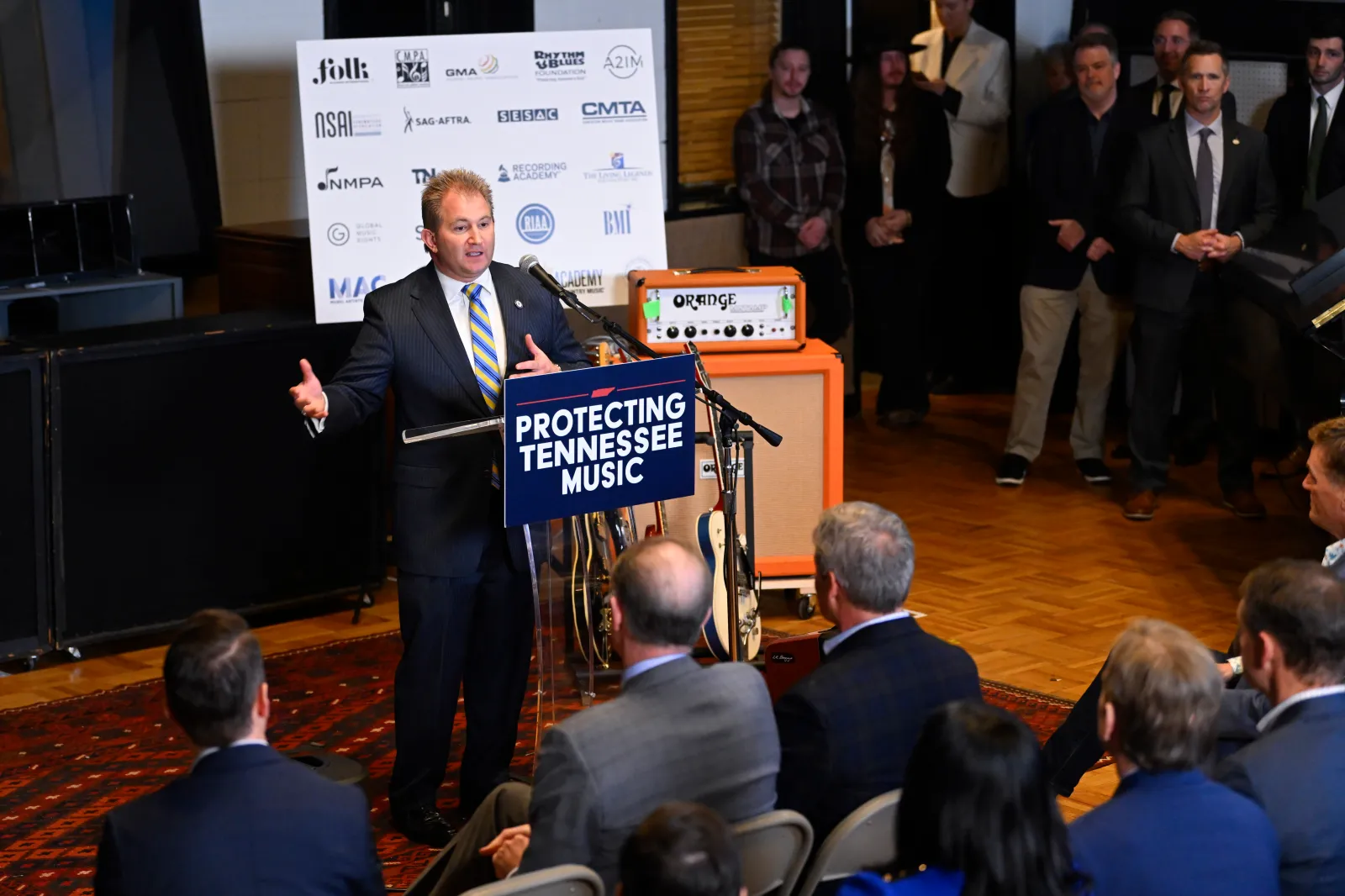
Tennessee became the first state to pass a law protecting artists from unauthorized AI-generated imitations.
Introduced by House Majority Leader William Lamberth and signed by Governor Bill Lee, the Ensuring Likeness, Voice, and Image Security (ELVIS) Act took effect July 1, 2024, expanding the state’s Protection of Personal Rights law to cover digital replicas of an artist’s voice, likeness, and image.
Announced at RCA Records in Nashville with backing from the RIAA and Nashville Songwriters Association, the law gives creators legal recourse if their identity or recordings are cloned without permission.
Lamberth said the measure ensures “artists’ voices belong to them—and not to an algorithm.”

...
Broader Implications Extend Beyond One Artist’s Catalog
Whatever the outcome, Justice’s lawsuit is part of a broader wave of legal actions testing how copyright law applies to AI-generated music, a market projected to reach $3 billion by 2030, according to a report report commissioned by Sacem and GEMA.
His case runs parallel to a separate lawsuit by Universal Music Group, Sony, and Warner Music against Suno and Udio, filed in 2024, claiming the AI platforms unlawfully copied and used copyrighted sound recordings to train its music-generation models for commercial gain, infringing artists’ rights and harming the market for licensed works.
Together, these actions form a coordinated front by both major labels and independent musicians seeking to establish whether AI firms must license the material they use to train creative models.
At stake there is more than compensation.
As AI-generated songs proliferate on streaming platforms, the question of who owns the underlying creative value remains unsettled. “It’s important to ensure that all creators have a seat at the table—both the innovators behind this AI generative technology and also the underlying content providers who work so hard at their artistic craft,” Gaglini told Massachusetts Lawyers Weekly.
What People Are Saying
From the Amended Complaint (filed September 22, 2025): “Rather than license these songs, like other AI companies already have done, Suno elected to steal Plaintiffs’, Class Members’, and Subclass Members’ songs.”
U.S. Copyright Office’s 2025 AI Report (as cited in the complaint): “The fair use doctrine does not excuse unauthorized training on expressive works, particularly when those works are used to generate substitutional outputs that may replace the originals in the relevant marketplace.”
Nashville Songwriters Association International (NSAI) said it: “…applauds Tennessee Governor Bill Lee … for introducing legislation that adds the word ‘voice’ … making it crystal clear that unauthorized AI-generated fake recordings are subject to legal action in the State of Tennessee.”
What Happens Next
The Suno case is awaiting a ruling from U.S. District Judge F. Dennis Saylor IV on the company’s motion to dismiss, which argues that its AI-generated music does not infringe copyright and that training on existing songs qualifies as fair use.
While no decision date has been set, a scheduling order in UMG Recordings v. Suno requires dispositive motions by December 5, 2025, suggesting a ruling could come late this year or in early 2026. If the motion is denied, the case will proceed to discovery, potentially revealing how Suno’s AI was trained and whether copyrighted works were copied; if granted, the plaintiffs may amend their complaint or appeal.
Because the suit seeks class-action status for independent musicians nationwide, its outcome could set an early precedent for how U.S. courts define the balance between creative rights and artificial intelligence innovation.
View 0 Comments
Submit Correction
View Editorial & AI Guidelines