...

By Ellie Cook
Senior Defense Reporter
0
Share
Newsweek is a Trust Project member
See more of our trusted coverage when you search.Prefer Newsweek on Googleto see more of our trusted coverage when you search.
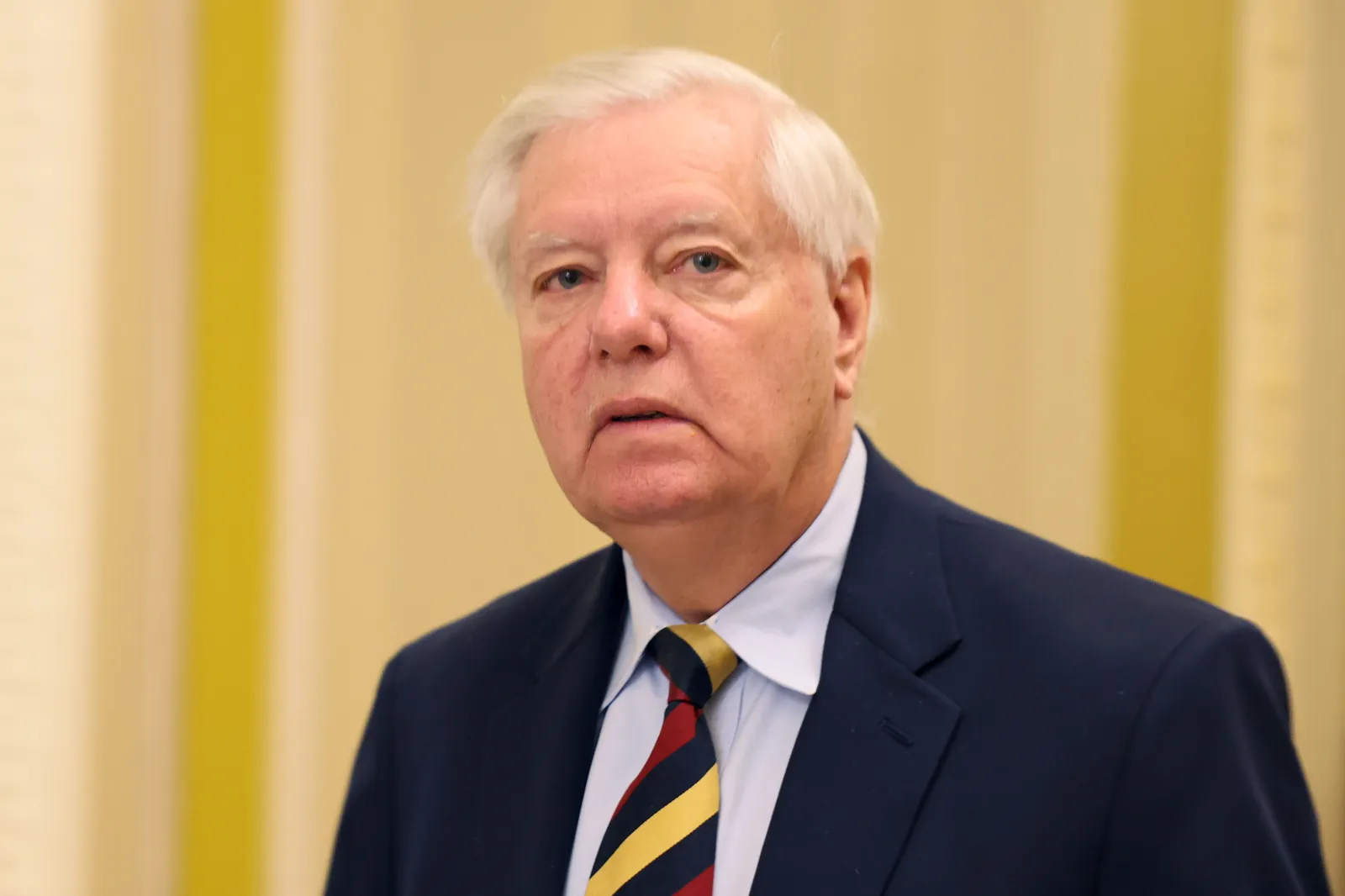
Republican Senator Lindsey Graham has said the government in Cuba will be next to "fall" after U.S.-Israeli strikes killed Iran's supreme leader over the weekend and Venezuela's former president sits in a New York detention center.
"This communist dictatorship in Cuba? Their days are numbered," Graham said during an appearance on Fox News late on Sunday.
U.S. President Donald Trump had said ahead of the cycle of strikes in the Middle East that the U.S. could orchestrate a "friendly takeover" of Cuba but offered scant details on ongoing negotiations with Havana.
Read More on News
Cuba has been squeezed by the threat of U.S. tariffs hitting suppliers of oil to the island after the U.S. seized control of Venezuela's energy reserves in January.
Countries like Mexico and Canada have sent aid to combat a growing humanitarian and energy crisis in the country as daily life ground to a juddering halt.
A lack of fuel led to frequent power outages, food became scarce and garbage piled up on the streets of the island's cities. Although the U.S. has slightly eased restrictions, Cuba's residents have struggled to return to normal life.
...
Fraught relations between Washington and Havana were further tested last week after U.S. officials said they would separately investigate the deaths of four U.S.-based Cuban nationals killed by Cuban authorities foiling what Havana called a terrorist plot.
"The Cuban government is talking with us. They have no money. They have no anything right now. But they’re talking to us, and maybe we’ll have a friendly takeover of Cuba," Trump said on Friday.
Just hours later, the U.S. and Israel struck targets across Iran. Iran has retaliated with waves of drone and missile attacks across the region, bringing multiple U.S. allies in the Middle East into the conflict as it entered a fourth day on Tuesday.
Trump said aerial assaults on Tehran had killed Supreme Leader Ayatollah Ali Khamenei, which was later confirmed by Israel, along with the deaths of a string of high profile Iranian political and military officials. Israel said it was advancing into southern Lebanon on Tuesday after extensive airstrikes against Iran-backed militant group, Hezbollah, the previous day
The U.S. and Israel said the attacks on Iran were necessary to take out Tehran's nuclear and ballistic missile programs, as well as openly calling for regime change and for the Iranian people to rise up against their clerical government.
Trump had promised support for demonstrators facing a brutal clampdown after anti-government protests broke out in late December across Iran. Estimates of the death toll in Iran since late 2025 vary wildly between several thousand to upward of 32,000 people killed, complicated by poor access to reliable information inside the country.
It's not clear how long U.S. operations in Iran will last, although the White House has signaled it is prepared to strike for upwards of five weeks. It's also hard to predict who will surge to power in Iran as top surviving officials debate Tehran's future leadership.
"The Iranian regime, the mothership of international terrorism, is about to collapse" Graham said. "The captain of the ship, the Ayatollah, is stone cold dead."
"Cuba is next," Florida Republican, Representative Carlos Giménez, said on Monday. "For decades, Cubans have endured repression, shortages, and silence, but the desire for freedom has never disappeared. Cuba is next. Are the Cuban people ready for a turning point?"
Cuba's foreign ministry said in a statement on Monday that lawmakers in Havana condemned the U.S. and Israeli strikes from Saturday after Cuban president, Miguel Díaz-Canel, said the attacks violated international law.
Díaz-Canel said separately on Monday Cuba needed to focus on "immediately" changing the island's economic and social models. Havana has said it needs to prioritize domestic food production as shortages continue to bite.
U.S. elite forces swept into Venezuela's capital, Caracas, in early January to capture then-leader Nicolás Maduro. He was brought to the U.S. along with his wife to face narco-terrorism charges.
Update 3/3/2026 6:57 a.m. ET: This article was updated with additional information.
View 0 Comments
Submit Correction
View Editorial & AI Guidelines