...

By Barney Henderson
Content Director
0
Share
Newsweek is a Trust Project member
See more of our trusted coverage when you search.Prefer Newsweek on Googleto see more of our trusted coverage when you search.
Donald Trump’s claim that NATO troops stayed "a little off the front lines" during the Afghanistan War has left America’s closest allies—and veterans of that brutal conflict—reeling, reviving doubts about the future of the Western alliance at a moment of mounting global instability.
It was a damaging and offensive broadside at the end of a week during which the U.S. President had dramatically climbed down from threats of force and huge tariffs against European allies to take over Greenland.
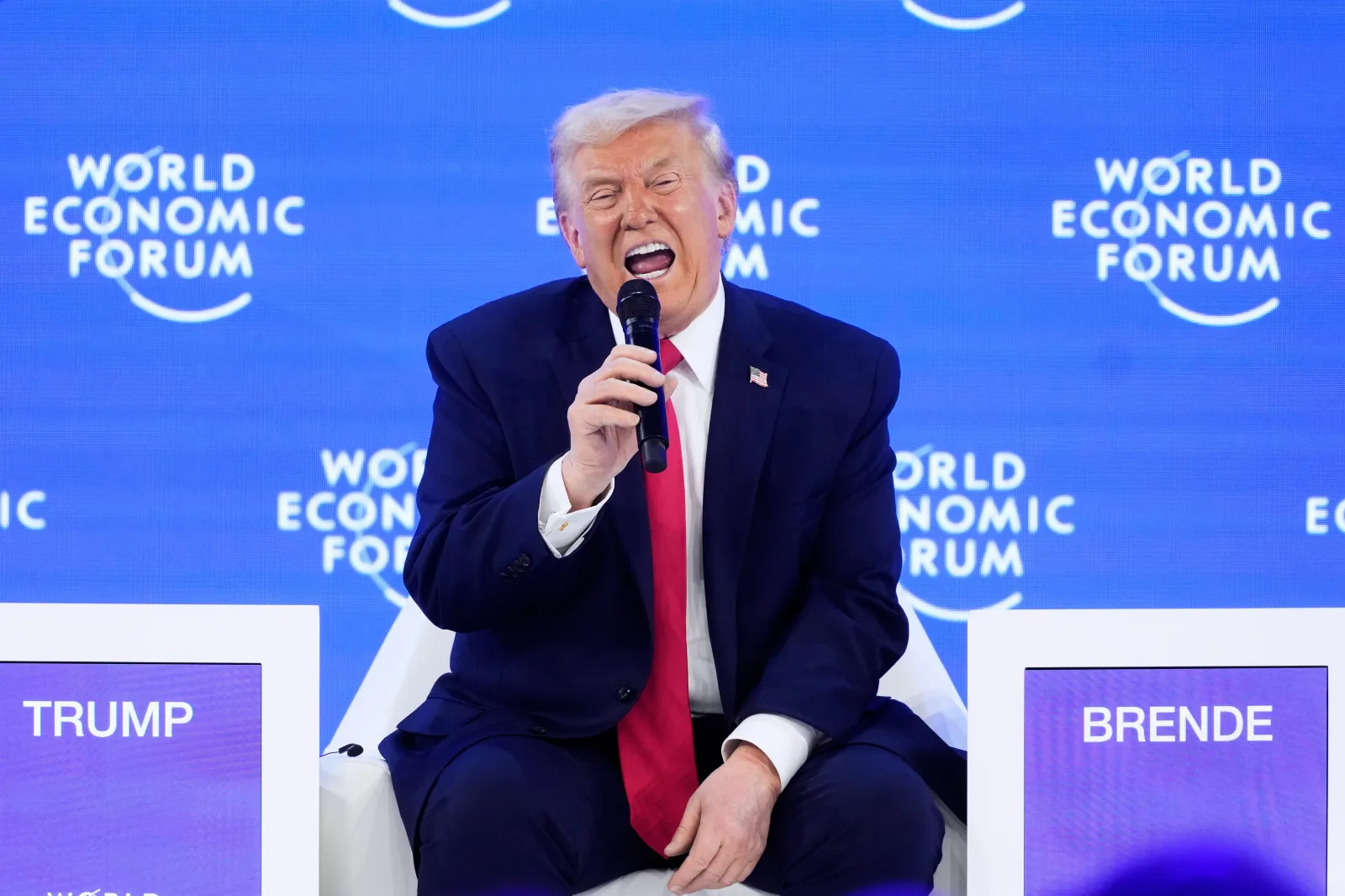
The champagne corks were being popped in Davos when Trump appeared on Fox News Thursday evening to claim the U.S. "never needed" support from European armed forces during the US-led invasion.
Read More on Analysis
Last June, NATO Secretary-General Mark Rutte jokingly dubbed Trump "Daddy" for his successful handling of the Israel-Iran conflict—the commander-in-chief of the world’s most powerful military purring approvingly. Rutte has since been cast as a Trump whisperer, capable of flattering, cajoling, and steadying the alliance.
But Trump remains unconvinced.
False and offensive Afghanistan claims
In his interview with Fox, Trump said of America's NATO allies: "I’ve always said, will they be there if we ever needed them? That’s really the ultimate test, and I’m not sure of that.
"We’ve never needed them. They’ll say they sent some troops to Afghanistan…and they did, they stayed a little back, a little off the front lines."
The backlash was swift. Military leaders, diplomats, and U.S. allies warned that Trump’s rhetoric distorted history and weakened American credibility. At its peak, more than 40 NATO and partner nations deployed to Afghanistan. Allies including the UK, Canada, and Germany suffered heavy losses; 457 British troops were killed.
For veterans, Trump’s remarks landed as an affront—dismissing years of shared sacrifice as freeloading.
The U.S. remains the only NATO member to have invoked Article 5, the alliance’s mutual-defense clause, after 9/11.
As Rutte reminded Trump bluntly: "There’s one thing I heard you say yesterday and today. You were not absolutely sure Europeans would come to the rescue of the U.S. if you will be attacked. Let me tell you, they will, and they did in Afghanistan.
"For every two Americans who paid the ultimate price, there was one soldier from another NATO country who did not come back to his family—from the Netherlands, from Denmark and particularly from other countries."
Greenland debacle
Those remarks came as allies were still recovering from another Trump-made crisis. His dramatic reversal on his push to acquire Greenland at Davos left allies cautiously relieved but still wary of future U.S. intentions. After weeks of ratcheting up pressure—including threats of tariffs on European nations for resisting Washington’s bid to own the semi-autonomous Danish territory and repeated assertions that Greenland was essential to U.S. national security—Trump abruptly backed off the most extreme language during his Davos address.
He ruled out using military force to seize the island and canceled planned tariffs after a meeting with Rutte, framing the shift as the emergence of a "framework" for a future Arctic agreement, while claiming the U.S. would gain "total access" without ownership—a line met with skepticism in Copenhagen and Nuuk, where sovereignty remains non-negotiable.
The U-turn eased immediate diplomatic tensions and halted market jitters triggered by Trump’s earlier brinkmanship, but it did not erase deep mistrust. The damage was done. European capitals, already riled by months of controversial Arctic rhetoric, greeted the detente with guarded optimism—stressing that Greenland must remain under Danish and Greenlandic authority, and that any security cooperation must respect long-standing alliances and laws.
In short, Trump’s Greenland episode may have defused a potential crisis, but it highlighted unpredictable U.S. leadership.
Pro or anti Ukraine?
That unpredictability looms largest over Ukraine.
Trump’s stance has morphed from skepticism to a high-stakes diplomatic gamble. Once criticized for withholding aid, he now claims to be driving a peace deal with Russia, insisting the sides are "reasonably close."
This diplomatic push has culminated in rare trilateral talks in Abu Dhabi involving U.S., Ukrainian and Russian delegations—the first of their kind since the 2022 invasion—underlining both momentum and fragility in the process. Ukrainian President Volodymyr Zelensky has said peace proposals are nearly ready, while Russian officials insist that any deal hinges on Kyiv yielding on territorial issues, especially in the occupied eastern Donbas.
Underlying these discussions is a broader peace framework: a revised 20-point plan backed by the U.S. and Ukraine that outlines security guarantees and postwar reconstruction, although core sticking points—control of territory and Russia’s demands—remain unresolved.
Trump’s oscillating messages—from questioning U.S. commitments to championing a deal—have compounded uncertainty. NATO allies and Kyiv alike are left navigating whether Washington’s evolving approach signals steadfast leadership or transactional disengagement.
World War II gloating
Earlier in his visit to Davos, Trump brought up World War II, claiming: "We won it big."
"Without us, right now you’d all be speaking German and a little Japanese, perhaps," he said.
On one hand it was vintage Trump: provocative and calculated for maximum reaction. On the other, by casting America as the singular savior of Europe, he brushed past the complex reality of Allied sacrifice to score a rhetorical point about modern burden-sharing.
For NATO, the past is no longer just contested. It is being actively weaponized, leaving the alliance more uneasy than ever about what comes next.
View 0 Comments
Submit Correction
View Editorial & AI Guidelines