
...

By Hannah Millington
Health Reporter
0
Share
Newsweek is a Trust Project member
See more of our trusted coverage when you search.Prefer Newsweek on Googleto see more of our trusted coverage when you search.
A GLP-1 drug called orforglipron—taken in pill form once a day—has been shown to help with "significant" weight loss in people with obesity.
In a multinational trial of around 3,000 adults, a 72-week treatment with orforglipron led to reductions in body weight of up to 11.2 percent depending on the dose, with side effects similar to other GLP-1 drugs.
Orforglipron works on the same receptor as semaglutide (licensed for diabetes under the name Ozempic and for weight loss under Wegovy).
Read More on Health
But unlike those drugs, which in pill form have restrictions around the timing of meals and the amount of water you can drink, orforglipron can be taken without restrictions on food or water intake.
"After 72 weeks of treatment, all the patients in the three orforglipron groups had a significant and clinically meaningful dose-dependent reduction in body weight," the authors said in a statement.
...
The study—sponsored by manufacturer Eli Lilly and presented at the Annual Meeting of the European Association for the Study of Diabetes in Vienna this week—shows promise in realizing oral medications for weight loss, which patients may prefer to injections.
"[This is the] first completed phase 3 study of a small molecule GLP-1a. Oral semaglutide is a large molecule," study author Dr. Sean Wharton of Wharton Weight Management Clinic told Newsweek.
Orforglipron is a small-molecule, oral glucagon-like peptide-1 (GLP-1) receptor agonist. "This pill can be easily made, administered and distributed," he added.
In the double-blind trial, a total of 3,127 patients with obesity but not diabetes in the USA, China, Brazil, India, Japan, South Korea, Spain, Slovakia and Taiwan underwent randomization.
The authors examined the safety and efficacy of once-daily orforglipron at doses of 6, 12 or 36 mg, compared with a placebo group, alongside a healthy diet and physical activity for 72 weeks.
The average change in body weight from baseline to week 72 was a 7.5 percent reduction with 6mg of orforglipron, 8.4 percent with 12mg of orforglipron and 11.2 percent with 36mg of orforglipron, as compared with a 2.1 percent reduction among the placebo group.
For those patients in the orforglipron 36mg group, 54.6 percent had a reduction of 10 percent or more of body weight, 36 percent had a reduction of 15 percent or more and 18.4 percent had a reduction of 20 percent or more, compared with 12.9 percent, 5.9 percent and 2.8 percent of the patients, respectively, for the placebo.
"All measured cardiometabolic levels improved with orforglipron treatment as compared with placebo... A weight reduction of 10 percent or more is a recognized therapeutic threshold, one that has been linked to meaningful cardiometabolic benefits," the authors said.
Other outcomes such as waist circumference, systolic blood pressure, triglyceride levels and non-HDL cholesterol levels significantly improved with orforglipron treatment, according to the team.
Adverse events resulted in treatment discontinuation in 5.3 percent to 10.3 percent of the patients in the orforglipron groups and in 2.7 percent of those in the placebo group.
The most common of these events with orforglipron were gastrointestinal effects, which were mostly mild to moderate and consistent with the GLP-1 class of medications, the team said.
...
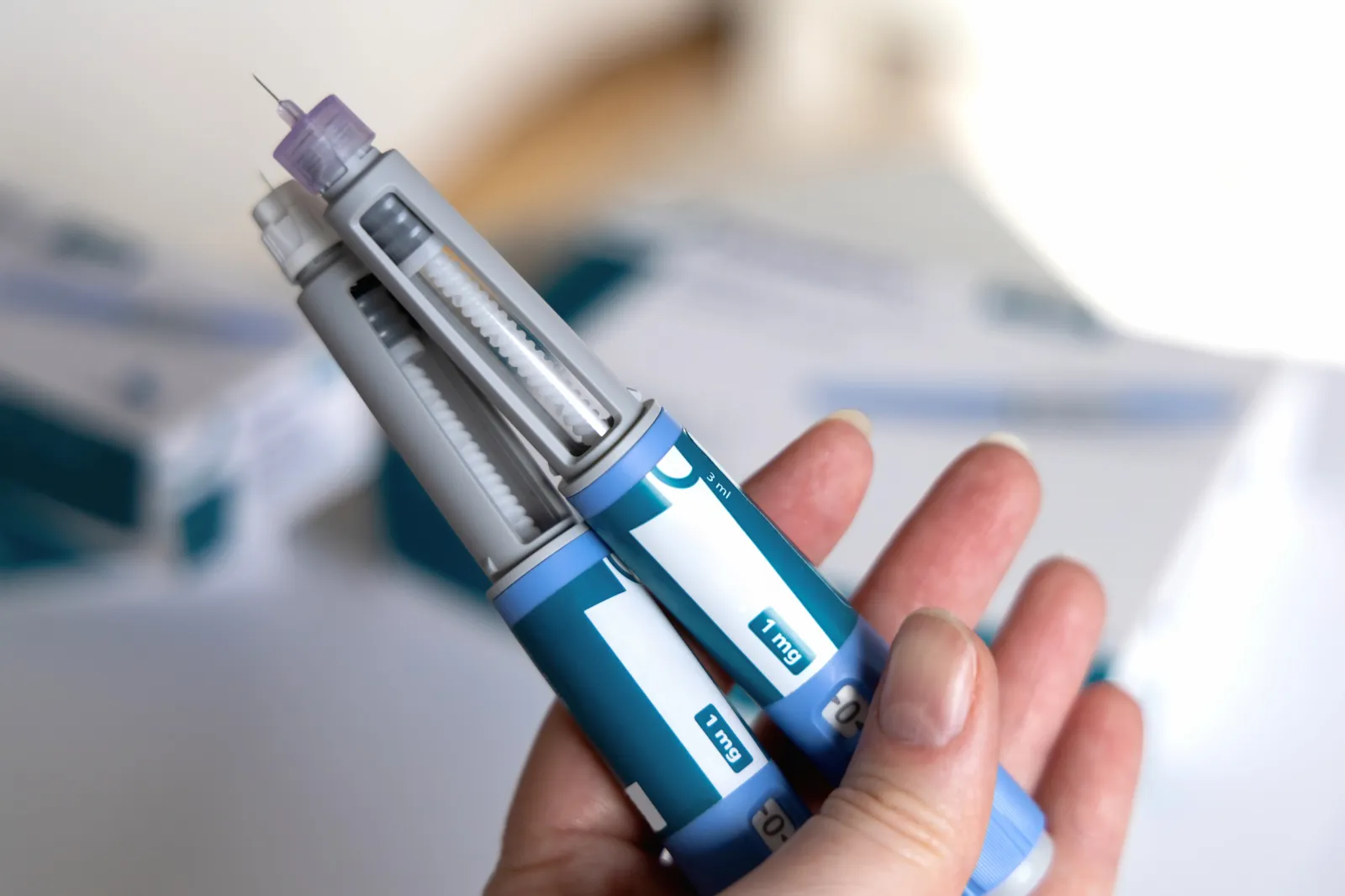
The authors note the use of medications such as GLP-1 receptor agonists (like semaglutide) are reported to result in mean weight reductions of approximately 15 percent to above 20 percent and have shown additional health benefits, including decreased cardiovascular risk.
However, most available GLP-1 based medications are administered as a subcutaneous injection (given to the fat under the skin), which may limit treatment initiation and adherence for some patients.
The authors acknowledge the trial's limitations include the lack of comparison with currently approved obesity-management medications amd the use of cutoffs for BMI inclusion criteria that have been developed in White populations and that exclude patients with lower BMI values who may also have body fat-related risks.
The increasing availability of obesity-management medications could also have an effect on treatment adherence and efficacy results.
However, strengths include the large multinational population cohort—including more than 35 percent enrollment of men.
The new findings "could mean an expansion of obesity interventions to groups who are currently excluded due to the cost of and lack of access to injectable medications," Dr Wharton said in a statement.
Orforglipron is not yet approved by the US Food and Drug Administration (FDA) or other similar agencies worldwide.
Daily Semaglutide Pill Shows Promise
A separate new study suggests a daily pill form of semaglutide is safe and effective.
In research released by Novo Nordisk—developer of the injectable version of the diabetes drug Ozempic—205 participants with obesity took the oral semaglutide pill for 64 weeks alongside 102 participants taking a non-active placebo pill.
The semaglutide group lost an average of 13 percent of their body weight during the study compared to 2.2 percent for the placebo group.
Gastrointestinal issues such as nausea or indigestion were more common for those taking semaglutide, but these problems were generally moderate to mild.
The researchers say this pill could be an effective alternative for people who can't use an injectable drug for various reasons.
An initial oral semaglutide trial used a dose of 50mg, while this used a lower dose of 25mg.
Do you have a tip on a health story that Newsweek should be covering? Do you have a question about weight loss drugs? Let us know via health@newsweek.com.
Reference
Wharton, S., Aronne, L. J., Stefanski, A., Alfaris, N. F., Ciudin, A., Yokote, K., Halpern, B., Shukla, A. P., Zhou, C., Macpherson, L., Allen, S. E., Ahmad, N. N., & Klise, S. R. (2025). Orforglipron, an Oral Small-Molecule GLP-1 Receptor Agonist for Obesity Treatment. New England Journal of Medicine. https://doi.org/10.1056/NEJMoa2511774
Wharton, S., Lingvay, I., Bogdanski, P., Vale, R. D. do, Jacob, S., Karlsson, T., Shaji, C., Rubino, D., & Garvey, W. T. (2025). Oral Semaglutide at a Dose of 25 mg in Adults with Overweight or Obesity. New England Journal of Medicine, 393(11), 1077–1087. https://doi.org/10.1056/NEJMoa2500969
View 0 Comments
Submit Correction
View Editorial & AI Guidelines