10
Loading video...

By Hannah Parry
Associate News Editor
0
Share
Newsweek is a Trust Project member
See more of our trusted coverage when you search.Prefer Newsweek on Googleto see more of our trusted coverage when you search.
Maryland is tightening its rules for data centers, joining a growing number of states pushing back on the industry's demands for power, water and land.
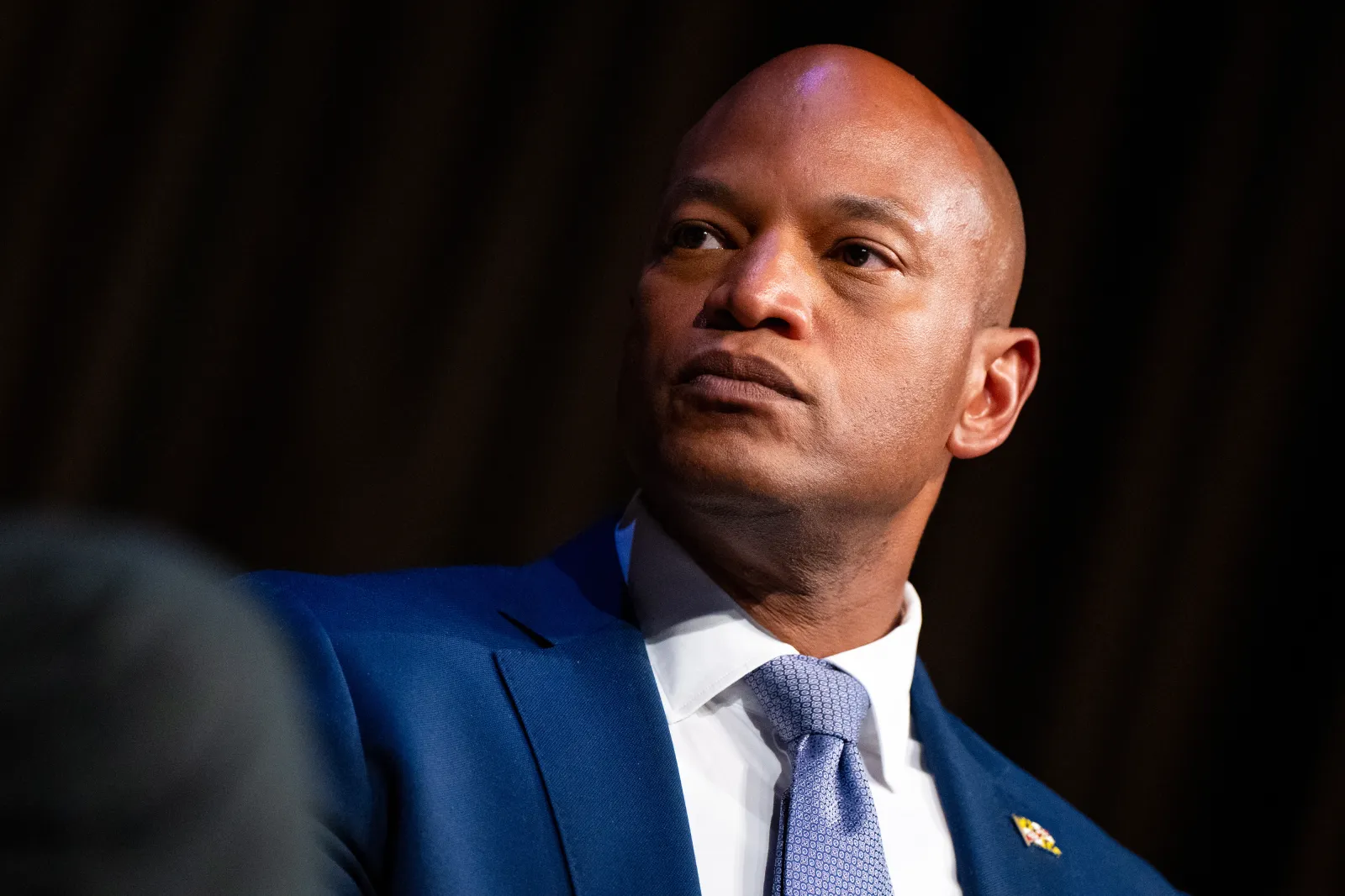
On Wednesday, Democratic Governor Wes Moore signed an executive order establishing a statewide framework for large data centers, requiring projects of 25 megawatts or more seeking state action to undergo a standardized review of their effects on the electric grid, water supplies, communities and the state's economy.
"Truthfully, the people are fed up, and so am I," Moore told WTOP.
Read More on News
The order creates a state task force to review projects. It also establishes a public dashboard that will disclose information, including a project's location, developer, expected electricity demand and water use, requested state approvals, and the task force's determination.
"Marylanders will be able to see what a company has proposed, how much electricity and how much water it expects to use, and how it plans to meet those needs," Moore said.
The approach puts Maryland in the middle of a rapidly changing national debate over an industry that states once competed aggressively to attract.
Texas, meanwhile, has taken a different approach. Republican Governor Greg Abbott has directed the Texas Commission on Environmental Quality to stop issuing permits sought by data centers while state agencies conduct audits of their electricity and water demands.
The two states illustrate the choices now confronting policymakers as artificial intelligence drives demand for enormous new computing facilities: impose a pause, impose new conditions, or continue trying to attract data center investment while making developers pay more of the costs.
...
How Is Maryland Reacting to Data Centers?
Moore's executive order creates what his administration describes as one standard, one review process and one public record for large data centers seeking state action.
Projects are set to be evaluated against five principles:
- protecting taxpayers and the electric grid
- delivering economic benefits to Marylanders
- giving communities a voice
- protecting the environment
- increasing transparency and accountability
The task force is expected to include representatives from the Maryland Energy Administration and the departments of commerce, labor, environment, natural resources, agriculture and planning.
The group would issue a written determination for each project: "Aligned," "Conditionally Aligned" or "Not Aligned." The state's public dashboard is supposed to be updated monthly.
The order also directs the administration to incorporate the new standards into the state's existing data-center incentive process to the extent allowed by law.
Moore said Marylanders "deserve a real say in what happens in their communities, and truthfully, that is just common sense. Local governments know their communities better than anybody."
Moore is separately asking the General Assembly to repeal Maryland's data-center sales and use tax exemption, which dates to 2020. That would require legislative action as the executive order itself does not repeal the exemption.
Texas Takes a More Immediate Approach
Texas has taken a more direct approach to slowing data-center development. On September 21, Abbott ordered the Texas Commission on Environmental Quality, or TCEQ, to halt permits until state regulators complete their audits of the industry's demands on the state's power grid and water supplies.
The order applies to regulatory approvals related to data-center development and requires TCEQ to use information from the audits when considering future permits.
The pause builds on a directive Abbott issued in August, when he ordered the Public Utility Commission of Texas and the Electric Reliability Council of Texas, known as ERCOT, to conduct a comprehensive audit of data centers seeking connections to the state's electric grid. Projects that fail to comply with the audit requirements can be denied grid connections.
The audits are intended to give regulators a much clearer picture of what individual projects will require. Data centers must provide information about projected electricity consumption, plans for generating their own power, water use and sources, cooling technology, tax incentives and other public assistance, and measures to address effects on nearby communities, including noise, traffic and setbacks. Ownership information is also part of the review.
Related Story

Police Officer Accused of Using Flock Cameras To Secretly Track Women
Related Story

Where America’s Revolt Against Data Centers Could Shape Key Senate Races
Water has become a particular focus. Abbott directed the Texas Water Development Board in September to enforce existing water-use reporting requirements and to work with ERCOT on the broader audit. The governor's latest order says data centers must not use water needed by local communities and must report their electricity and water consumption.
The state's concern is partly about scale. ERCOT was tracking more than 474 gigawatts of requests to connect to the Texas grid in August, more than five times the state's record peak electricity demand, according to Abbott's office. The governor said roughly 90 percent of the new power requests were associated with data centers.
Texas has also been trying to ensure that data centers, rather than ordinary electricity customers, bear more of the cost of the infrastructure needed to serve them. Abbott has directed regulators to require data centers to cover their electrical infrastructure costs and has said he wants to eliminate financial incentives for the industry in the next legislative session.
The pause is not necessarily permanent. Its duration is tied to the completion of the state audits and the collection of information regulators say they need to evaluate projects. TCEQ has been directed to provide the governor with an update on its compliance by October 19.
Which States Have Data Center Moratoriums?
The push to slow data-center development has spread across the country, but relatively few states have enacted a statewide moratorium. Maryland considered a moratorium this year, but legislation that would have barred new data-center construction or permits failed.
New York became the first state to impose a one-year statewide moratorium on new hyperscale data centers, with the pause applying to facilities whose peak electric demand exceeds 50 megawatts while the state develops a broader regulatory framework. It represents the most significant statewide pause among the states tracked by the National Conference of State Legislatures (NCSL).
Texas is now operating under Abbott's executive pause on state permits while its grid and water reviews proceed.
Meanwhile, Delaware, Georgia, Michigan, New Jersey, Pennsylvania, South Carolina and Vermont have all introduced legislation that would temporarily halt data-center approvals or construction, or give governments greater authority to block projects. The bills still remain at various stages in the legislative process. Virginia is also considering a temporary halt tied to the state's electricity grid. Its legislation would restrict final approval of new data centers until existing grid interconnection requests are addressed or until 2028.
The details vary considerably. Some proposals would halt permits for a defined period; others target facilities above a particular power threshold or would suspend approvals until regulators complete studies.
What Are Other States Doing?
A large number of states are choosing something between a full stop and business as usual.
Nevada Governor Joe Lombardo, a Republican, signed an executive order last week requiring data centers to pay local school support taxes in full, cover project-related energy costs and protect water resources.
According to S&P Global, eight states moved between May and August to pause or repeal data-center sales-tax exemptions or similar benefits. Arizona, Illinois, Massachusetts and Ohio paused exemptions or benefit programs, while Maine, Minnesota and Nebraska repealed them. Pennsylvania and Delaware have also tightened requirements around data-center development.
The policy debate is therefore no longer simply "build or don't build." States are experimenting with taxes, power requirements, water rules, local approval, community benefits, environmental standards and disclosure requirements.
Yet, despite the backlash, some states are still courting data centers, which can provide billions of dollars in construction and infrastructure investment, along with jobs and new demand for electricity and related services.

...
In Colorado, lawmakers introduced a bill earlier this year that would have created a state data-center development authority and offered certified projects a 100 percent state sales and use tax exemption on qualifying equipment and infrastructure. In exchange, projects would have had to meet requirements involving investment, jobs, energy efficiency, water stewardship and utility planning. The bill was postponed indefinitely by a House committee on May 7.
In Rhode Island, lawmakers introduced a bill proposing a tax-incentive approach to data-center development. It is still in the legislative process.
Other states continue to offer incentives that can apply to data centers even without passing a new data-center-specific bill this year. NCSL reported in August that 38 states offered some form of preferential tax treatment for data centers, even as at least 13 states considered rolling those incentives back.
Why Are Some Americans Against Data Centers?
Opposition to data centers often concerns local costs. Large facilities can require enormous amounts of electricity and, depending on their cooling systems, water. Residents have also raised concerns about noise, traffic, land use and the conversion of farmland or other open space.
The economic benefits can be significant, particularly during construction, but critics question how many permanent jobs facilities create compared with the amount of land, power and public infrastructure they require.
Electricity has become one of the biggest concerns. As utilities build new generation and transmission capacity to accommodate rapidly growing demand from data centers, policymakers are debating how much of those costs should be paid by the companies building the facilities and how much could ultimately be borne by other customers.
Those concerns have helped turn data centers from a relatively obscure economic-development issue into a local political fight in communities across the country.
Is There a Political Divide on Data Centers?
There are partisan differences in how politicians talk about the issue, but the data-center debate does not fall neatly along Democratic-versus-Republican lines.
Democratic governors such as Moore and Abigail Spanberger of Virginia are pursuing tighter state oversight, while Republican officials are also moving to restrict data center development.
At the same time, some Democrats and Republicans continue to support data-center development because of the investment and economic activity it can generate.
The divide is increasingly less about whether artificial intelligence should exist and more about who pays for the infrastructure needed to support it, who gets the economic benefits, and how much authority local communities should have over projects in their backyards. That has made electricity rates, water consumption and land use central political issues.
The issue is also unfolding weeks before the 2026 midterm elections, putting greater pressure on politicians to respond to voters' concerns.
The timing is particularly visible in Texas, where Abbott's increasingly restrictive actions come amid his reelection campaign. The Texas Tribune reported that the governor's September move followed growing community opposition to data-center development.
In Maryland, Moore is also seeking reelection in November and must defend an executive order that imposes new standards but stops short of the statewide moratorium he recently said he would sign if lawmakers sent one to his desk. His Republican opponent, former Delegate Dan Cox, has criticized the timing of the order. Moore's campaign, in turn, has highlighted Cox's role as a sponsor of the 2020 legislation that created the data-center tax exemption.
Those competing claims are part of a broader argument over whether Maryland's previous strategy of attracting data centers went too far and who bears responsibility for it.
What Trump Has Said About AI and Data Centers
President Donald Trump has generally advocated rapid expansion of the country's AI infrastructure, criticizing state-level pauses on data-center construction.
The White House's 2025 AI Action Plan called for faster permitting of data centers and energy infrastructure and argued that building the infrastructure needed for AI was important to U.S. technological and economic competitiveness.
Trump subsequently signed an executive order intended to accelerate data-center infrastructure, including by streamlining federal environmental reviews and permitting and making financial support available for qualifying projects. But his administration has also addressed the concern that data centers could shift their infrastructure costs onto ordinary electricity customers.
In March, the White House announced a Ratepayer Protection Pledge signed by major technology companies, including Amazon, Google, Meta, Microsoft, OpenAI, Oracle and xAI. The companies pledged to build, bring or buy additional power and cover power-delivery infrastructure upgrades associated with their data centers.
Trump directly criticized Abbott's pause on new grid connections, saying in August that he thought Texas' opposition to data centers was "a mistake" and arguing that other communities wanted the investment.
While governors from both parties are increasingly focused on local costs, Trump has touted the proposed economic benefits, saying communities opposing data centers could "kill the Golden Goose."
Contact Newsweek editors on this story: Samantha Beech and Shakeema Edwards.
View 0 Comments
Submit Correction
View Editorial & AI Guidelines