...

By Giulia Carbonaro
Senior Reporter
0
Share
Newsweek is a Trust Project member
See more of our trusted coverage when you search.Prefer Newsweek on Googleto see more of our trusted coverage when you search.
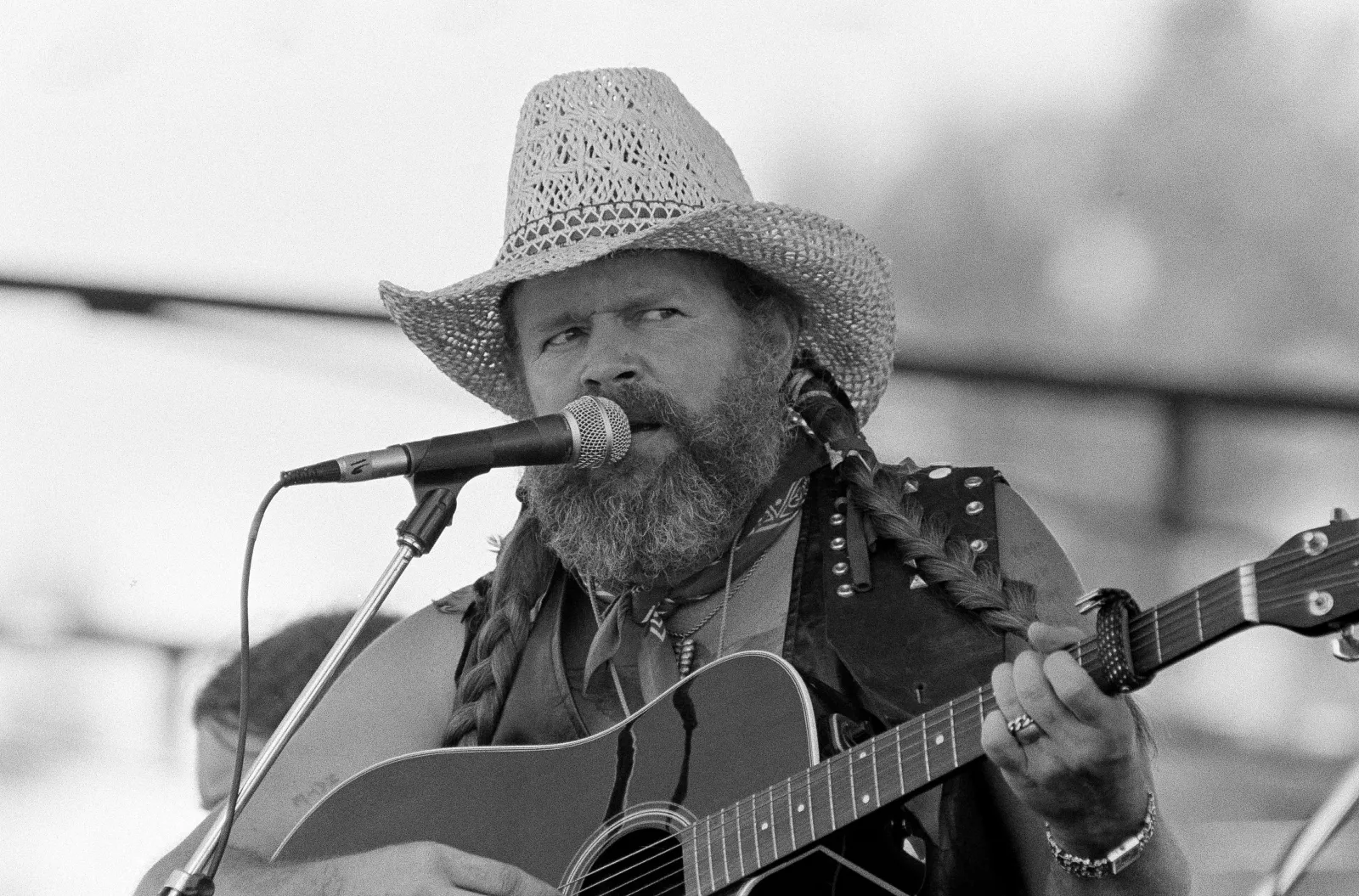
David Allan Coe, the legendary country singer-songwriter famed for his songs including "You Never Even Called Me by My Name" and "The Ride," has died at the age of 86.
Coe's death was confirmed by his widow, Kimberly Hastings, who said he passed away on Wednesday, April 29. A representative told People that he died at around 5 p.m., but the cause of death was not disclosed.
Hastings, who was Coe's sixth wife, told Rolling Stone that her husband was "one of the best singers, songwriters, and performers of our time [and] never to be forgotten."
Read More on News
"My husband, my friend, my confidant and my life for many years. I'll never forget him and I don't want anyone else to ever forget him either," she said in a written statement.
...
What To Know
Born September 6, 1939 in Akron, Ohio, Coe was in and out of reform schools, correction centers, and prisons from the age of 9 until the late 1960s, serving time for charges ranging from grand theft auto to possession of burglary tools.
It was during his incarceration between 1963 and 1967 that he turned seriously to music, and later moved to Nashville, where he started his career busking. He later found fame in the 1970s as part of the outlaw music scene, where he built his own image and myth around the time he spent in prison.
Coe claimed to have killed a fellow inmate with a mop bucket in the fall of 1963 after the man had threatened to assault him in the prison showers, and to have spent time on death row for it; but research later revealed that he never served time for murder.
Regardless, his time behind bars became crucial to his songwriting and his career. His debut album, Penitentiary Blues, reflected his experiences in prison and set the tone for a career defined by raw, autobiographical storytelling. He went on to release more than 40 albums throughout his career.
"I'd have never made it through prison without my music," he told The Associated Press in 1983. "No one could take it (music) away from me. They could put me in the hole with nothing to do but I could still make up a song in my head."
He was perhaps best known as the writer of "Take This Job and Shove It," a 1977 hit for Johnny Paycheck that became an enduring blue-collar anthem. It inspired a film of the same title in 1981.
Coe recorded a number of his hits over the decades, including "Mona Lisa Lost Her Smile" and "Longhaired Redneck."
Despite his musical success, Coe remained a polarizing figure. Some of his underground recordings in the late 1970s and early 1980s drew criticism for offensive and explicit content, including racist and misogynistic themes. Coe denied being racist, but acknowledged controversy followed him throughout his career.
Coe collaborated and toured with artists such as Willie Nelson, Neil Young and Kid Rock, and is widely credited as one of the genre’s most distinctive voices.
In later years, Coe faced legal troubles and was ordered to pay the Internal Revenue Service nearly $1 million in 2016 for obstructing the agency and was sentenced to three years' probation.
View 0 Comments
Submit Correction
View Editorial & AI Guidelines