
...

By Jesus Mesa
Reporter
0
Share
Newsweek is a Trust Project member
See more of our trusted coverage when you search.Prefer Newsweek on Googleto see more of our trusted coverage when you search.
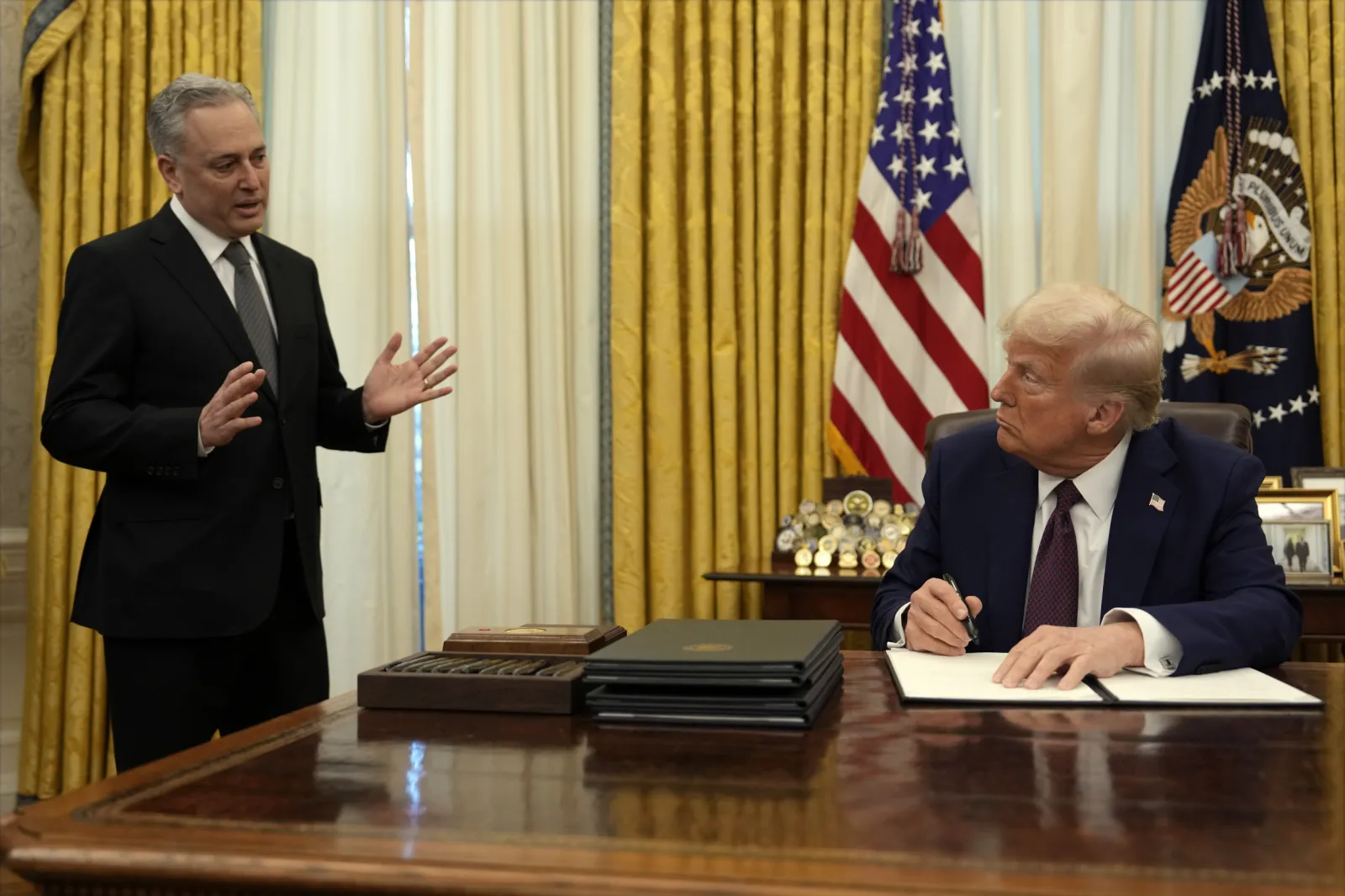
President Donald Trump's weekend announcement of a U.S. Strategic Crypto Reserve has shaken financial and political circles. Supporters see it as a bold move to make America the "Crypto Capital of the World," as Trump promised, while critics warn of potential conflicts of interest—especially involving David Sacks, Trump's newly appointed AI and crypto czar.
Trump said the reserve will buy well-known digital assets like Bitcoin (BTC) and Ethereum (ETH), along with lesser-known coins such as XRP, Solana (SOL), and Cardano (ADA).
In January, Trump directed a Presidential Working Group on Digital Assets to explore the creation of a national crypto stockpile—a stark contrast to the regulatory crackdowns of the previous administration.
Read More on Politics
No Conflict of Interest, Sacks Says
But the selection of these specific cryptocurrencies has led to scrutiny, particularly regarding David Sacks, a billionaire venture capitalist who backed Trump during the 2024 campaign and who was appointed to oversee crypto policy.
Sacks is a Silicon Valley investor known for his early backing of PayPal, and through his venture firm Craft Ventures, he has invested in Bitwise Asset Management—one of the largest crypto index fund providers.
Notably, Bitwise's top holdings include Bitcoin, Ethereum, Solana, XRP, and Cardano—the exact assets named by Trump for inclusion in the strategic reserve.
A spokesperson for Craft Ventures told Newsweek the firm had sold all its Bitwise holdings prior to the start of the new administration.
...
This relationship has fueled allegations of self dealing on social media. Critics argue that a government-backed reserve of these assets could significantly boost their valuations, directly benefiting funds like Bitwise and their investors. While Sacks insists he has divested his personal crypto holdings, questions remain about the extent of his indirect exposure to these assets, such as whether he has invested in other start-ups that could have exposure to the cryptocurrencies listed for inclusion in the strategic reserve.
The Craft Ventures spokesperson told Newsweek Sacks was no longer an investor in Bitwise and referred back to his comments on X, where he has forcefully denied any conflict of interest, adding that he sold all his personal Bitcoin, Ethereum, and Solana holdings before joining the administration.
In a follow-up thread on X, Trump's crypto czar said he also sold a $74,000 position in the Bitwise ETF on January 22 and refuted claims he has "large indirect holdings" that would stand to benefit from a strategic crypto reserve, saying he would provide more information "at the end of the ethics process."
Market and Political Reaction
Trump's announcement triggered a crypto market surge of over $300 billion in total capitalization, with the assets mentioned in his Truth Social announcement seeing double-digit gains on Monday. Cardano soared by more than 60 percent, while Solana and XRP also experienced major spikes. For critics, the timing is too convenient.
"How much input did David Sacks have on which tokens are going into the strategic reserve? Did Sacks let his portfolio company know this announcement is coming?" asked Derek Martin, founder of Pathfinder Research, a research and intelligence firm, on X.
Financial analyst Gordon Johnson called the market reaction "driven by corruption," while the progressive independent journalist Ryan Grim went further, describing the reserve plan as "a direct transfer of wealth from the U.S. Treasury to David Sacks and other crypto barons."
He likened it to the monopolies of the 19th century, writing, "The railroad and coal tycoons could never have dreamed of a heist like this."
Adding to the concerns of self-dealing, on-chain analysts detected a $200 million leveraged trade on Bitcoin and Ethereum just one day before the announcement. It is unclear who executed that trade.
Even within Trump's own camp, reactions have been mixed. "It's wrong to steal my money for left-wing grift; it's also wrong to tax me for crypto bro schemes," wrote Joe Lansdale, a venture capitalist and Trump supporter who is also a close associate of Elon Musk.
'Step Toward Legitimization'
Not everyone is crying foul. Crypto industry leaders see the reserve as a historic validation of the burgeoning class of digital assets and another Trump campaign promise kept. The president pledged to establish a federal "Bitcoin stockpile" on the trail and also signaled a more relaxed regulatory approach to the sector.
"This signals a shift toward active participation in the crypto economy by the U.S. government," said Federico Brokate of 21Shares, adding that it could accelerate institutional adoption and strengthen America's leadership in digital assets.
Charles Hoskinson, co-founder of Cardano, defended the selection process when economist Peter Schiff questioned XRP's inclusion. "XRP is great technology with a strong community," Hoskinson shot back. "The president made the right decision."
Meanwhile, crypto-related equities initially reacted positively to the news. Shares of Coinbase and Robinhood, both heavily exposed to the crypto space, rallied Monday morning before pulling back. The price of Bitcoin, seen as a bellwether for the broader crypto space, spiked by about $9,000 in the hours after Trump's Sunday post, though it has since pared those gains.
...
But even within the crypto world, support for the federal government's involvement in a strategic reserve has not been uniform. Bitcoin purists argue that any U.S. strategic reserve should hold Bitcoin and nothing else, warning that adding altcoins like XRP, SOL and ADA dilutes the asset's reputation as the most battle-tested store of value.
Schiff, one such bitcoin maximalist, argued the U.S. should hold "Bitcoin only" if it holds any crypto at all, criticizing the inclusion of "riskier" altcoins.
"I get the rationale for a Bitcoin reserve. I don't agree with it, but I get it. We have a gold reserve. Bitcoin is digital gold, which is better than analog gold. So let's create a Bitcoin reserve too. But what's the rationale for an XRP reserve? Why the hell would we need that?" Schiff posted on X.
Tyler Winklevoss, CEO of crypto exchange Gemini and another Trump backer, also criticized the plan, arguing that Bitcoin should be the main asset.
"I have nothing against XRP, SOL, or ADA, but they don't belong in a Strategic Reserve. Only one digital asset meets the bar, and that's Bitcoin," he posted on X Monday.
Calls for Oversight
Democratic lawmakers appear to see an opening amid the debate. Senator Elizabeth Warren has called for an ethics review, signaling a possible investigation into whether the reserve plan unfairly benefits private entities.
The controversy comes ahead of the White House's first Crypto Summit, scheduled for Friday and chaired by Sacks. With Congress still needing to approve the plan for a crypto reserve, the debate over its beneficiaries could determine its fate.
If enacted, the federal government directly buying up crypto assets would be a first, signaling a major shift in fiscal strategy. Some analysts predict it could drive global adoption of crypto as a sovereign asset. Others caution that government involvement in digital markets could lead to manipulation, favoritism, and regulatory uncertainty.
Jason Calacanis, a venture capitalist who co-hosts the influential "All In" podcast — along with Sacks, among others — called Trump's announcement of a crypto reserve a "terrible idea to spend tax payer money buying the crypto bags of the people who donated many millions to him," arguing it would expose the administration to "endless investigations" and distract from the president's mission of exerting a message of fiscal discipline.
"This will be the issue that derails his second term," Calacanis predicted on X.
Update 3/3/25 9:45 p.m. ET: This story has been updated with new comment from David Sacks' spokesperson.
View 0 Comments
Submit Correction
View Editorial & AI Guidelines