
...

By Jesus Mesa
Reporter
0
Share
Newsweek is a Trust Project member
See more of our trusted coverage when you search.Prefer Newsweek on Googleto see more of our trusted coverage when you search.
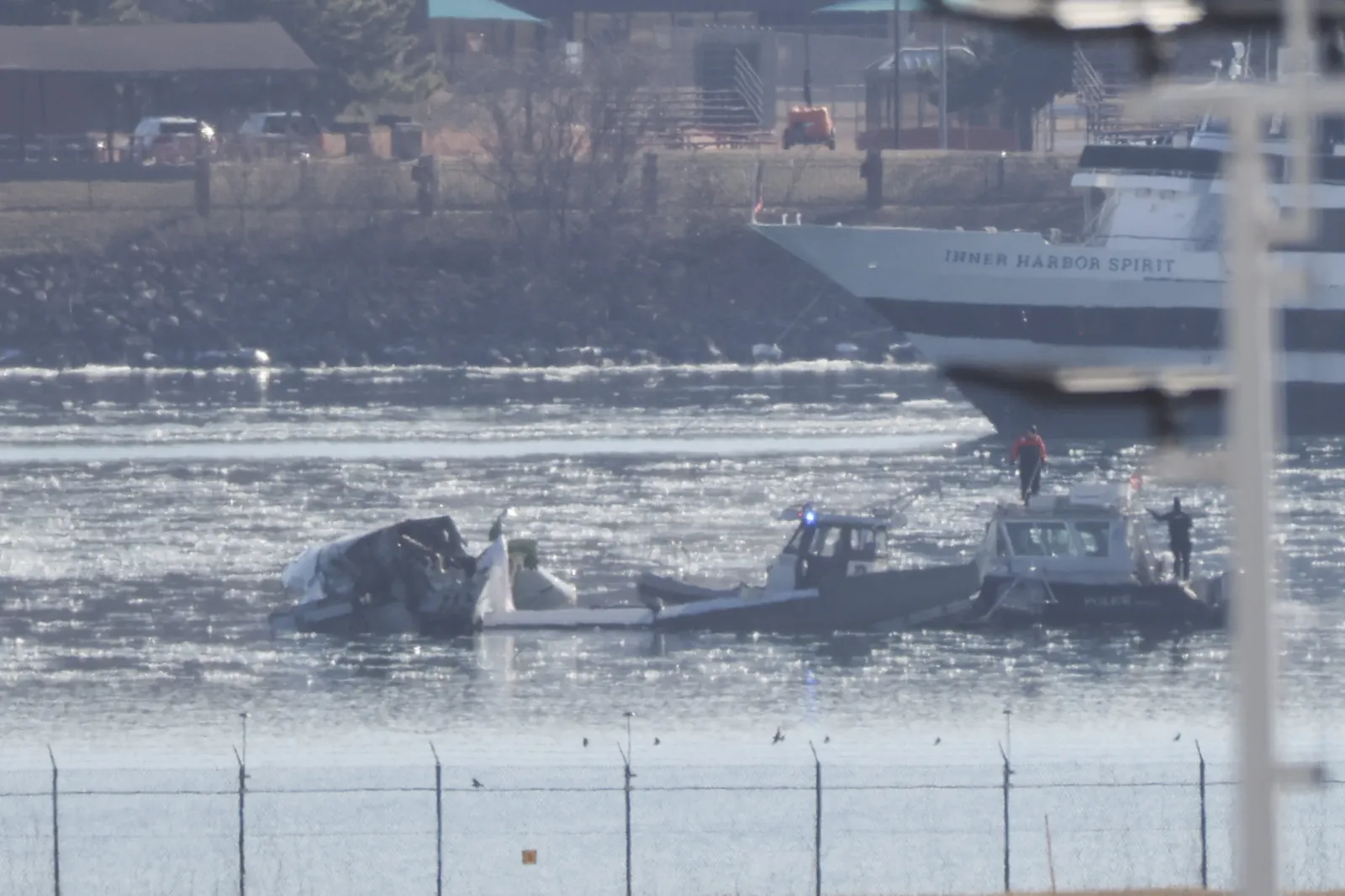
A midair collision between a U.S. Army Black Hawk helicopter and an American Airlines regional jet approaching Washington, D.C.'s Reagan National Airport has sparked urgent concerns about air-traffic safety, as experts work to determine if something went wrong with the flight's Traffic Collision Avoidance System (TCAS).
The crash, the first commercial air disaster in the U.S. in 15 years, killed 67 people in both aircraft, according to officials.
Dan Bubb, a former airline pilot and aviation historian, told Newsweek that the aviation community was stunned that such a collision could occur under seemingly clear and controlled conditions.
Read More on U.S.
"Many of us pilots are still perplexed because, usually, when passenger jets are on short final approach to the runway, they have all their lights on, including landing lights. It's really hard not to see them. If you look at the video, it looks like the helicopter flew right into the back of the passenger jet," Bubb said.
A Busy and Complex Airspace
Reagan National Airport, shoehorned into a slice of land on the western banks of the Potomac directly south of the White House, operates in one of the most congested airspaces in the country, where military, commercial and private aircraft share limited flight corridors. The Washington Post described the region as a "beehive of activity," with air traffic controllers and pilots relying on strict procedures and safety mechanisms to prevent collisions.
...
The Black Hawk was reportedly flying in a designated low-altitude corridor along the Potomac, a route commonly used by military and Coast Guard aircraft. Air traffic controllers had been in communication with both the helicopter and the passenger jet before the collision, and the helicopter pilot had acknowledged instructions to maintain visual separation from the approaching airliner.
Despite these safeguards, the two aircraft still collided.
Did TCAS Fail?
One of the biggest questions arising from the crash is whether TCAS, a system designed to prevent midair collisions such as this one, failed to warn the pilots of the jetliner in time. TCAS alerts pilots to potential conflicts and provides automated commands to avoid crashes.
Retired American Airlines pilot Doug Rice told NBC News that TCAS is not fully effective below 700 feet—the estimated altitude of the collision. As planes approach landing, TCAS alerts can be suppressed to reduce unnecessary distractions, meaning the system may not have provided a timely warning that the Black Hawk was approaching.
However, Bubb noted that some witnesses reported seeing the airplane in a steep bank turn before the helicopter struck it, followed by a trail of sparks.
"That tells me the helicopter was on the TCAS of the passenger plane, and the pilot tried to avoid it, but it was too late," Bubb told Newsweek.
While it is too early to assign blame, Bubb emphasized that the nature of the crash is highly unusual. Preliminary details suggest human error may have played a significant role.
"That airspace is some of the most tightly controlled in the country, so it's really hard to understand what prompted the helicopter pilot's actions. Did they have a medical episode? There are so many possibilities."
...
What People Are Saying
Former President Donald Trump, in a Truth Social post on Wednesday: "The airplane was on a perfect and routine approach to the airport. The helicopter was going straight at the airplane for an extended period of time. It was a CLEAR NIGHT, the plane's lights were blazing—why didn't the helicopter go up, down, or turn? Why didn't the control tower tell the helicopter what to do instead of just asking if they saw the plane? This is a bad situation that looks like it should have been prevented. NOT GOOD!!!"
American Airlines CEO Robert Isom, in a video statement: "This is a difficult day for all of us at American Airlines. Our focus now is entirely on the needs of our passengers, crew members, partners, first responders, and, most importantly, their families and loved ones."
Robert Clifford, aviation attorney, speaking to Newsweek: "The FAA must immediately suspend all helicopter flights in the airspace of Reagan National Airport until the investigation is complete and any NTSB recommendations are implemented. The risks are simply too high."
What Happens Next
Federal investigators led by the NTSB will now work to piece together the moments leading up to the collision, examining communication between the aircraft and air traffic controllers, as well as any loss of altitude by the jet.
Neither black box has been recovered as of midday Thursday.
View 0 Comments
Submit Correction
View Editorial & AI Guidelines