...

By Jordan King
Reporter
0
Share
Newsweek is a Trust Project member
See more of our trusted coverage when you search.Prefer Newsweek on Googleto see more of our trusted coverage when you search.
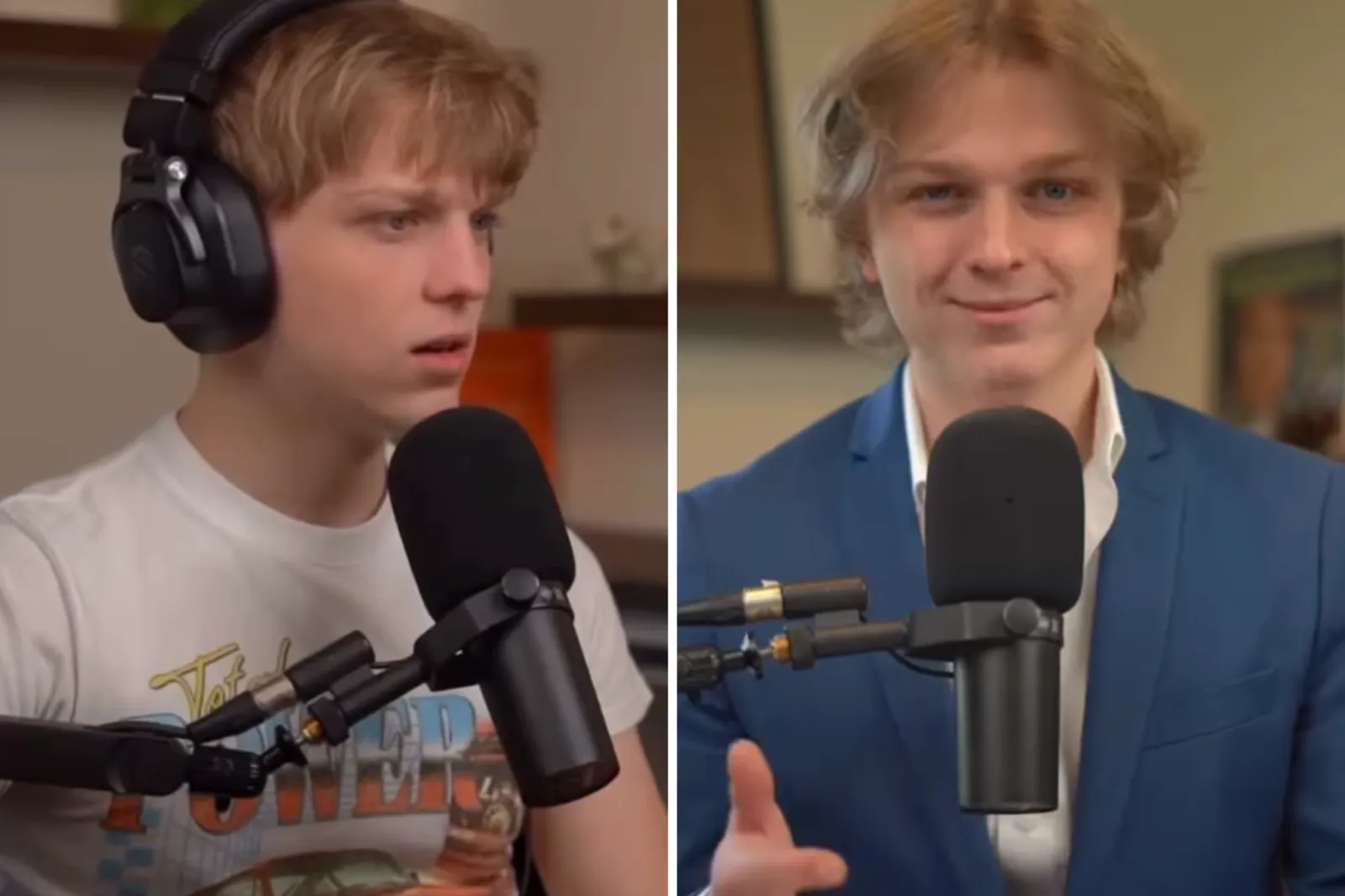
Liberal commentator Dean Withers said he faced death threats and that a fake TikTok account made false rape allegations against him.
Withers, who featured on the popular web series Surrounded, wrote on social media: "Right wing twitter has decided to peddle a false rape allegation against me all over the time line.
"This allegation originates from a FAKE TikTok account named 'Emily,' this account stole the identity of a minor from Australia to pretend to be a girl. MAGA knows NO low."
Read More on News
Newsweek has contacted Withers and the Grand Junction Police Department for comment.
...
He shared a video taken from TikTok in which a voice can be heard saying over screenshots of the "Emily" account: "I'm the girl whose photos were being used in Emily's videos. ... I'm now getting multiple DMs and comments about this whole situation, and I wanted to let you guys know that I'm not involved in any of this and I didn't make any of these videos."
Withers later said on his YouTube channel that someone called his local police department and said they were "on their way to my house with a bomb to kill me."
"So I went out front, and I sat in a chair with my 9 mm at my hip, waiting for somebody to show up at my house to try to kill me," he said.
"But that was just a precaution. I knew that chances were it was fake. Luckily, it was fake. Instead of somebody showing up at the house to kill me, the cop showed up, and I spoke with him for a while," he continued.
Newsweek has not independently verified either the allegations against Withers or his account of the threat.
Who Is Dean Withers?
Withers, 21, has built a large online following by debating conservative activists and voters on subjects such as abortion, LGBTQ+ rights and the 2024 presidential election.
A philosophy student from Grand Junction, Colorado, he rose to national prominence in 2024 on Surrounded, a Jubilee series on YouTube in which a featured participant debates a succession of ideological opponents.
He first appeared among a group of liberal students debating conservative activist Charlie Kirk before becoming the focus of an episode in which he faced 20 supporters of then-Republican presidential nominee Donald Trump. The latter video received millions of views and accelerated the growth of Withers' audience on TikTok and other platforms.
Withers has said he was raised in a conservative family in rural Colorado and once held similar political views. He attributed his shift to the left to conversations with liberal friends and further research into political and social issues.
"The predominant reason I have these conversations isn't to convince the person that I'm talking to," he told GQ in 2024. "It's to convince people that are listening and that share the same beliefs as the person that I'm talking to."
That strategy has given Withers a substantial audience beyond the debate programs where he first attracted widespread attention. He has almost 500,000 followers on X, 3.6 million followers on Instagram and 7.4 million followers on TikTok.
Political Debate in the Viral-Video Era
Withers' rise reflects a broader change in how younger Americans encounter political news. About 37 percent of U.S. adults under 30 regularly receive their news from social media influencers, according to the Pew Research Center. The Reuters Institute for the Study of Journalism found that personalities can attract more attention than traditional news organizations on some social and video platforms.
Political commentators can build audiences without the staff, reporting infrastructure or editorial controls associated with established news outlets. Livestreams, confrontational debates and rapid-response videos also generate short clips that can circulate independently, allowing a single exchange to reach viewers who never encounter its original context.
That distribution model helped make Withers prominent, but it can also expose public figures to misleading edits, impersonation and unsupported claims.
An allegation originating with a small or anonymous account can consequently receive far greater exposure when established commentators repeat it. Reposting purported screenshots, messages or witness accounts across several platforms may give material an appearance of corroboration even when each post can be traced to the same unverified source.
The circumstances described by Withers—including the alleged use of another person's photographs and amplification by his political opponents—resemble methods used in online impersonation and harassment. Newsweek has not established that the allegation was part of a coordinated campaign or identified who created the account at the center of Withers' claims.
Such episodes can also be difficult to reconstruct after the fact. Accounts can be deleted, usernames changed and posts removed, while screenshots may combine authentic profile photographs with text whose origin cannot be independently established. Visibility across multiple platforms is therefore not evidence that a claim has been independently verified.
Contact Newsweek editors on this story: John Fitzpatrick and Shakeema Edwards.
View 0 Comments
Submit Correction
View Editorial & AI Guidelines