

By Jesus Mesa
Reporter
0
Share
Newsweek is a Trust Project member
See more of our trusted coverage when you search.Prefer Newsweek on Googleto see more of our trusted coverage when you search.
Iowa Democrats emerged from Tuesday's primaries with candidates in place for two competitive statewide races and a simple argument: that a struggling farm economy, two open Republican-held seats and record organizing could give the party its best shot at the state in more than a decade.
In the Senate race, State Representative Josh Turek won the Democratic primary against state Senator Zach Wahls, setting up a fall matchup against Republican U.S. Representative Ashley Hinson for a seat Democrats have not held since 2008. Both parties agree the race could help decide Senate control.
In the governor's race, State Auditor Rob Sand, the only Democrat currently holding statewide office in Iowa, heads into the general election with $18 million in the bank and polling that shows him leading Republican Randy Feenstra by double digits. Sand is the first Democrat to win a statewide race in Iowa since Barack Obama carried it in 2012.
Read More on Politics
Democrats are also making a play for three House seats. Christina Bohannan is running for the third time in the 1st District, having come within 800 votes of unseating Republican Rep. Mariannette Miller-Meeks in 2024. In the open 2nd District, vacated by Hinson's Senate run, Democratic state Rep. Lindsay James won the primary. And in the 3rd District, Democratic state Sen. Sarah Trone Garriott faces Republican Rep. Zach Nunn in a race that drew a visit from Vice President JD Vance earlier this year.
Together, the races amount to the most ambitious Democratic effort in Iowa in years, driven by a bet that a difficult economic environment for the state's farmers and manufacturers will scramble a political map that President Donald Trump carried by 13 points just two years ago.
Turek vs. Hinson
The Senate race will be harder. Turek, a 47-year-old two-time Paralympic gold medalist and Council Bluffs lawmaker, won a contested battle that drew national attention and millions in outside spending before setting his sights on Hinson in November.
"I've been an underdog my whole entire life, in every single aspect," Turek said. "But I know that Iowa loves an underdog."
He faces Hinson, a former television news anchor in her third term who collected Trump's endorsement shortly after entering the race. "I know Ashley well, and she is a WINNER," Trump posted on Truth Social. Hinson has said she is "running to be President Trump's top ally in the United States Senate."
Polling in the race has been split. An Echelon Insights survey found Turek leading Hinson 46 percent to 37 percent, but a GBAO poll sponsored by ModSquad, a group supporting moderate Democrats, showed Hinson with the upper hand at 47 percent to Turek's 43 percent. The GBAO poll surveyed 1,200 likely voters in mid-March with a margin of error of plus or minus 2.8 percent.
Prediction markets favor Republicans, who carry roughly a 61 percent chance of holding the seat on both Kalshi and Polymarket.
Sand Leads the Ticket
The centerpiece of the Democratic effort is Rob Sand, the state auditor, the only Democrat currently holding statewide office in Iowa and the first to win a statewide race since former President Barack Obama carried the state in 2012. Now running for governor, Sand has spent years building crossover appeal in a state that has drifted steadily away from his party.
Sand was first elected as state auditor in 2018, defeating a Republican incumbent, and was reelected in 2022 even as several other Democratic incumbents fell. He amassed $18 million in his campaign account by the time of Tuesday's primary.

...
A poll from Echelon Insights had found Sand leading Feenstra 51 percent to 39 percent before Tuesday's primary. But Sand's general election opponent will instead be Zach Lahn, a farmer and businessman aligned with the Make America Healthy Again movement, who edged out Trump-endorsed Feenstra by less than a percentage point in a five-way Republican primary.
It was the first time in the 2026 midterm cycle that a Trump-backed candidate for governor, the House or the Senate lost a primary.
Three House Seats in Play
Democrats also made a play for three competitive House races that will help determine control of the chamber.
In the 1st District, Christina Bohannan won the Democratic primary and will face Republican Rep. Mariannette Miller-Meeks for the third consecutive time, having come within 800 votes of unseating her in 2024.
In the open 2nd District, vacated by Hinson's Senate run, Democratic state Rep. Lindsay James will face Republican former state Rep. Joe Mitchell, who carried Trump's endorsement into the general election.
In the 3rd District, Democratic state Sen. Sarah Trone Garriott faces Republican Rep. Zach Nunn in a race most forecasters rate a toss-up. Vance visited the district earlier this year, a move Democrats read as a sign of Republican concern.
The Economic Backdrop
Iowa ranks first nationally in corn, pork, egg, ethanol and biodiesel production, second in soybeans, and fourth in cattle on feed, but the state's agricultural dominance has made it especially vulnerable to the economic turbulence of Trump's second term.
Democrats are leaning heavily on Iowa's economic pain to make their case. Iowa's gross domestic product declined 6.1 percent in the first quarter of 2025, annualized, one of the steepest declines in the country. The agricultural and manufacturing sectors, cornerstones of the state's economy, have been squeezed by Trump's tariff regime.
Hundreds of people lost jobs as factories and meat processors shut down, and rural residents drove further to see doctors as healthcare clinics closed. Farmers also faced higher prices for fertilizer and diesel fuel, with the Iran war mostly to blame.

...
“We are running out of patience. What worries me even more is that the bankers farmers rely on may run out of patience faster than we do,” Mark Mueller, a corn and soybean farmer from Waverly, Iowa, told Newsweek.
Farm bankruptcies more than doubled in Iowa during 2025, with 18 filings—a 220 percent increase from the year before, according to data from the American Farm Bureau Federation. Additionally, Iowa net farm income is projected to drop nearly 24 percent in 2026, according to the Rural and Farm Finance Policy Analysis Center at the University of Missouri.
“Much of this feels unnecessary. We didn't have to go to war. Diplomacy has a place, and I have the feeling that diplomacy was not the first choice of this administration,” Mueller added.
Republicans insist that Iowa will remain red, but White House travel plans have suggested there may be some concern. President Donald Trump and Vice President JD Vance have both touched down in the state this year to shore up Republican enthusiasm, among a difficult time.
Republicans Insist Iowa Will Stay Red
Republicans acknowledged a difficult environment but said Iowa's structural advantages would hold. The state GOP has not lost a statewide race since 2012. Democrats lag Republicans by roughly 200,000 registered voters statewide and trail in all four congressional districts.
At a recent Republican event, Texas Senator Ted Cruz framed the stakes bluntly: "The Democrats have put a bullseye on the state of Iowa. They're coming after Iowa. They want to turn Iowa blue."
Yet even as economic pressures mount, some argue the hardships may not be enough to change voting behavior.
...
"I know a lot of farmers who could never bring themselves to vote for a Democrat. A lot of that comes down to social issues," Mueller, the farmer from Waverly, said.
“They may be drowning in debt, but the social positions they associate with the Democratic Party are not something they can get behind. I think what's more likely is that they simply stop voting altogether."
Iowa Republican Party Chairman Jeff Kaufmann argued that Democrats cannot reposition themselves overnight. "You can't have political born-again experiences," he said. "Tweaking the message and running away from the national party is not going to erase your history in one election cycle."
Will the Democrats Win Back Iowa?
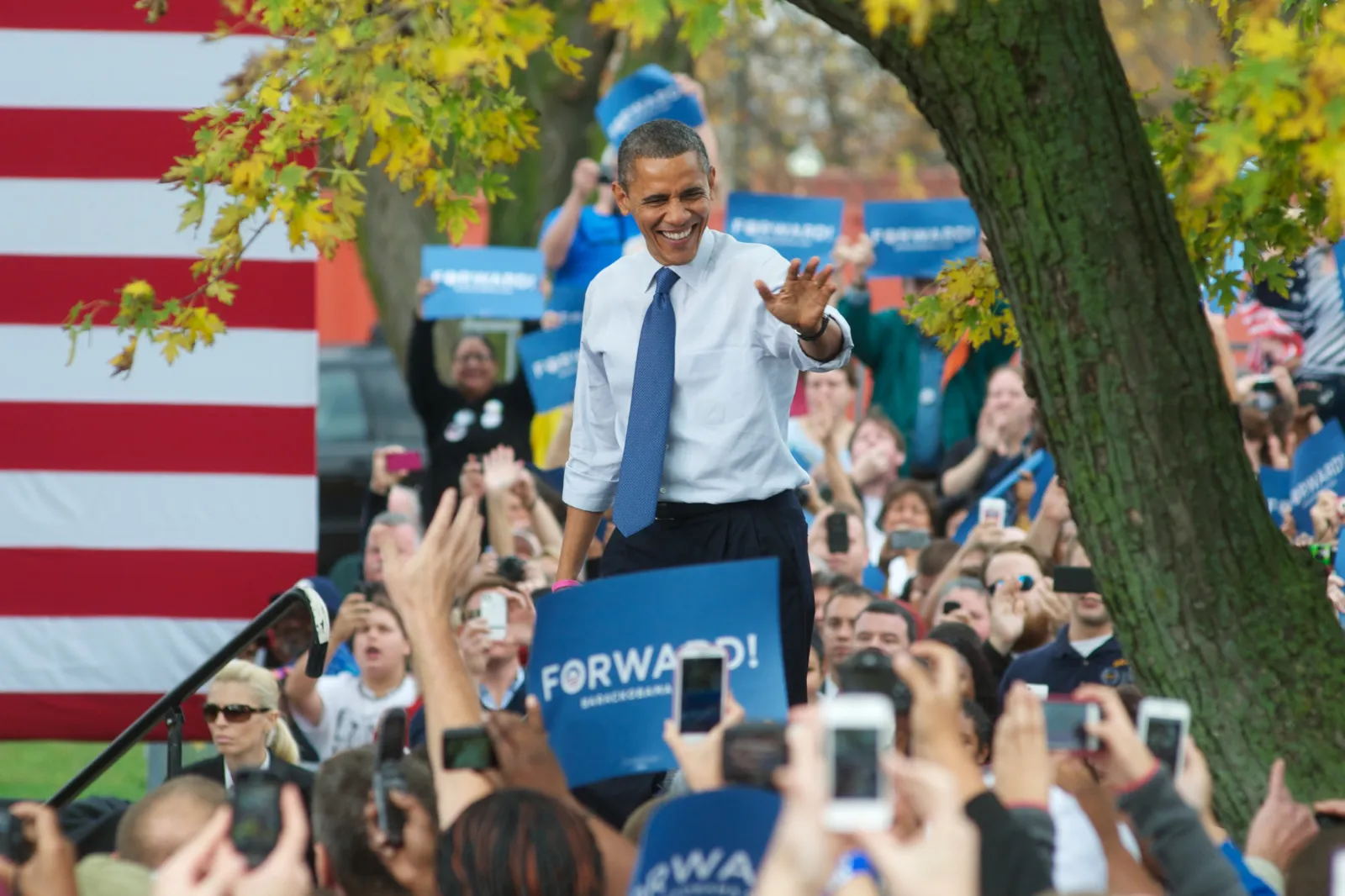
It was not always this way. Obama carried Iowa by nearly 10 points in 2008, taking 54 percent of the vote. He won it again in 2012, this time by 6 points, collecting 52 percent of the vote and winning by nearly 87,000 votes statewide. Then came the collapse: nearly a third of Iowa's 99 counties swung from Obama in 2012 to Trump in 2016, with some rural counties shifting by as many as 40 points in a single election cycle.
By 2024, Trump carried the state by 13 points. Democrats are now betting that the same working-class economic anxiety that powered that realignment can power a correction.
"Iowa is still, in my view, a purple state," Iowa Democratic Party Chair Rita Hart said. "We just haven't given people the opportunity to show that lately."
The last time Iowa sent a Democrat to the Senate was 2008, when Tom Harkin secured a fifth term. Harkin, who held the Joni Ernst seat until his 2014 retirement, endorsed Turek and said Trump's stumbles opened a genuine window.
View 0 Comments
Submit Correction
View Editorial & AI Guidelines