
...

By Anna Rahmanan
0
Share
Newsweek is a Trust Project member
See more of our trusted coverage when you search.Prefer Newsweek on Googleto see more of our trusted coverage when you search.
If Walmart sold a Democratic Resistance Starter Kit, it would probably come with a kaffiyeh, a green abortion-rights bandanna, a pink blazer and a black T-shirt reading NO KINGS in a font that suggests democracy has approximately 15 minutes left. Batteries not included; placard sold separately.
For the more traditional Democrat, there is, of course, the Heritage Collection: an immaculate white pantsuit, preferably worn en masse, in homage to the suffragists.
This is a joke, but only barely.
Read More on News
Over the past decade, Democrats have developed an extraordinarily specific political wardrobe. There are clothes for reproductive rights, clothes for Palestinian solidarity, clothes for resisting Donald Trump, clothes for invoking the suffragists and, occasionally, clothes for doing several of these things at once.
At the 2024 State of the Union, Representatives Summer Lee, Cori Bush and Rashida Tlaib wore kaffiyehs in solidarity with Palestinians, while Democratic women filled the chamber in suffragist white to make a statement about reproductive rights.
Democratic congresswomen also wore the color during Trump's first term, including the spectacularly coordinated sea of white at his 2019 State of the Union. They returned to it in 2024 and, this past February, more than a dozen Democratic congresswomen pulled the white suits back out for Trump's 2026 State of the Union, this time to protest the SAVE America Act.
In between, there were other collections.

...
In 2022, Democratic members of Congress including Alexandria Ocasio-Cortez, Ilhan Omar, Ayanna Pressley and Tlaib marched to the Supreme Court wearing specially made green bandannas reading "Won't Back Down" to protest the overturning of Roe v. Wade.
For Trump's 2025 address to Congress, Democratic women switched to pink. Representative Teresa Leger Fernández, chair of the Democratic Women's Caucus, explained that pink was a color of "power and protest"; Nancy Pelosi joined dozens of Democratic women in the coordinated display. Elsewhere in the chamber, Representative Maxwell Frost wore a black shirt declaring "NO KINGS LIVE HERE," while Representative Delia Ramirez went with "NO KING. NO COUP."
Related Story

Memo To America: This Is What a Crisis Looks Like
Related Story
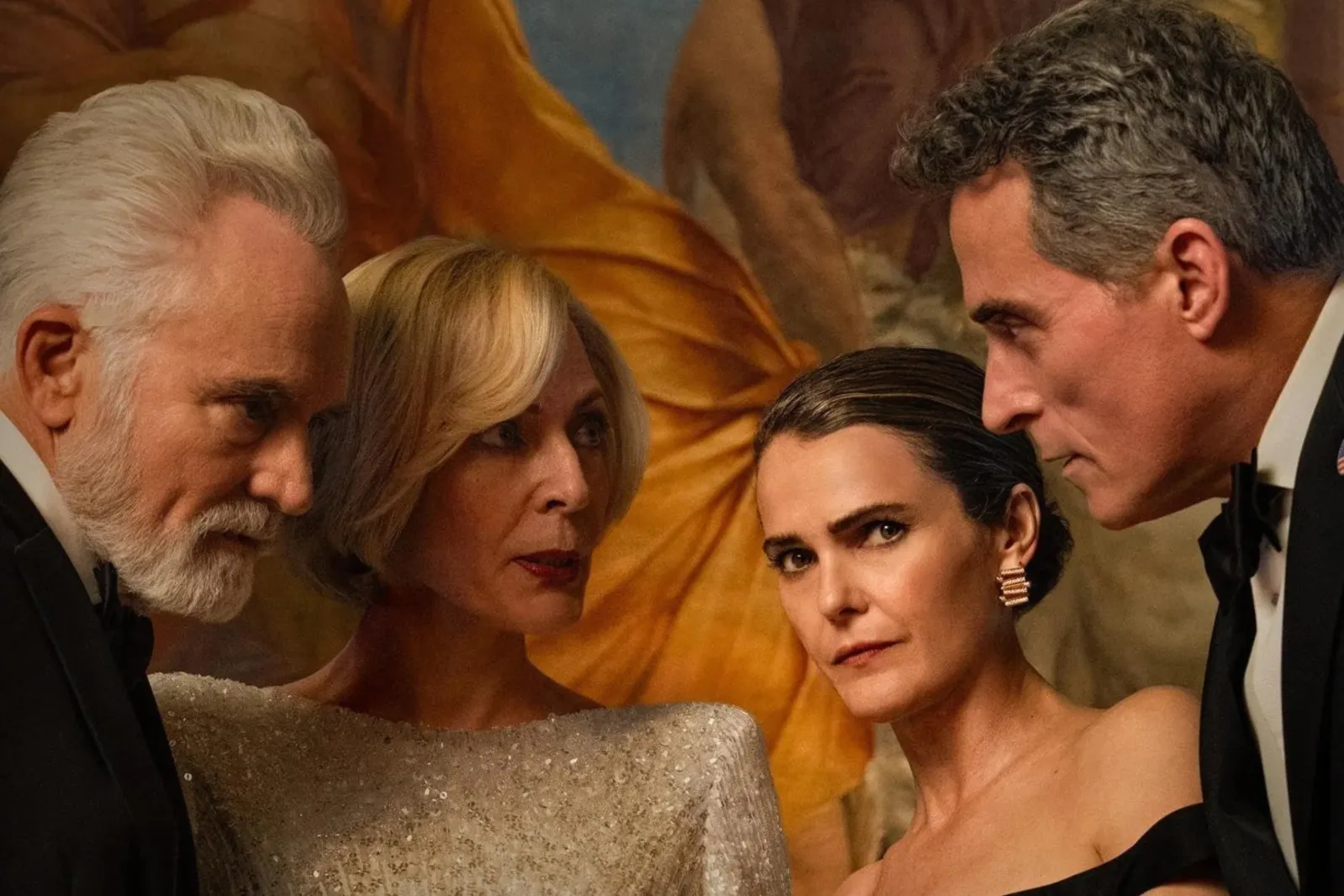
‘The Diplomat’ Is the ‘West Wing’ Escape We Need From Breaking News
Related Story

How Hamas Won the War Despite Losing Everything
And then there is the look Democrats would probably prefer we forget: June 2020, when Nancy Pelosi, Chuck Schumer and other Democratic leaders knelt in the Capitol wearing kente cloth stoles after the murder of George Floyd. The textile is deeply rooted in Ghanaian culture and associated with royalty, identity and ceremony. On congressional Democrats, the intended message was solidarity, but the (very memorable) resulting photograph looked considerably more complicated.
The concept of a uniform isn't relegated to Washington either.
Walk around almost any heavily liberal neighborhood in America, and you can often identify the politics before you hear them. The kaffiyeh wrapped around a neck on an ordinary Tuesday, the protest T-shirt under an open jacket, the bandanna, the tote bag, the pin, the slogan sweatshirt. These people are not necessarily going to a demonstration. They don't even really need to. In a sense, they are already demonstrating.
And what is striking is how frequently the aesthetic communicates not merely conviction, but anger. The clothes announce an objection. Something is wrong, someone is responsible and the wearer would like you to know that they know it. The political outfit has become a kind of portable picket sign: protest without the inconvenience of actually having to be at a protest.

...
Of course, liberals hardly invented dressing your politics. One red baseball cap can tell you quite a lot about a stranger from across a Costco parking lot.
The MAGA hat may be the most successful piece of political clothing in modern American history precisely because it performs the same tribal function. You see it and you know, or think you know, where its owner stands. Trumpism has since produced an entire aesthetic universe around it: red trucker hats! Cowboy boots! American flag everything! It can, and usually is, tacky and it borders on ridiculous and it could also be angry.
But there is an important difference in what the uniforms are selling: the red MAGA hat is political merchandise, but its literal message is fundamentally affirmative: Make America Great Again. Whatever one thinks of the proposition, it proposes one. The message is: This is who we are, and this is what we want.
The contemporary Democratic wardrobe, on the other hand, increasingly says, This is what we're against.
Against Trump: pink.
Against restrictions on abortion: green.
Against perceived threats to women's rights: white.
Against monarchy: NO KINGS.
Against Israel's conduct in Gaza: kaffiyeh.
Each item makes sense on its own. Put them together, however, and you begin to see a party dressed permanently for the picket line.

...
That might be inconsequential to the average American but, subconsciously, if clothing tells people where you belong, the trouble for Democrats is that their in-group increasingly resembles the uniform of the opposition. And I don't mean opposition in the partisan sense, but as an entire identity; a group of contrarians, which is particularly strange for a party that would presumably like to govern.
Protest movements are supposed to look like protest movements. Their job is to pressure power from the outside. A governing party has a different visual task: to look as though it possesses power and knows what it wants to do with it independently of who is against them having the power.
Instead, Democrats have spent years perfecting the aesthetics of people demanding to speak to whoever is in charge. Dare I say…a group of Karens?
The causes being advertised may be perfectly worthy ones. Millions of Americans sincerely believe abortion rights are under threat, that Palestinians deserve solidarity, that Trump poses a danger to democratic institutions or that women's rights require defending and there is something extremely human about wanting to wear your convictions.
The problem begins when the wardrobe communicates the grievance more successfully than the politics communicates the alternative. At some point, a party asking to run the country has to offer voters something more alluring than the deluxe resistance multipack.
Perhaps, the Democrats don't need a new dress code. They need an outfit for winning.
View 0 Comments
Submit Correction
View Editorial & AI Guidelines