
...

By Anna Skinner
Associate News Editor
0
Share
Newsweek is a Trust Project member
See more of our trusted coverage when you search.Prefer Newsweek on Googleto see more of our trusted coverage when you search.
Water bills are set to climb for roughly 1.5 million people across the Denver metro area after Denver Water approved temporary drought pricing in response to historically low snowpack and worsening drought conditions.
The rarely used pricing tool, last deployed more than 20 years ago, targets outdoor water use and is designed to push customers to conserve as supplies tighten across Colorado’s major river basins.
Denver Water officials say this winter’s snowpack, which supplies about 90 percent of the system’s water, is shaping up to rival or exceed the severity of the early‑2000s drought. Conditions in both the South Platte and Colorado River basins remain far below normal following a warm, dry winter, raising concerns about runoff and reservoir levels heading into summer.
Read More on News
Water bills could climb even further later this summer if conditions don't improve, a Denver Water spokesperson told Newsweek.
"We are dealing with conditions never seen before, and if conditions don't begin to improve, there is a possibility that we'll need to take further actions later this summer. What those look like will depend on the conditions, situation and customer response," the spokesperson said. "Fortunately, our customers have historically proven to answer our call when we've needed drought savings in the past, which will help us manage through these unprecedented times."
...
Where Will Prices Rise?
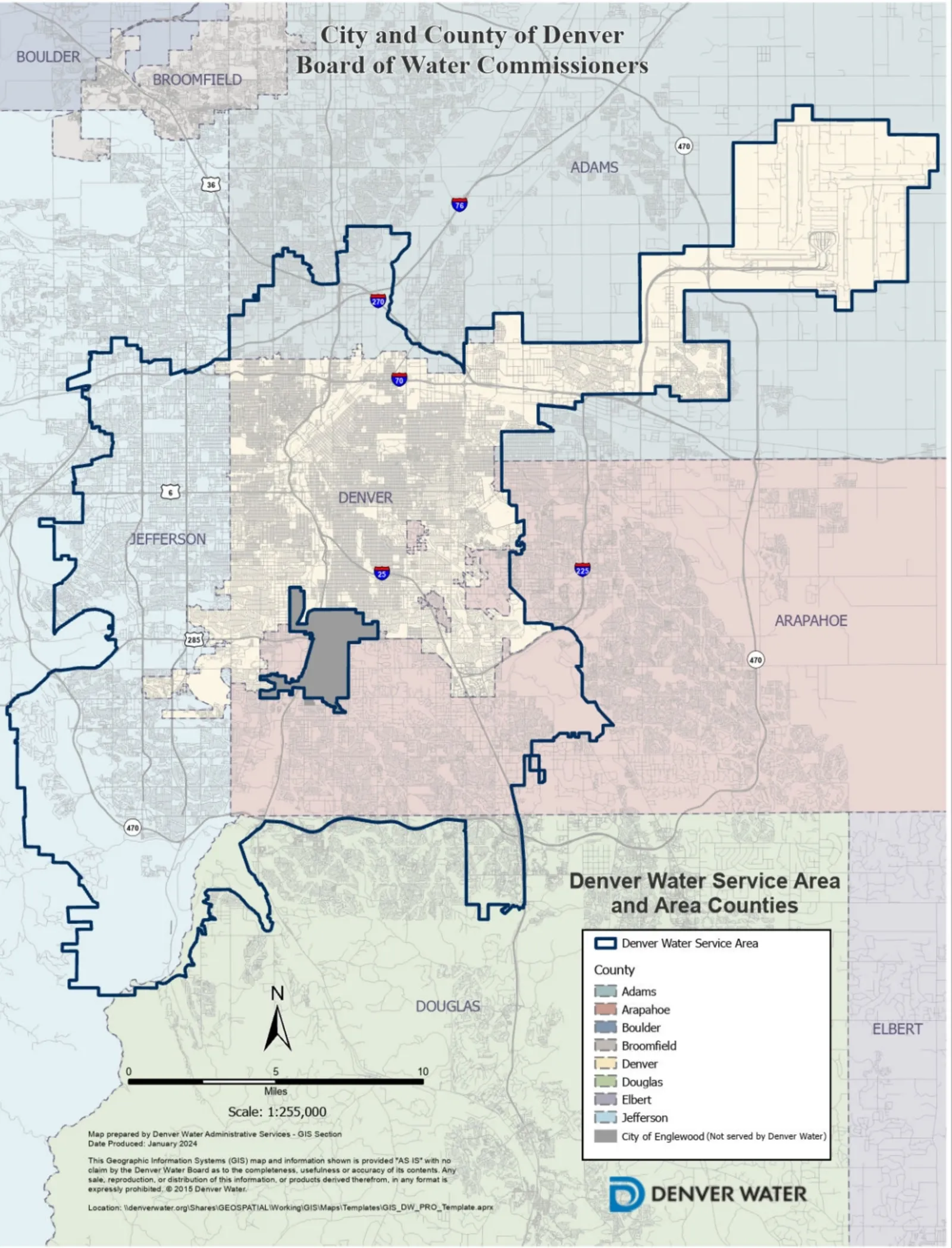
The price increases will affect Denver Water’s entire service area, which includes the city of Denver and surrounding suburbs across the metro region. That footprint serves about 1.5 million customers, spanning parts of Denver, Adams, Arapahoe, Douglas, and Jefferson counties. The drought pricing applies system‑wide and is not limited to a single neighborhood or municipality.
...
Importantly, the higher charges focus on outdoor water use, not essential indoor needs. Denver Water calculates each customer’s typical winter consumption, when lawns and gardens are not being watered, to establish a baseline. Water use above that threshold, most often tied to irrigation, is where the new charges begin to apply.
What Will the New Price Be?
Under the drought pricing structure, customers will see temporary surcharges layered on top of existing 2026 rates:
- Tier 1 (essential indoor use): No additional drought charge
- Tier 2 (efficient outdoor use): An added $1.10 per 1,000 gallons
- Tier 3 (higher outdoor use): An added $2.20 per 1,000 gallons
Denver Water estimates that the average single‑family household could pay about $45 more per year if water use does not change. High‑use households could see increases closer to $76 annually, Denver 7 reported, while customers who significantly reduce usage may avoid most of the added cost.
Officials emphasize that indoor activities such as drinking water, bathing, and cooking are shielded from drought pricing, with the policy aimed squarely at discretionary outdoor irrigation.
When Will the Ruling Hit Water Bills?
The drought pricing takes effect with May water use, but customers will not see the higher charges until bills are issued starting June 1. Unless conditions improve, the temporary rates are scheduled to remain in effect through April 30, 2027, though Denver Water’s board could adjust or end the pricing earlier if drought conditions ease.
The pricing move follows Denver Water’s earlier Stage 1 drought declaration, which already imposed mandatory watering restrictions and a system‑wide goal to cut water use by 20 percent. Officials say the combination of restrictions and higher prices reflects the severity of the region’s water outlook after a winter marked by record‑low snowpack and early melt.
As drought conditions persist across the West, Denver Water leaders warn that this summer could be one of the most challenging in decades, making conservation key for keeping supplies stable and bills from rising further.
View 0 Comments
Submit Correction
View Editorial & AI Guidelines