...

By Yvette D. Clarke and Michael Shank
0
Share
Newsweek is a Trust Project member
See more of our trusted coverage when you search.Prefer Newsweek on Googleto see more of our trusted coverage when you search.
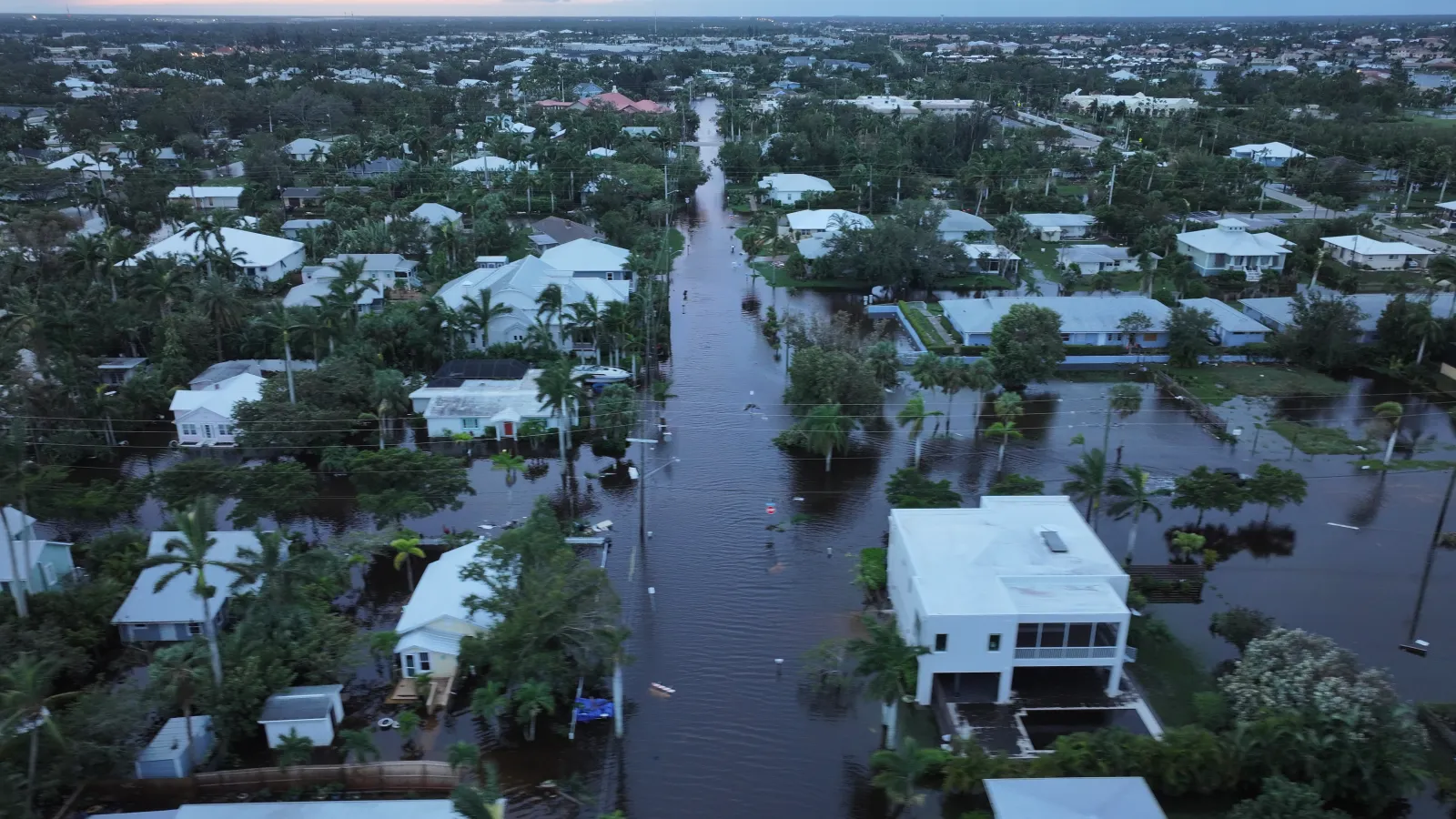
As the United States approaches hurricane, fire and flood season this summer, we face a new danger. Not only are these disasters becoming more severe and destructive due to a rapidly warming planet, but this year the U.S. will be less equipped than in previous years to prevent, prepare for and respond to increasingly extreme weather.
President Donald Trump made the Federal Emergency Management Agency (FEMA) less effective, less funded and less capable of helping Americans before, during and after a storm. The administration recently went further, arguing that local and state governments, not the federal agency, should lead disaster response. At the same time, the administration’s immigration policies are shrinking the very workforce we rely on for disaster preparation, response and recovery.
This is what we mean when we talk about issues being intersectional. A government cannot operate in silos when policies collide in the real world. Trump’s approach to immigration is devastating our approach to emergency response and public safety. They’re interrelated. Immigration policy isn’t separate from disaster policy—it’s shaping who shows up when disaster strikes.
Read More on Opinion
...
The consequences for the American people are significant and growing, especially as former U.S. Senator Markwayne Mullin replaces former Secretary Kristi Noem as head of the Department of Homeland Security. There is little reason to believe Secretary Mullin will depart from the same hard-line approach, as the administration continues using U.S. Immigration and Customs Enforcement (ICE) to deport workers essential to disaster response. Just look at his Senate confirmation hearings and statements since becoming secretary.
Let’s be very clear about what this means. Immigrants make up an estimated 25 to 40 percent of the disaster recovery workforce. These are the workers who climb onto damaged roofs in the southeast, clear hazardous debris after Western wildfires and gut flooded homes across the Midwest. They are skilled, experienced and indispensable—and they have been serving American communities for years.
Removing this workforce—this experience and expertise—puts all Americans at greater risk. When the next hurricane, fire or flood strikes, there will simply be fewer trained workers available to help communities recover. That is a direct consequence of current immigration enforcement policies. And that’s because ICE is deporting our disaster workforce.
There is a better way. This disaster season is expected to be severe. On the extreme heat, drought and fire front alone, with little snowpack in the West over the winter and a record-breaking heat wave already hitting vulnerable communities, we need all hands on deck.
That means federal, state and local agencies must work seamlessly together. It means a well-resourced, nonpartisan FEMA empowered to do its job. And it means ensuring that workers who show up in times of crisis can do so without fear of deportation.
That’s a tall ask under this Trump administration, but Congress and the courts still have a role to play. There is some good news: FEMA recently got court-ordered to relaunch climate resiliency grants to help communities prepare for disasters. That’s a step forward—but it shouldn’t require a court order for FEMA to fulfill its mission of protecting Americans.
The U.S. once came together in times of disasters, setting politics aside to help one another, regardless of how we voted. We need that spirit again. And we need a disaster response workforce that is ready, focused and undistracted.
It’s both more effective and more cost-efficient to ensure that the workers who help protect us from hurricanes, fires and floods, including many in immigrant communities, can do their jobs without fear or disruption from enforcement actions while our communities are already under strain.
This isn’t a moral argument; it’s a practical one. Keeping Americans safe during disaster season depends on fully resourcing our federal, state and local agencies and the trained workforce that prepares for and responds to emergencies.
The storms are coming. Let’s make sure we’re ready.
Congresswoman Yvette D. Clarke serves as ranking member of the Oversight and Investigations Subcommittee on the Energy and Commerce Committee, chair of the Congressional Black Caucus and co-chair of the Haiti and Caribbean Caucus. Dr. Michael Shank is adjunct faculty at New York University’s Center for Global Affairs and a visiting scholar at George Mason University’s Carter School for Peace and Conflict Resolution.
The views expressed in this article are the authors' own.
View 0 Comments
Submit Correction
View Editorial & AI Guidelines