...

By Micah McCartney
Reporter
0
Share
Newsweek is a Trust Project member
See more of our trusted coverage when you search.Prefer Newsweek on Googleto see more of our trusted coverage when you search.
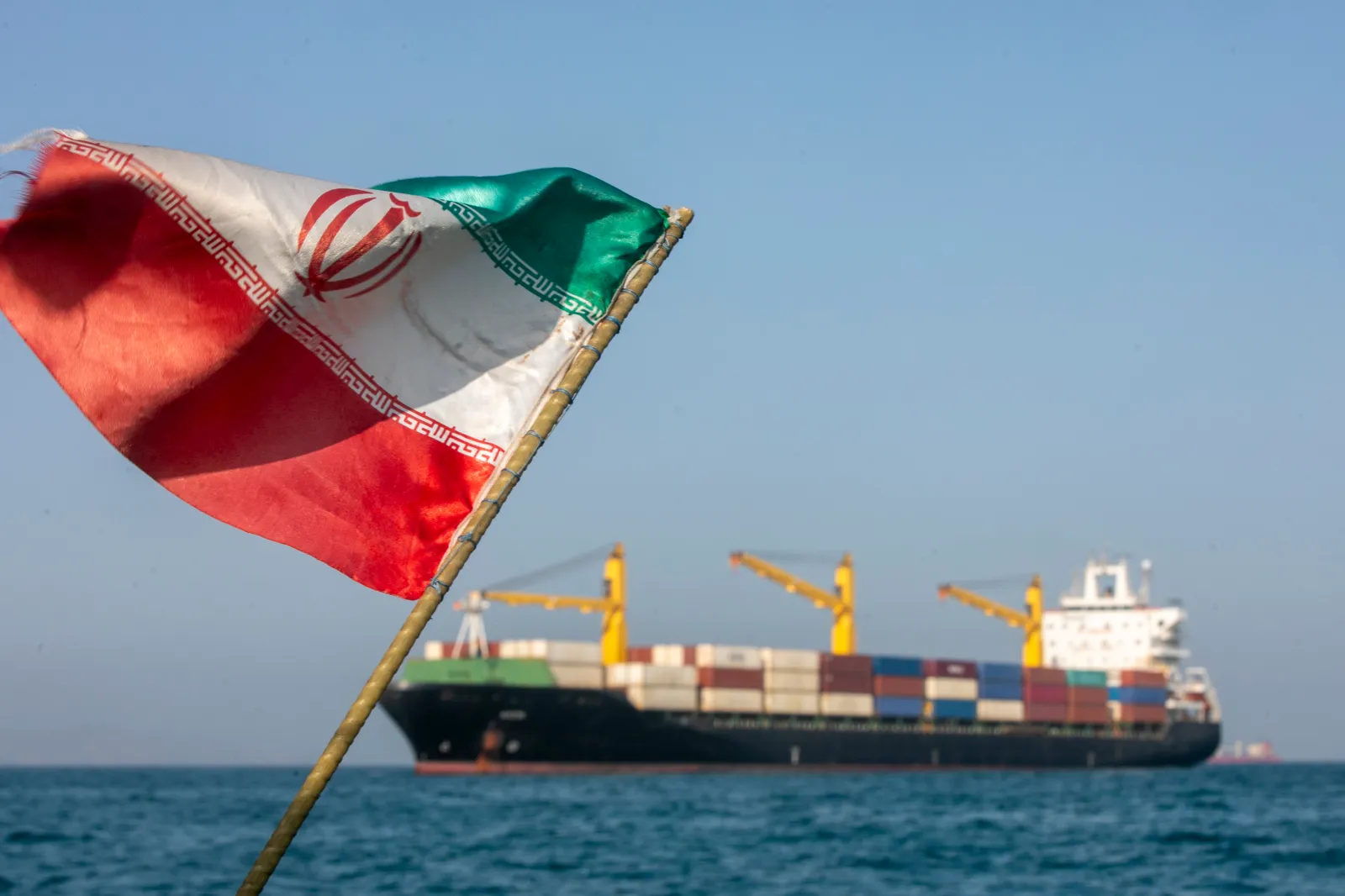
Iran says it will charge fees for transit through the Strait of Hormuz—a position at odds with the United States that threatens to unravel a fragile diplomatic breakthrough before the ink even dries on the memorandum of understanding signed Wednesday.
The dispute exposes ambiguities in the wording of the 14-point agreement, which U.S. President Donald Trump signed Wednesday in Versailles during his visit to France for a G7 summit. When announcing the coming signing on Monday, Trump wrote on Truth Social he was "authoriz[ing] the toll free opening of the waterway."
Charging transit fees on a major international shipping route is unusual and is widely seen as inconsistent with established norms of freedom of navigation.
Read More
US Blockade Over? Iranian Ships Sail Out of Strait of Hormuz3 min read

The Many Concessions For Iran In Trump’s Deal 11 min read

China Subtly Rejects New Alliance With Iran4 min read

Shipping has been at a near-standstill in the strait, a conduit for one-quarter of the world's seaborne oil, since the U.S. and Israel launched their war against the Islamic Republic on February 28. The threat of Iranian attacks sent insurance costs soaring and prompted many operators to avoid the route altogether, while vessels calling at Iranian ports faced additional complications from the U.S.-led naval blockade.
...
Toll-Free?
While Washington and Tehran appear to agree on toll-free transit during the initial 60-day period, they differ on whether Iran will be permitted to continue collecting fees after that two-month window expires.
Since mid-March, Iran's Islamic Revolutionary Guard Corps has been running a "tollbooth" under which foreign-flagged vessels undergo a strict vetting process with the IRGC before being allowed to transit through Iranian waters after paying a fee.
Trump stressed the strait will be "permanently toll-free." Vice President JD Vance told CNBC in a Monday interview that it would remain "toll-free for the long term."
Iran has insisted it intends to collect maritime service fees, not tolls.
The charges would offset the cost of services provided, including navigational assistance, vessel insurance, and environmental protection measures jointly administered by Iran and Oman, Iranian Foreign Ministry spokesperson Esmaeil Baghaei told the semiofficial Tasnim news agency late last month.
According to the MOU, Iran is to immediately begin the process of reopening the strait for the safe passage of commercial vessels, including demining operations and the removal of "technical and military obstacles.
Iran also must "make arrangements using its best efforts for the safe passage of commercial vessels with no charge for 60 days only from the Persian Gulf to the Sea of Oman and vice versa."
Permanent Deal in Jeopardy
Iran’s insistence on collecting services fees in the waterway likely would undermine any chance of a permanent peace deal with the U.S., according to Charlie Brown, a senior adviser at the nonprofit United Against Nuclear Iran.
Tehran also may be using the issue of tolls as a bargaining chip to extract concessions from the U.S. in the upcoming talks, Brown told Newsweek.
"The Iranians consider themselves experts at dragging out negotiations and continuously moving the goal posts, and seeking concessions," Brown said.
Newsweek reached out to the White House and the Iranian Foreign Ministry via email for comment.
The fees could also further strain relations with at least five of the six Gulf Cooperation Council states that were targeted by Iranian retaliatory missile and drone strikes on U.S. military, economic and energy infrastructure linked to their hosting of American forces.
"The Omanis may actually benefit by joining Iran in collecting a toll. The Saudis and Emiratis have options to go around the strait, but Kuwaitis, Qataris, and Bahrainis do not," Steven Cook, a fellow at the Council on Foreign Relations, wrote in an analysis on Wednesday.
"They will be forced to comply with Iranian demands or experience economic dislocation. The conflict will likely lead to additional Gulf hedging in the form of non-aggression pacts with Iran."
Approximately 550 merchant ships—including 160 tankers, 200 bulk carriers, and 60 containerships—remained in the Persian Gulf Thursday, according to Lloyd's List.
Update, 06/19/26, 05:25 a.m. ET: this article was updated with a new headline and additional information.
View 0 Comments
Submit Correction
View Editorial & AI Guidelines