...

By Pandora Dewan
Senior Science Reporter
0
Share
Newsweek is a Trust Project member
See more of our trusted coverage when you search.Prefer Newsweek on Googleto see more of our trusted coverage when you search.
Dinosaurs have thrown into question everything we thought we knew about the evolution of body size.
In biology, Bergmann's Rule is a 150-year-old principle that correlates an animal's body size to their external environment. It was first described by German biologist Carl Bergmann in 1847 who noticed that animals in cold climates are expected to have a larger body size compared to their close relatives in warmer climates. For example, polar bears typically weigh more than three times your average American black bear.
However, new research from the University of Alaska Fairbanks and the University of Reading in the U.K. has called this rule into question.
Read More
Bird Population Faces ‘Long-Term Consequences’ From Everyday Chemicals3 min read

Prehistoric Ritual Sacrifice Practiced for at Least 2,000 Years Revealed4 min read

‘Exciting’ New Insight Into Ancient Egyptian Astronomy and Mythology6 min read

"Our study shows that the evolution of diverse body sizes in dinosaurs and mammals cannot be reduced to simply being a function of latitude or temperature," Lauren Wilson, a UAF graduate student and a lead author of the study, said in a statement.
...
In the study, published in the journal Nature Communications, Wilson and colleagues trawled through the fossil records to determine whether the correlation between body size and climate was still applicable for prehistoric animals.
"We found that Bergmann's rule is only applicable to a subset of homeothermic animals (those that maintain stable body temperatures), and only when you consider temperature, ignoring all other climatic variables," Wilson said. "This suggests that Bergmann's 'rule' is really the exception rather than the rule."
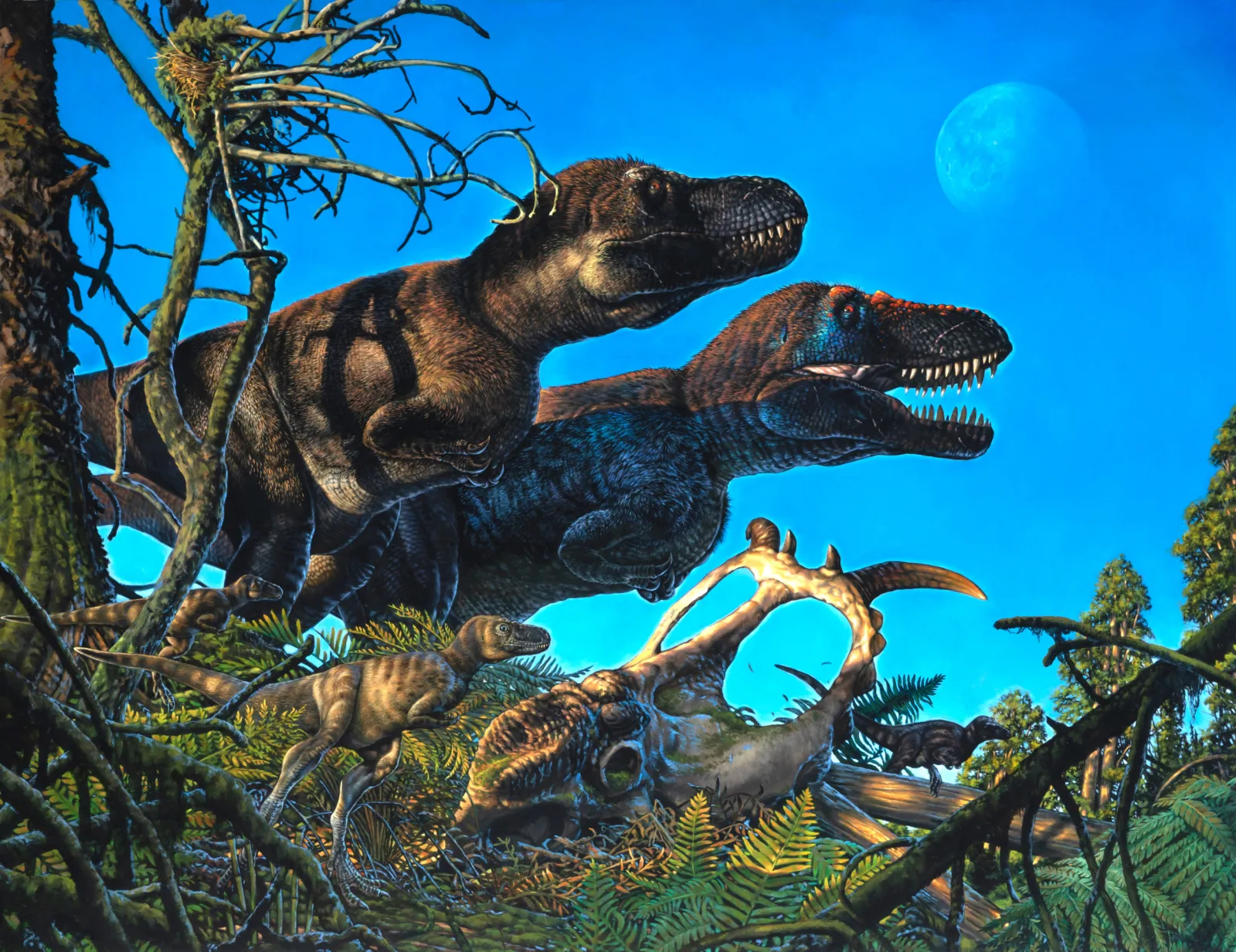
The dataset included the northernmost dinosaurs known to science, those found in Alaska's Prince Creek Formation. And yet, despite the freezing temperatures and snowfall these beasts had to endure, the researchers found no notable increase in body size compared to their more temperate relatives.
These findings are a good example of why the fossil record should be used to test current-day scientific rules and hypothesis, the researchers said. "The fossil record provides a window into completely different ecosystems and climate conditions, allowing us to assess the applicability of these ecological rules in a whole new way," Jacob Gardner, a postdoctoral researcher at the University of Reading and the other lead author of the paper, said in a statement.
Patrick Druckenmiller, director of the University of Alaska Museum of the North and another of the study's co-authors, added: "You can't understand modern ecosystems if you ignore their evolutionary roots. You have to look to the past to understand how things became what they are today."
Do you have a tip on a science story that Newsweek should be covering? Do you have a question about animal evolution? Let us know via science@newsweek.com.
View 0 Comments
Submit Correction
View Editorial & AI Guidelines