
10
Loading video...

By Brendan Cole
Senior Reporter
0
Share
Newsweek is a Trust Project member
See more of our trusted coverage when you search.Prefer Newsweek on Googleto see more of our trusted coverage when you search.
The U.S. Navy sea drone that Iran has boasted about capturing in the Strait of Hormuz can operate underwater for up to 10 days and at depths of up to six kilometers.
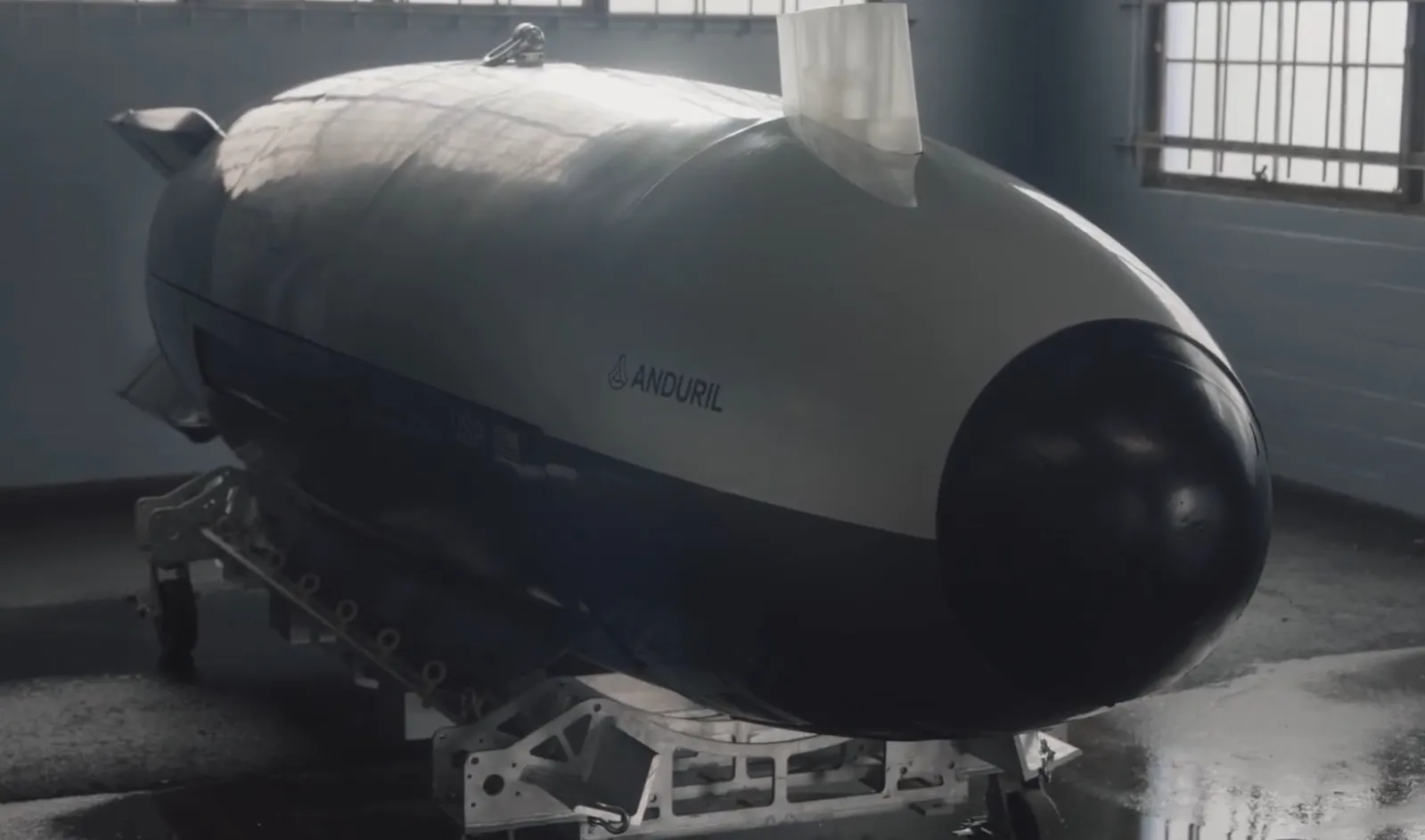
Iran’s IRGC (Islamic Revolutionary Guard Corps) captured the American uncrewed underwater vehicle (UUV) Anduril Dive-LD on Tuesday, according to the semiofficial Tasnim news agency which posted an image of the vessel.
Naval News reported that the photograph shared online by Iran’s media of a partially submerged drone closely matches the Anduril Dive-LD.
Read More on News
U.S. officials had previously confirmed the use of UUVs to keep the Strait of Hormuz free of Iranian Navy mines, but military publication TWZ said this looks to be the first known instance of an operational deployment of the Dive-LD.
Navy Capt. Tim Hawkins, a spokesman for U.S. Central Command, confirmed the capture to Newsweek but downplayed its significance, saying that the drone had malfunctioned while surveying regional waters.
Newsweek has contacted Anduril for comment outside of office hours.
...
What Is the Dive-LD?
Naval News said not much has been reported about the Dive-LD but it has likely been in U.S. Navy service for the last year and a half, specifically with Unmanned Undersea Vehicle Group (UUVGRU) 1 and Undersea Vehicle Squadron (UUVRON) 3.
Anduril are supplying the U.S. Navy with the larger Dive-XL design, which is like the Australian Navy’s Ghost Shark design, the publication added.
Known as an AUV (autonomous underwater vehicle), the Dive LD is around 19 feet long, four feet in diameter and weighs about three tons, according to the Anduril website.
It is designed for multiday missions and has "extensive open interfaces, generous payload bays" and can operate at a depth of 6,000 meters (18,000 feet) and its portability allows it to be pier-launched, towed to sea or stow launched.
Related Story

RNC Dallas Puts the GOP’s Trump Paradox on Full Display
What Iran’s Media Says About the Capture of a US Submarine
Without specifying the exact circumstances, Iranian state media reported Tuesday that the IRGC had "captured one of the most modern, unmanned, and smart submarines…at the entrance to the Strait of Hormuz" during a dawn operation on Tuesday.
The statement on Iranian TV said that the vessel was "equipped with the latest technology in the subsurface field in the world."
Next to an image of the captured drone, Tasnim News touted the hi-tech nature of the device, saying, according to a translation, its "modular design and parts produced by 3D printing allow for the rapid installation of various sensors and mission payloads."
Iran's embassy in Sweden posted an image of the vessel, next to the message, "yesterday, only one country (the U.S.) had a 2025 Anduril Dive-LD LUUV/AUV. Today, there are two: the U.S. and Iran."
Navy News said that the Dive-LD is much more sophisticated than Iranian designs although the Islamic Republic has pioneered weaponized underwater drones with at least two types being supplied to the Houthi movement in Yemen.
The outlet also said that access to the Dive-LD may help Iranian underwater drone capabilities or it could be shared with Iran’s allies such as Russia or China.
What the US Has Said
U.S. Navy Captain Tim Hawkins, U.S. Central Command spokesperson, told Newsweek in a statement Wednesday that an underwater drone operated by U.S. forces malfunctioned more than a day ago.
"It was surveying regional waters in support of ongoing operations. The defective drone was an older model that neither collected sensitive data nor carried any classified sonar or radar equipment. U.S. operations in area waters continue."
Hawkins did not clarify the larger mission of such unmanned vessels or whether any other U.S. sea drones have been captured.
However, TWZ reported that the apparent loss of a Dive-LD intact to Iran is still significant because an advanced modern system in operational U.S. service is now held by an adversary which will be interested in its capabilities and limitations.
The outlet added that the fact that it was not destroyed before or during capture showed that U.S. forces had lost track of its location beforehand.
"I’m sure the Iranian military will learn things they didn’t know about this vehicle and that information might inform their tactics and the design of similar systems," Craig Woolsey, an aerospace and ocean engineering professor at Virginia Tech, told Newsweek Wednesday.
"The IRGC will learn some things, but the purpose and existence of these systems is well known. I doubt they'll discover any deeply guarded secrets," he said. "This worst-case outcome, where the vehicle was captured intact, was a known risk that the US military accepted when they deployed it. No US service members were captured with the device."
"The outcome is an argument for maritime robotics and for the naval research that made it possible."
Latest Iran-US Strikes
On the same day Iran’s media reported the vessel’s capture, U.S. forces destroyed five Iranian crude oil tankers in the latest of an escalating round of exchanges as the Iran war continues.
US CENTCOM said the tankers were linked to the IRGC and shared footage of the strikes showing the aft, or rear, part of the massive non-military vessels.
The U.S. military said four of the tankers were in the Gulf of Oman while the other tanker was in the Persian Gulf near Kharg Island, a critical oil depot President Donald Trump has threatened to attack.
Meanwhile, the IRGC said its navy had targeted two US vessels and eight oil tankers in the Persian Gulf and also attacked 10 ships trying to transit the Strait of Hormuz, according to Iranian media.
Contact Newsweek editors on this story: Federica Bindi and Robert Greenall
View 0 Comments
Submit Correction
View Editorial & AI Guidelines