...

By Melissa Fleur Afshar
Reporter
0
Share
Newsweek is a Trust Project member
See more of our trusted coverage when you search.Prefer Newsweek on Googleto see more of our trusted coverage when you search.
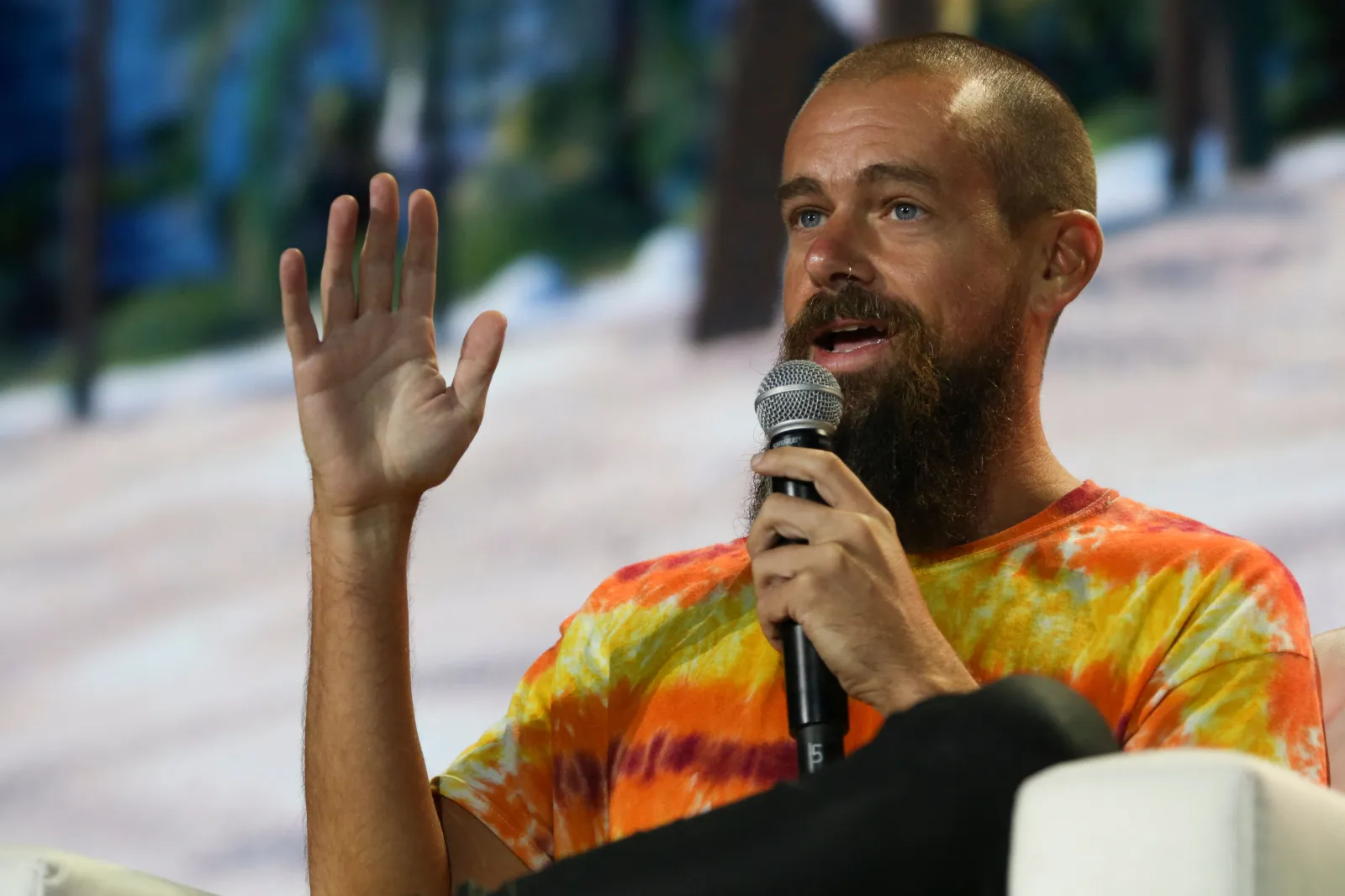
Jack Dorsey's latest social media experiment is launching with a promise: no AI slop.
Backed by the former Twitter (now X) CEO and co-founder, the reboot of Vine—called diVine—will allow users to access over 100,000 archived six-second clips from the original platform, while creating new content in what its founders say will be a human-first space, designed to resist the spread of AI-generated content.
The relaunch arrives amid growing concerns that AI is overwhelming social media feeds with lax regulations doing little to flag when synthetic media shows up. With TikTok continuing to dominate the short-form video space—with more than 1.59 billion users—experts say diVine could mark a new front in the battle over trust and authenticity online.
Read More on Business
"DiVine is launching at a time when AI-generated content is starting to overwhelm the platforms that once shaped online culture," Martin Jeffrey, a digital strategist specializing in AI and platform architecture, told Newsweek. “YouTube alone now feeds more than 200 times the number of citations into AI systems compared with most social platforms, which shows how heavily these models depend on user-generated video for training.”
Dorsey, who helped shut down the original Vine in 2016, is backing the new platform through his nonprofit “and Other Stuff,” which was formed in May 2025 to support experimental open-source projects. The app was built by Evan Henshaw-Plath, an early Twitter employee, who recovered the Vine archive and began exploring the idea of what building a new app rooted in the platform’s original format could look like a decade on.
The result is diVine, which will allow users to create profiles and upload new six-second videos while promising to strictly filter AI-generated content. The app proposes to detect suspected AI-generated content and prevent it from being posted, unlike most mainstream platforms where labeling can inconsistent or absent, and AI influencers are rife.
Could DiVine Topple TikTok?
“DiVine’s anti-AI approach should not be seen as a fear of technology, but a practical reaction to what is happening online right now,” Jeffrey said. “AI can produce endless videos and images at almost no cost, which means the real value shifts to content that can be proven to come from a real human being.”
The platform is being built on the decentralized protocol Nostr, which Dorsey has donated bitcoins to, as a way to avoid the commercial pressures that can attribute to AI dominating social networks. The move is strategic, designed to shield diVine from the cycles of algorithmic optimization that have turned platforms like TikTok into what Jeffrey called “AI content mills.”
“Dorsey’s team knows that if you want a platform people can trust, you need a way to push synthetic media down and lift verified human posts,” Jeffrey said.
The team behind diVine says their ambition is not to compete on entertainment value, but to offer a credible alternative for users seeking transparency and trustworthiness.
That goal hinges on how diVine’s algorithms treat content from the outset, according to Satyam Dhar, a former Amazon and Adobe engineering leader who now leads AI infrastructure at Galileo.
“Most social feeds rely on large statistical systems that guess what people want to see. These systems pull from millions of small behavioral signals, and the choices they make shape everything downstream,” Dhar told Newsweek. “A platform that wants more authentic content has to rethink those early decisions, because that’s where synthetic or low-value material slips in.”
...
Dhar emphasized that diVine’s success will depend not on a single stance against AI, but on establishing consistent, enforceable rules to govern automated behavior across the platform long-term.
“It’s not one big choice,” he said. “It’s hundreds of small rules about who can publish, how content is handled, and what gets filtered before it spreads.”
That infrastructure, Dhar added, could be the key to restoring user confidence in what they see while scrolling social media feeds.
“People want to know where a piece of content originated and who shaped it along the way,” he said. “If a new platform can offer clear attribution and a reliable record of how content evolves, it gives people a reason to trust what they see.”
Bob Hutchins, an AI expert and behavioral and organizational psychologist, agrees.
"DiVine reads like a counter-move laced with nostalgia," he told Newsweek. "The pitch is straightforward. Short-form video experience that doesn’t fall prey to endless synthetic media. Henshaw-Plath wants to rewind the clock to an era before algorithmic feeds and engagement metrics. Before algorithmic recommendations that function on attention at scale."
While he acknowledges that diVine could only have been launched because people have grown fatigued of seeing AI-generated content on social media, he doubts it can tackle the likes of TikTok, just yet.
"It’s not going to take down X or TikTok. It’s in beta now with roughly 150,000 archived videos created by 60,000 creators," he said. "TikTok has more than 1 billion monthly users and X has hundreds of millions. This is a community-building project for a niche community. It’s built around nostalgia for a prior era of social media and open-source principles."
Newsweek reached out to Jack Dorsey via his team at Block for more information via email.
View 0 Comments
Submit Correction
View Editorial & AI Guidelines