10
Loading video...

By Chris Matthews
News Reporter
0
Share
Newsweek is a Trust Project member
See more of our trusted coverage when you search.Prefer Newsweek on Googleto see more of our trusted coverage when you search.
Democrats have announced plans for 12 presidential primary debates ahead of the 2028 election, as new polling shows a tight contest for the party's nomination.
The Democratic National Committee said Monday that five debates would take place in 2027 and seven in 2028, with the first scheduled for June next year.
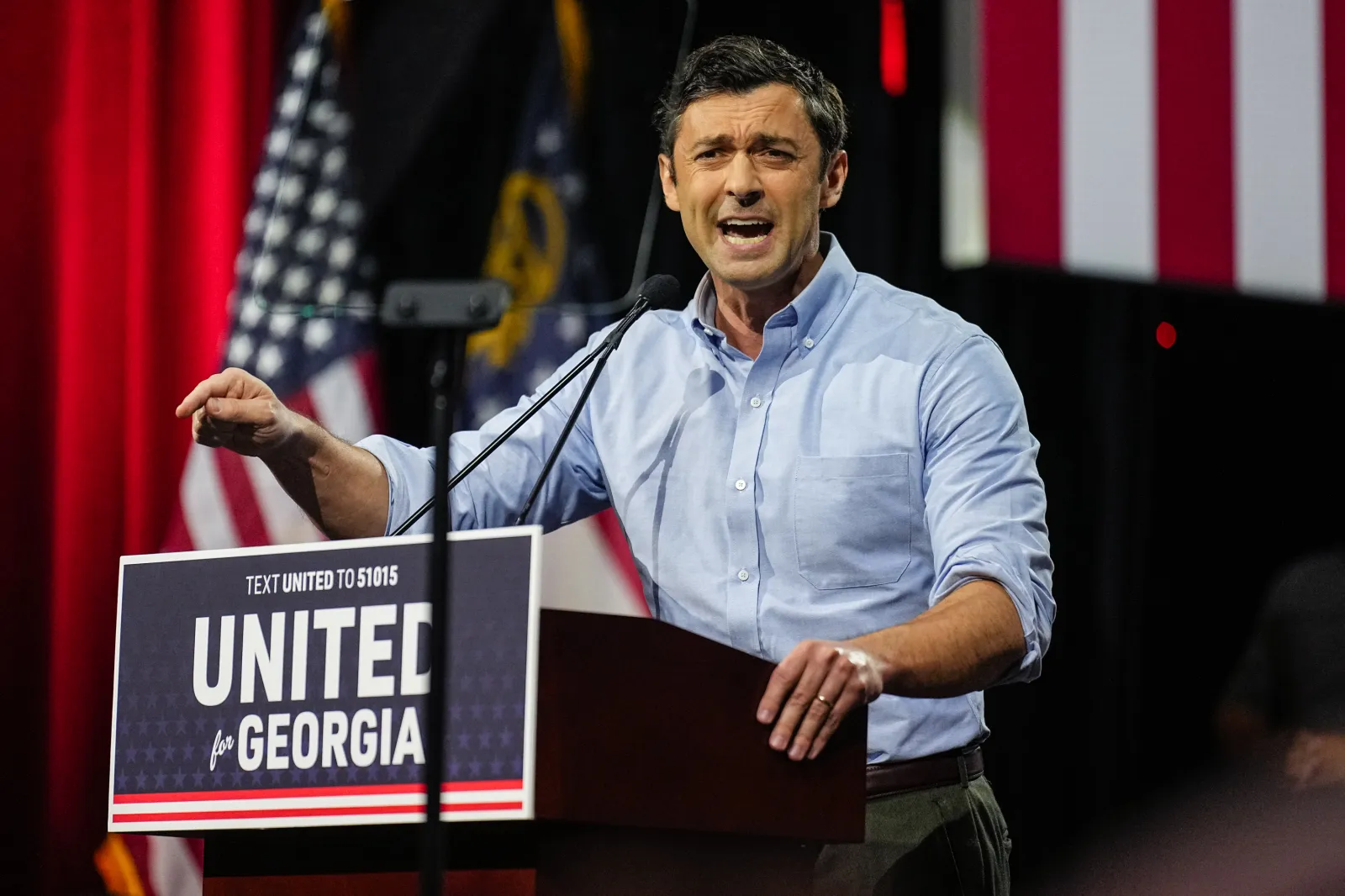
Former Vice President Kamala Harris leads the latest RealClearPolling national average by just 1.5 percentage points over Georgia Senator Jon Ossoff, who has rebounded sharply in one pollster's latest survey and led two other recent polls.
Read More on News
The party is also introducing new rules requiring candidates to denounce certain spending by super PACs and groups that do not disclose their donors, commonly known as dark money.

...
Who Is Leading the 2028 Democratic Primary Polls?
Harris leads the RealClearPolling average at 16.5 percent, followed by Ossoff on 15 percent.
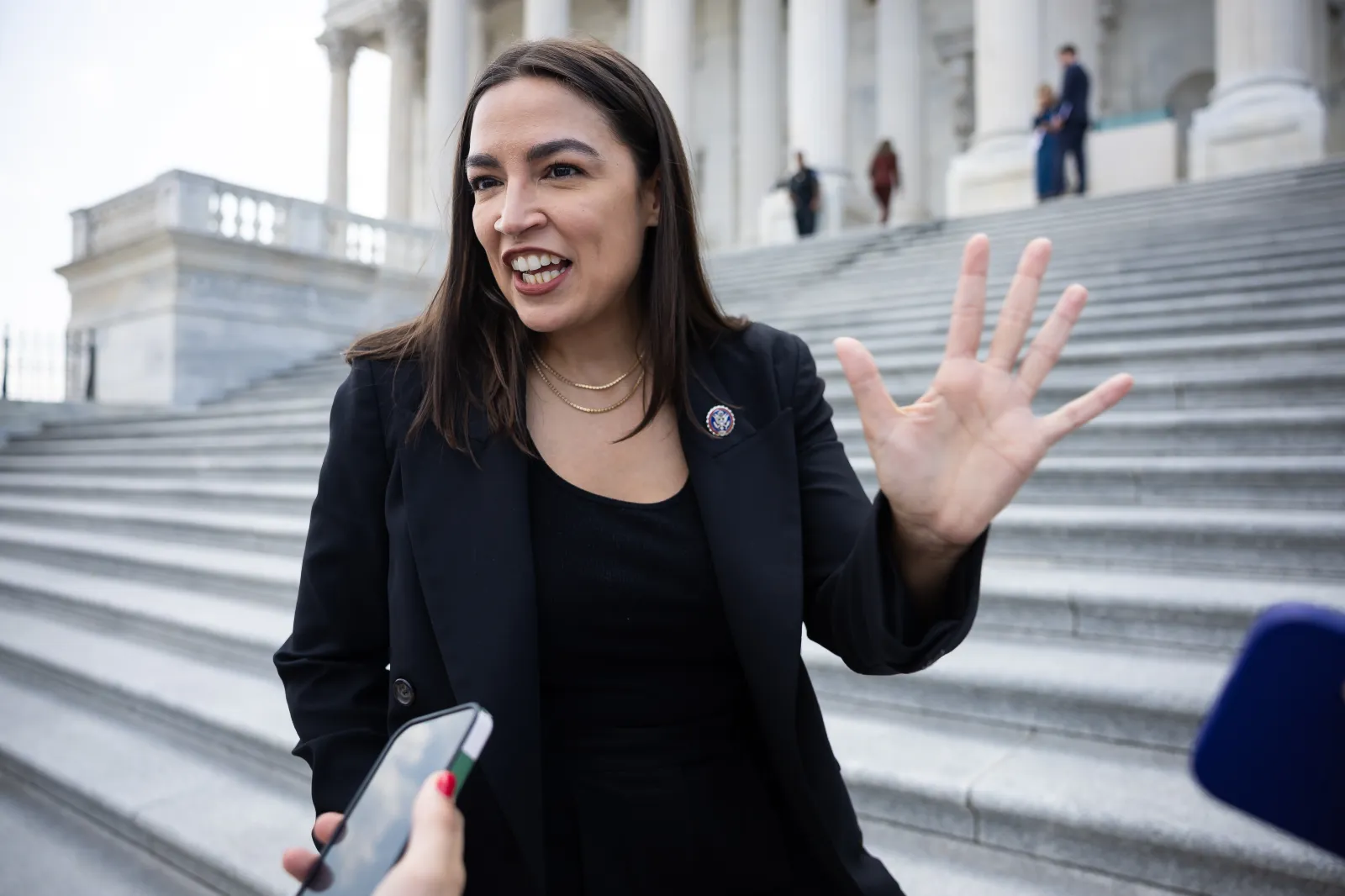
New York Representative Alexandria Ocasio-Cortez and former Transportation Secretary Pete Buttigieg are tied at 14 percent, while California Governor Gavin Newsom is on 11.3 percent.
Arizona Senator Mark Kelly follows on 5.5 percent, Kentucky Governor Andy Beshear on 4 percent and Pennsylvania Governor Josh Shapiro on 3.5 percent.
The average covers four national surveys conducted between October 31 and November 16.
Harris' narrow advantage contrasts with earlier polling, when she held a much larger lead.
A Harvard-Harris survey conducted September 26 to 28 put her on 38 percent, ahead of Newsom on 17 percent and Ocasio-Cortez on 12 percent.
By late October, the same pollster recorded Harris at 34 percent, with Newsom on 20 percent.
More recent surveys have found a closer contest.
...
An Emerson College poll conducted November 14 to 16 placed Ossoff first on 17 percent, followed by Harris on 16 percent, Ocasio-Cortez on 15 percent and Buttigieg on 14 percent.
An AtlasIntel survey conducted between October 31 and November 1 found Ossoff and Ocasio-Cortez tied for first on 18 percent, with Buttigieg on 16 percent and Harris on 13 percent.
Other pollsters have continued to put Harris ahead.
An Echelon Insights survey conducted November 12 to 16 gave Harris 19 percent, followed by Buttigieg on 15 percent and Newsom on 11 percent. Ossoff and Ocasio-Cortez were tied on 10 percent.
An Economist/YouGov poll conducted November 9 to 11 put Harris on 18 percent, Ossoff on 15 percent and Newsom on 14 percent.
Which Democrats Are Gaining Ground?
Ossoff has made gains in several surveys, although his support varies considerably between pollsters.
Echelon Insights recorded him on 8 percent in September, falling to 5 percent in October before rising to 10 percent in November.
Harvard-Harris also found an increase, from 6 percent in September to 7 percent in October.
More recent surveys from Emerson and AtlasIntel have placed him in the high teens.
Harris, meanwhile, has seen her support fall in some polls.
Echelon Insights recorded her on 24 percent in September, falling to 19 percent in October and remaining at that level in November.
Harvard-Harris found a smaller decline, from 38 percent in September to 34 percent in October.
Buttigieg has also improved in Echelon's surveys, rising from 10 percent in September to 13 percent in October and 15 percent in November.
Newsom's support has moved in the opposite direction in the same pollster's surveys, falling from 14 percent in September and October to 11 percent in November.
Ocasio-Cortez has also gained ground in Echelon's polling since September, rising from 8 percent to 12 percent in October before slipping to 10 percent in November.
The surveys use different methods and candidate lists, meaning their results are not directly interchangeable. Several of the politicians included have not announced presidential campaigns.
What Do Prediction Markets Say?
Prediction markets present a different picture from national polling, particularly for Harris and Ossoff.
A Polymarket snapshot published by BetG8, recorded on November 23 at 1.31pm UTC, placed Ossoff at 22.9 percent.
Ocasio-Cortez followed on 14.1 percent, with Newsom on 9.7 percent.
Shapiro was on 6.3 percent, Buttigieg on 5.7 percent and Harris on 4.6 percent.
Despite having the highest market price, Ossoff had fallen by 3.3 percentage points over the previous seven days. Harris was down 0.5 points over the same period, while Shapiro had risen 0.9 points.
The figures reflect the prices at which traders buy and sell contracts linked to the nomination, rather than the preferences of Democratic voters. They can change rapidly and do not establish who will win.
What Has the DNC Announced?
The DNC said its first two debates would take place in June and July 2027, with the final debate planned for March 2028.
Specific dates, locations and media partners for the opening debates will be announced in January.
The party is preparing for a potentially crowded field, with early debates possibly split across two consecutive nights.
If that happens, candidates would be randomly assigned to each night, with a maximum of 20 participants across both events.
Candidates will have to meet polling and fundraising thresholds, although the DNC has not yet announced the precise requirements.
...
DNC Chair Ken Martin said: "Democrats are on offense after our historic victories in the midterms, and the DNC is keeping our foot on the gas as we head into the 2028 cycle."
He added that the debate process would help keep the party united and strengthen its eventual nominee.
The DNC's debate planning committee will be led by senior adviser Minyon Moore and executive director Roger Lau.
What Are the New Rules on Dark Money?
The biggest change is the DNC's Fair Campaign Practices Pledge, which candidates must sign to participate in its debates.
The pledge is intended to reduce the influence of super PACs, which can raise and spend unlimited amounts of money, and nonprofit groups that do not disclose their donors.
Candidates must appoint a representative who can submit complaints about outside spending to the DNC.
If the party determines that spending breaches the pledge, it will ask the relevant candidate to issue a statement denouncing it.
The DNC will publish a tracker recording complaints and denunciations.
However, the party cannot legally prevent super PACs from spending money in Democratic primaries, and a candidate's denunciation would not stop an outside group from continuing its activities.
The requirement has already prompted criticism.
Rob Flaherty, deputy campaign manager for Harris' 2024 presidential campaign, wrote on X: "What happens when everyone denounces the spending but their aligned superpac spends anyway?"
Ammar Moussa, a spokesperson for Maryland Governor Wes Moore, another potential 2028 contender, also questioned the move.
"I love when Dems virtue signal so hard to the point they want to cost us elections," he wrote.
Vermont Senator Bernie Sanders, who has long opposed super PAC spending in Democratic primaries, welcomed the announcement.
He described the pledge as "excellent" and called for similar rules to be introduced for House and Senate primaries.
Candidates must also agree not to enter joint fundraising agreements with Democratic Party committees or authorize coordinated party spending during the primary.
The DNC warned that candidates could be barred from future debates if they participate in unauthorized events involving multiple presidential contenders.
That restriction could cause problems in New Hampshire, which has a state law requiring it to hold the nation's first presidential primary.
The DNC has placed South Carolina first in its 2028 nominating calendar, with New Mexico, Michigan and Virginia among the early states.
Further details of the debate rules and qualification thresholds are expected in January.
Contact Newsweek editors on this story: Matthew Cannon and James Debens
View 0 Comments
Submit Correction
View Editorial & AI Guidelines