10
Loading video...

By Jodie Ginsberg
CEO, Committee to Protect Journalists
0
Share
Newsweek is a Trust Project member
See more of our trusted coverage when you search.Prefer Newsweek on Googleto see more of our trusted coverage when you search.
The Committee to Protect Journalists (CPJ) has spent 40 years addressing authoritarian regimes' threats to journalists, from the dictatorship of Chile under Augusto Pinochet to the Russian kleptocracy of Vladimir Putin. And for the last 12 months we have been applying everything we learned over those four decades right here in the United States.
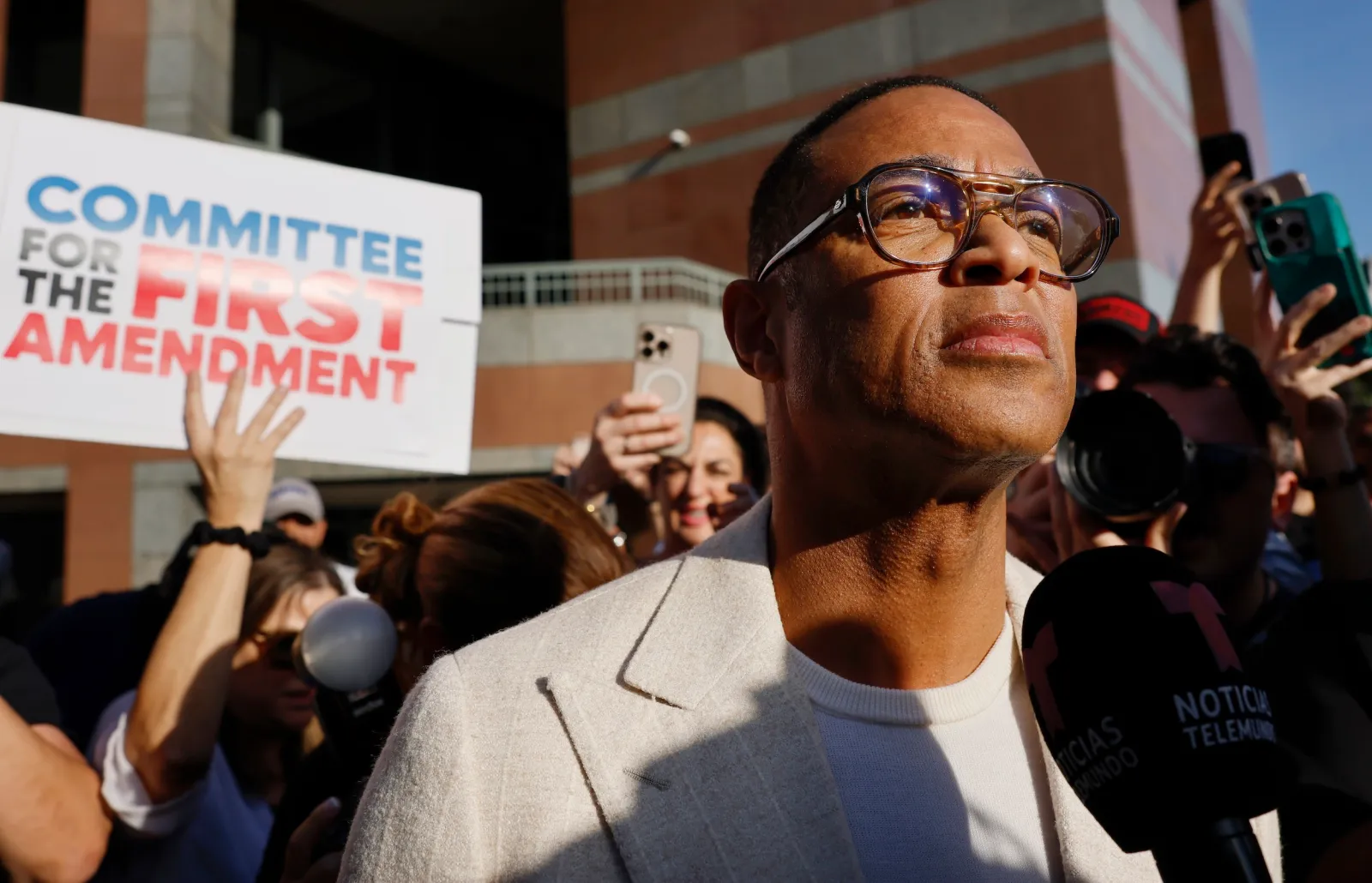
The arrest of former CNN anchor Don Lemon and Emmy award-winning journalist Georgia Fort—for covering a protest in Minnesota—is the latest trick from the authoritarian playbook: abuse and misuse of the law, governmental overreach and humiliation.
Lemon, a household name who reported for CNN for nearly two decades and now publishes on Substack, was arrested Thursday night in Los Angeles by federal agents. Fort, an Emmy-winning filmmaker, was arrested Friday morning. Both were arrested in relation to a protest at a church in Minneapolis the previous week despite both a federal magistrate judge and a federal appeals court previously rejecting the Justice Department’s attempt to arrest Lemon and his producer.
Read More on Opinion
...
In rejecting the request, the presiding magistrate said prosecutors had failed to present evidence justifying the arrests. In an unusual move, prosecutors then filed emergency applications to try to persuade Minnesota's chief federal judge to overrule the magistrate judge. Patrick Schiltz, the chief judge, said the appeals were without precedent and told the prosecutors they needed an indictment from a grand jury, adding that Lemon and his producer "were not protesters at all" nor was there any evidence they engaged in any criminal behavior or conspired to do so.
Smearing journalists as criminals is a familiar tactic of authoritarian regimes. Journalist and Nobel laureate Maria Ressa, a CPJ board member, writes often of the way in which authorities in the Philippines accused her and fellow journalists of being in some way criminal long before they actually brought charges against her.
That is precisely what has been happening in the United States for the better part of a decade, led firmly by the current president. Donald Trump has branded journalists “enemies of the people” and as “fake news,” and mused openly not just about them being arrested—but about them being raped in prison.
On Friday, after news broke of Lemon and Fort’s arrest, the White House posted a photo of Lemon with the caption “When life gives you lemons” with an emoji of metal chains.
In the U.S., it is rare for journalists to be arrested in connection with their work—and even rarer for them to be charged. In 2025, the U.S. Press Freedom Tracker, of which CPJ is a founding member, documented 34 arrests or detentions of journalists, in which just 12 were charged. Federal charges—especially felonies—against journalists are even rarer.
The contortions through which the Justice Department has gone to bring these charges therefore seem a great deal like lawfare: the misuse of the law to punish individuals not because they have committed a crime but because they are a threat to those in power. Journalists are often the first to be targeted as autocracy takes hold because they threaten narratives that the autocrat wants to push.
Lemon and Fort’s arrests follow a growing pattern of journalists being accused of obstruction or of unlawful assembly for exercising their First Amendment rights. In June 2025, Emmy-winning journalist Mario Guevara was arrested on charges including unlawful assembly and obstruction while livestreaming a protest in the Atlanta metro area. He spent over 100 days in custody, and was eventually deported to his native El Salvador, despite being in the United States legally at the time of his arrest.
Last week veteran photojournalist John Abernathy was charged by federal agents in Minneapolis with impeding and obstructing normal access, shot with crowd control munitions and tear gas and deliberately pepper-sprayed as he photographed ICE protests.
All of this follows a wildfire 12 months in which the administration has rapidly escalated its attacks on media freedom in the United States in a flurry of executive and legal actions that range from the expulsion of the Associated Press from the White House press pool to lawsuits against CBS, the New York Times, Wall Street Journal and others, to the evisceration of public media. Earlier this month, Justice Department officials disregarded usual legal protections for journalists when they raided the home and confiscated the electronic devices of a Washington Post reporter as part of a leak investigation.
Few imagined that the erosion of press freedom would happen so fast and in so many ways. All of this has made journalists’ ability to report more precarious, ultimately harming the public’s right to know, as CPJ noted in its report on the first 100 days of the Trump administration.
That report rang an alarm bell. Now we’re past the fire alarm. We are at the fire. CPJ has repeatedly urged all those who believe in a free press to be vocal in its defense, in particular media owners, no matter their political allegiance. Now is the time to speak up—and put out the fire.
Jodie Ginsberg is CEO of the Committee to Protect Journalists.
The views expressed in this article are the writer's own.
View 0 Comments
Submit Correction
View Editorial & AI Guidelines