...

By Robert Alexander
Senior Crime & Court Reporter
0
Share
Newsweek is a Trust Project member
See more of our trusted coverage when you search.Prefer Newsweek on Googleto see more of our trusted coverage when you search.
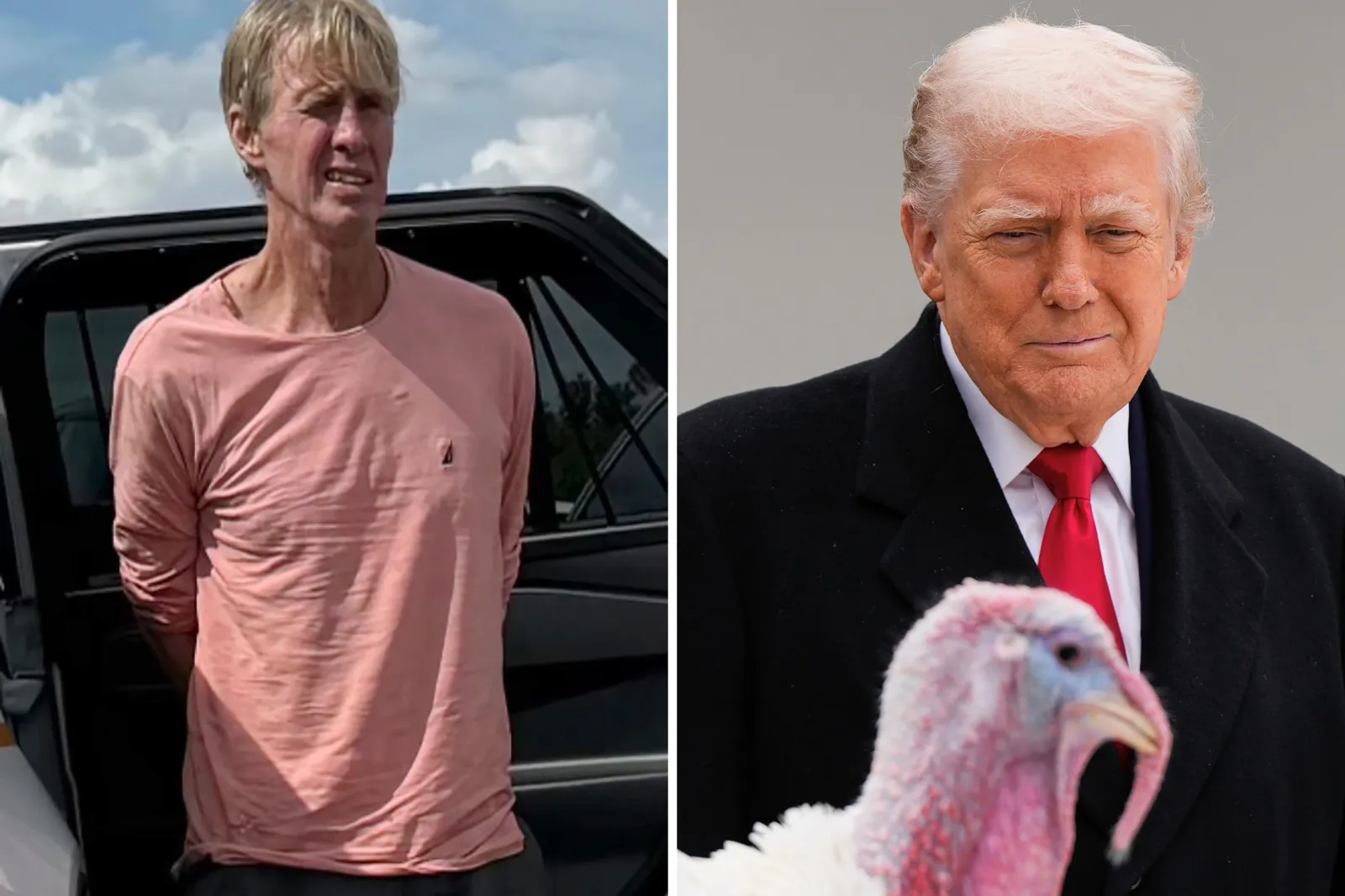
Ryan Wesley Routh, the man convicted of attempting to assassinate President Donald Trump, issued a series of handwritten filings and subpoenas that invite Trump to confront him directly in court—including, explicitly, to physically strike him.
The documents, unsealed in the Southern District of Florida case, outline Routh's requests, comments and instructions to multiple proposed witnesses, along with a subpoena addressed directly to Trump.
Newsweek contacted the Department of Justice for comment via email on Wednesday outside normal office hours.
Read More on U.S.
Why It Matters
The unusual filings offer a rare look into the mindset of a defendant convicted of attempting to assassinate a president, while raising questions about courtroom security and the handling of politically sensitive cases.
By directly inviting Trump to confront or even strike him, Routh has underscored ongoing concerns about threats against political figures and the judicial system's ability to manage them.
...
What To Know
In a handwritten "Motion to Compel Witnesses," filed on November 25, Routh wrote that he did not "want the moment to pass without someone inviting him [Trump] to an open microphone to spill all that is on his mind," saying he believed jurors "would love to hear his thoughts."
Routh told the court he wished to speak without restrictions, adding: "Just good fun. Don't be a p****. (Can I say p**** or coward—sorry)."
He also wrote that if Trump "wished to pummel the defendant just for good measure, put on the handcuffs and shackles and give it your worse."
The motion further said Routh preferred "no cameras, no complaints, no charges."

...
A Wave of Unusual Subpoenas to Trump and Academics
Among the series of subpoenas Routh prepared is one addressed to "Donald John Trump—President," directing him to appear at the Fort Pierce federal courthouse.
That subpoena includes an explicit "open invitation" for Trump to "punch him in the face, as many times" as the president wants and to "vent any anger and displeasure with the defendant" before a jury.
Routh wrote that Trump could "give a list of allowable questions," adding, "I will comply."
The subpoena is signed in Routh's name, alongside his inmate identification number and return address at the Federal Detention Center in Miami.
The filing includes additional handwritten comments, including Routh's remark, "And 5 expert witness subpoenas—please!" written above his signature.
The documents also include subpoenas drafted for other individuals—including academics, journalists and public figures—whom Routh described as potential witnesses offering a wide range of insight he considered relevant to his case.
He drafted a subpoena for former Columbia University student Mahmoud Khalil, asking him to "testify to the gross violation to our Freedom of Speech and erosion of democracy to authoritarianism," and he used the document to advance a theory that Trump sought to make himself a "permanent president."
"Tell us how the war against migrants is to enact the insurrection act for martial law to end all federal voting," Routh wrote.
He issued another proposed subpoena to Yale professor Jason Stanley, a leading scholar on authoritarianism, requesting expert testimony on fascism.
Routh asked Stanley to address constitutional questions related to the 14th Amendment's disqualification clause and the Second Amendment, and he posed speculative scenarios involving how the country might remove a president from the White House in 2029.
No Response From Trump and No Court Action Yet
Court records included in the materials do not show any judicial action taken on Routh's handwritten requests. They also do not indicate whether the subpoenas were ever formally issued by the court or whether Trump or any of the named individuals have responded.
Routh was arrested in September 2024 following what authorities described at the time as an attempted assassination targeting Trump.
No additional details about his current sentencing status are contained in the documents provided.
To date, no public record shows that any of his invitations—including the request that Trump "punch him in the face, as many times as you want," as summarized in assignment notes—have been acknowledged by the president or his legal team.
Who Is Ryan Routh
Routh is a 59-year-old North Carolina man who was found guilty in September on five federal counts—including attempted assassination of a president and use of a firearm in a crime of violence—after prosecutors said he spent weeks surveilling Trump's West Palm Beach golf course and pushed the muzzle of a rifle through a perimeter fence near the sixth hole as Trump played nearby.
He never fired the weapon, according to testimony, because a Secret Service agent spotted him and fired first, prompting Routh to flee before he was arrested minutes later on a nearby highway.
Routh said he never brandished his rifle to shoot Trump or the Secret Service agent who spotted him. He said any evidence suggesting otherwise was a "blatant fabrication," adding, "It was just an individual on the fence with a gun resting there."
In court, the case unfolded chaotically. After the jury returned its guilty verdict on September 23, Routh attempted to stab himself in the neck with a pen as jurors were leaving, causing U.S. Marshals to restrain him and remove him from the courtroom.
When proceedings resumed, he appeared shackled and without his jacket or tie.
Routh dismissed his court-appointed lawyers before trial and represented himself, criticizing his former attorneys and telling Judge Aileen Cannon that he had "no interest in counsel."
Prosecutors have described his plot as politically motivated, though they did not allege organizational ties, and he now faces up to life in prison at his December 18 sentencing.
What People Are Saying
Ryan Routh said during his 55-minute closing argument that he did not intend to shoot Trump: "The prime opportunity was there for the defendant to shoot the president. Why was the trigger not pulled?"
President Donald Trump said after the verdict: "I'm very appreciative of the justice that was given and the way it was handled by Pam Bondi and Todd Blanche and … their team of people."
What Happens Next
The court is set to review Routh's handwritten motions and subpoenas, which have no legal force unless formally approved by the judge, meaning neither Trump nor any proposed witness is required to respond at this stage.
The judge may address the filings in a future hearing, potentially denying them outright or noting them in the record, and could consider whether they raise competency or conduct concerns.
The case itself is expected to continue on its established timeline—toward sentencing or further proceedings—with any security adjustments handled internally. In essence, the filings change little about the legal trajectory of the case.
View 0 Comments
Submit Correction
View Editorial & AI Guidelines