...

By Newsweek Editors
0
Share
Newsweek is a Trust Project member
See more of our trusted coverage when you search.Prefer Newsweek on Googleto see more of our trusted coverage when you search.
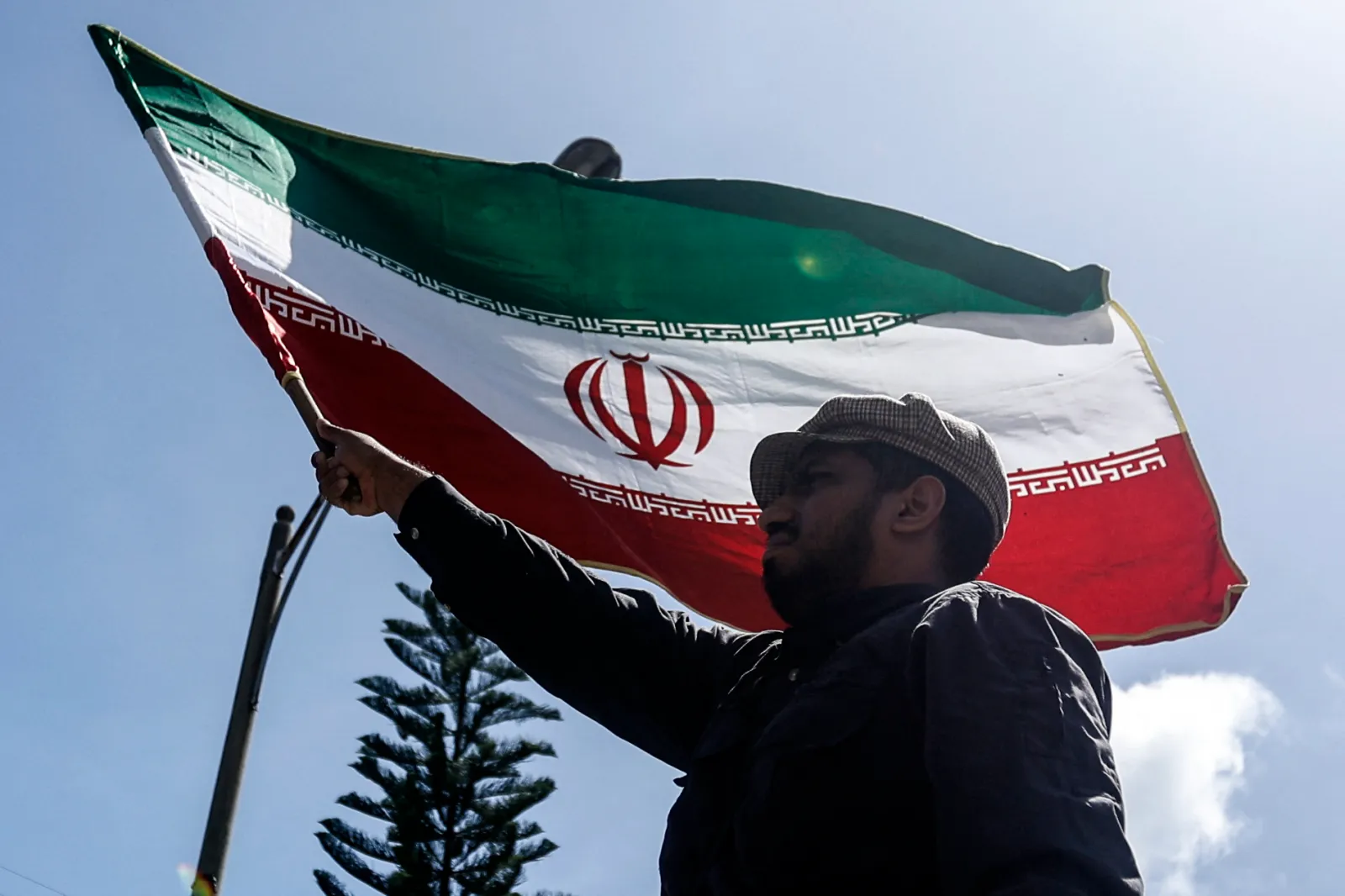
This morning, Donald Trump warned that the United States is "locked and loaded and ready to go" if Iran uses lethal force against protesters. At sea last month, a sanctioned tanker hauling roughly 300,000 barrels of Russian naphtha slipped into Venezuelan waters even as other ships hesitated or turned back. And U.S. officials have detailed a Tehran–Caracas drone line, naming a Venezuelan state-owned aerospace firm as a client for Iranian-designed Mohajer systems. Stitch those frames together and a startling picture appears: the "Axis of Resistance" in 2026 runs on barrels and parts—Russia keeps Venezuela’s oil moving, Iran wants to sell the drones and munitions, and the United States is trying to squeeze both. It's a hidden, 21st-century battlefield, and it's already global.
Common Knowledge
On the right, hawks argue that credible threats work. John Bolton, Trump's former national security adviser who is now one of his implacable opponents, said the president "did precisely the right thing" by striking Iranian nuclear sites last summer and that it was "long past time" to act. Douglas Feith, senior fellow at the Hudson Institute, wrote of those strikes that "Americans are safer now than they were," calling the use of force a necessary reminder that rogue nuclear programs can invite destruction.
Read More on News
Skeptics such as the Cato Institute previously warned the United States was "barreling toward full-scale war with Iran," arguing that the June strikes and, by implication, any new threats risk widening the conflict.
Trump’s "locked and loaded" Truth Social post landed as Iran’s largest protests since 2022 turned deadly. Ali Larijani, a prominent Iranian political figure, accused Washington of meddling and warned U.S. interests would suffer if it intervened.
Uncommon Knowledge
The rhetoric is familiar by now. What’s new is the way the U.S. is coupling it to a daily grind of maritime and financial enforcement that runs from the Gulf to the Caribbean.
Venezuela’s export machine depends on a light petroleum liquid to thin its tar-thick Orinoco crude so it can be pumped into pipelines and loaded onto tankers. That liquid is naphtha, a gasoline-like distillate long used as a solvent or petrochemical feedstock but, crucially here, as a diluent for heavy oil. Think of Venezuela’s crude as honey in winter; naphtha is the warm water that makes it flow. When the naphtha slows, exports stall and the money stops.
The supplier has changed. Trade trackers cited by Lloyd’s List show Russia has supplanted Iran (who else?) as Venezuela’s principal naphtha source, stepping in so that PDVSA, the state-owned Venezuelan oil and gas company, can blend extra-heavy crude into exportable grades. A Russia-origin naphtha cargo even made port as other sanctioned vessels peeled away in late December.
The U.S. campaign has begun to bite in measurable ways. Reuters reported PDVSA residual fuel inventories swelling to roughly 25 million barrels by December 31 and monthly exports dropping to about half November’s 950,000 barrels per day, as tankers idled, reversed course, or shifted to floating storage.
Meanwhile, Iran is offering Venezuela something else. On December 30, the U.S. Treasury sanctioned a Venezuela–Iran network that, it says, facilitated "millions of dollars’" in combat UAV sales and local assembly, naming Venezuela’s state company EANSA and its chair alongside Iranian partners tied to Mohajer-series drones. That same week Washington also targeted 29 "shadow-fleet" vessels and their managers moving Iranian oil, and separately hit Venezuela-linked traders and tankers.
Tehran is already adapting. The Financial Times reported that Iran’s defense export arm is now offering major weapons for payment in cryptocurrency—one of the first overt cases of a state advertising crypto-denominated arms sales.
Russia’s role is also no longer a mere inference. As U.S. interdictions mounted, Moscow formally asked Washington to halt the pursuit of a fleeing oil tanker reportedly heading to Venezuela, an extraordinary, on-the-record diplomatic intervention that lays bare how enforcement has become a U.S.–Russia friction point in the Americas.
Put it together and the "Axis of Resistance" looks less like an ideological bloc and more like an "Axis of Invoices." Russia supplies the thinning liquid that lets Venezuela ship oil while Iran supplies the drones and munitions that tie Caracas to Tehran’s military-industrial ecosystem. The United States is trying to raise the cost and lower the reliability of both flows.
The situation is explosive. Trump’s vow to intervene if protesters are killed raises the immediate stakes even further.
If you’re enjoying Uncommon Knowledge, please share. If you have suggestions for future editions or feedback, email subscriber.feedback@newsweek.com. We want to hear your voice.
View 0 Comments
Submit Correction
View Editorial & AI Guidelines