...

By Peter Aitken
Politics Weekend Editor
0
Share
Newsweek is a Trust Project member
See more of our trusted coverage when you search.Prefer Newsweek on Googleto see more of our trusted coverage when you search.
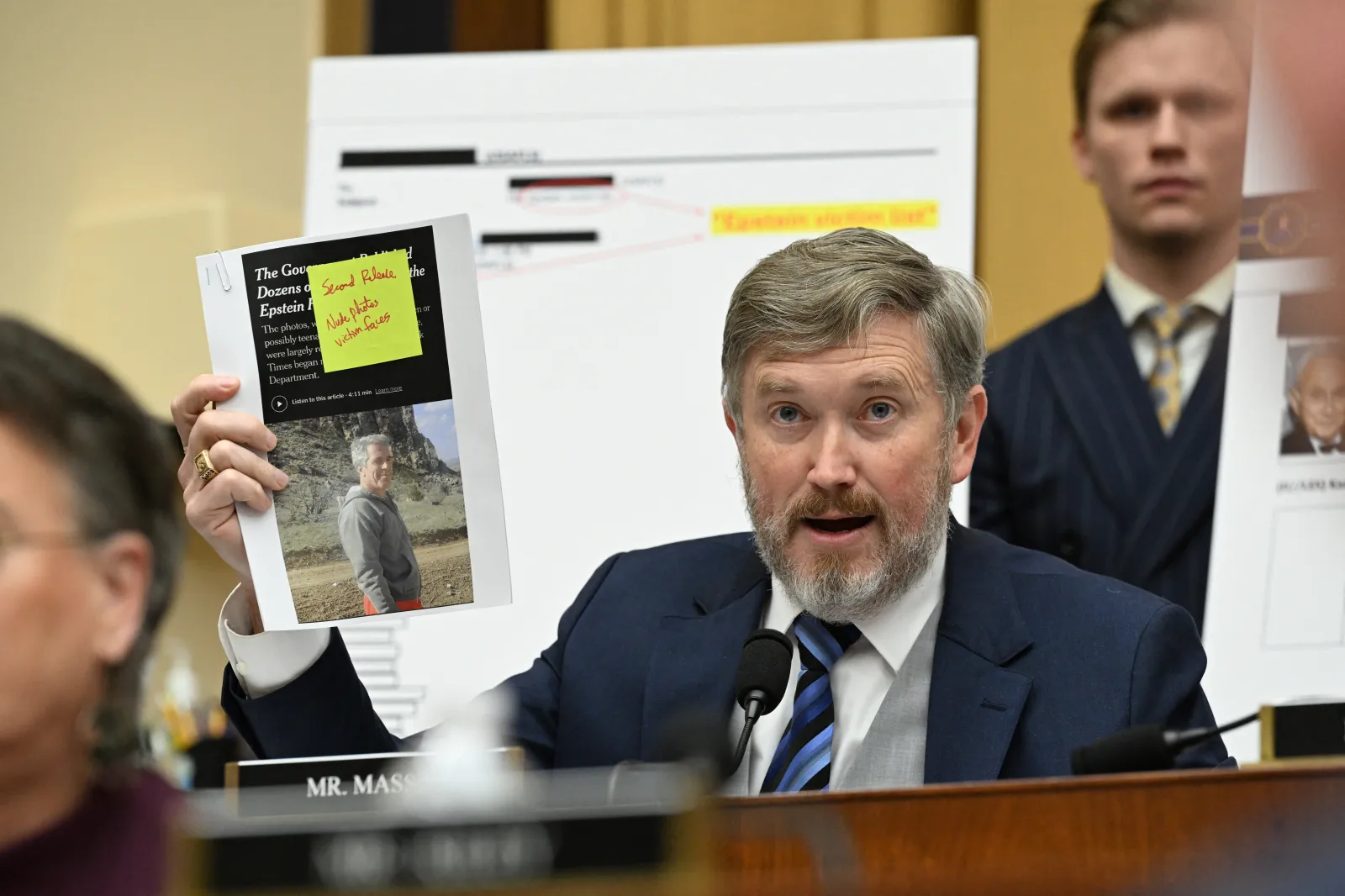
Representative Thomas Massie, a Kentucky Republican who has increasingly spoken out against the Trump administration, recently told Politico that the "retirement caucus is growing" after dozens of GOP members have decided not to seek reelection to the House of Representatives in this year's midterms.
“Once we get past March, April, and May, which contain a large portion of their Republican primaries, I think you’re going to see more defections," Massie said, adding that thanks to the razor-thin majority in the House, he only needs one or two "co-conspirators" to put pressure on the party "to get something done."
Newsweek reached out to the White House via email on Sunday for comment.
Read More on Politics
Why It Matters
Republicans have a slim majority in Congress with 218 seats to the Democrats' 213. While the GOP came out of the 2024 election on a high, having secured the White House and both chambers of Congress, some analysts have warned President Donald Trump faces an uphill battle to retain control of the House, which historically sees the ruling party suffer significant losses if they also control the White House during the sitting president's first midterm election.
The situation has only grown more complicated as lawmakers have privately and publicly started to criticize the administration and House Speaker Mike Johnson, a Louisiana Republican. However, intraparty clashes are not uncommon, especially in a closely divided House where a small number of dissenters can shift the balance of power, and at times, force the speaker’s hand.
...
What To Know
Cracks first started to show in Republican Party unity when Massie launched a bipartisan effort with Representative Ro Khanna, a California Democrat, to push through the Epstein Files Transparency Act, which Johnson resisted and forced the lawmakers to resort to using a discharge petition in order to bypass the speaker. Some accused Johnson of delaying the swearing in newly-elected Representative Adelita Grijalva, an Arizona Democrat, due to the fact she would ultimately provide the final signature to pass the petition.
However, last year's federal government shutdown, which ended up the longest shutdown in U.S. history, proved to be more of a long-term carbuncle for the administration, as it brought to light some of the complaints and frustrations lawmakers had been holding back.
Then-Representative Marjorie Taylor Greene of Georgia announced she would not seek reelection and finished out her tenure on January 5 of this year. Her departure would prove to be the start of a wider movement rather than a one-off instance.
By February, 30 Republican lawmakers had declared their intent to not seek reelection. However, according to available records dating back to 2012, a significant number of representatives retire each year—roughly 10 percent of the total chamber—and the divide between the parties fluctuates dramatically. In 2020, 36 Republicans decided not to seek reelection, while in 2022, 33 Democrats did, the most for each party in this time period.
Of the 30 Republicans not seeking reelection, eight are leaving to seek a seat in the Senate, with almost half of those seeking to unseat a senator from their party, including an effort to unseat Senator John Cornyn of Texas.

...
Republican Speaks Out on Party Frustrations
Representative Don Bacon of Nebraska, one of the 30 Republicans retiring after this session, joined two of his colleagues in forcing a House vote on Trump's tariffs—a matter which the president has fiercely defended and fought for throughout his second administration.
Bacon told Politico he had heard other House Republicans complaining about the tariffs before ultimately voting to support the president anyway, saying that "some people live in fear."
He claimed that the White House and Trump had threatened retaliation against those who voted for the measure, and without it, might have seen dozens of Republicans break ranks for it.
Those threats have largely focused on Trump backing rival candidates in primaries, but with so many Republicans not seeking reelection, they have gained a sort of immunity, giving them the ability to vote more freely: In the end, six Republicans backed the vote against the tariffs.
What People Are Saying
President Donald Trump wrote on Truth Social last week: "Any Republican, in the House or the Senate, that votes against TARIFFS will seriously suffer the consequences come Election time, and that includes Primaries! Our Trade Deficit has been reduced by 78%, the Dow Jones has just hit 50,000, and the S&P, 7,000, all Numbers that were considered IMPOSSIBLE just one year ago. In addition, TARIFFS have given us Great National Security because the mere mention of the word has Countries agreeing to our strongest wishes. TARIFFS have given us Economic and National Security, and no Republican should be responsible for destroying this privilege."
Representative Jim McGovern, a Massachusetts Democrat, wrote on X earlier this month: "This is Trump's #1 tell. He spends zero time attacking the pedophiles—and instead attacks the Republican congressman who helped expose the pedophiles."
What Happens Next
Primaries will start in March and run through the summer, with Arkansas, North Carolina, and Texas set for the first week of March, followed by Mississippi and Illinois.
In a polarized era, the center is dismissed as bland. At Newsweek, ours is different: The Courageous Center—it's not "both sides," it's sharp, challenging and alive with ideas. We follow facts, not factions. If that sounds like the kind of journalism you want to see thrive, we need you.
When you become a Newsweek Member, you support a mission to keep the center strong and vibrant. Members enjoy: Ad-free browsing, exclusive content and editor conversations. Help keep the center courageous. Join today.


View 0 Comments
Submit Correction
View Editorial & AI Guidelines