10
Loading video...

By Brendan Cole
Senior Reporter
0
Share
Newsweek is a Trust Project member
See more of our trusted coverage when you search.Prefer Newsweek on Googleto see more of our trusted coverage when you search.
Armenian Prime Minister Nikol Pashinyan has hailed a "historic victory" in parliamentary elections, which are considered a test of his party's ability to move the former Soviet republic away from Russia's influence.
U.S. President Donald Trump had endorsed Pashinyan ahead of Sunday's ballot amid allegations of interference by Moscow, with Russian President Vladimir Putin comparing its European Union ambitions to the scenario that triggered his full-scale invasion of Ukraine.
In a post on Truth Social last month, Trump expressed his “complete and total endorsement for re-election” of Pashinyan, the first time a U.S. president has publicly backed a candidate in a country considered part of Russia’s backyard, following a peace and trade deal signed with the incumbent Armenian premier.
Read More
JD Vance Faces Call to Not Just Focus on Trade in Trip to Russia’s Backyard6 min read

Putin is likely to view the result with concern as Pashinyan seeks closer ties with the EU, a peace agreement with Baku and the normalization of relations with Turkey.
"Russia is concerned about Armenia coming too close to the EU," Fabienne Hara, the Europe program director at the International Crisis Group, told Newsweek on Monday. "There's a shift in foreign policy of Armenia in which they are trying to diversify their partners."
The Nagorno-Karabakh Influence
...
Sunday's ballot was the first election since Armenia’s loss of Nagorno-Karabakh to Azerbaijan in 2023, which ended more than three decades of Armenian control over the disputed region that is internationally recognized as part of Azerbaijan.
When Russia failed to come to Armenia's aid after Baku seized Nagorno-Karabakh, Pashinyan suspended Yerevan's participation in the Moscow-led Collective Security Treaty Organization (CSTO), marking its biggest move away from Russia since the breakup of the Soviet Union and pivot toward the European Union and NATO.

...
On Sunday, Pashinyan's ruling Civil Contract party won just under half (49. 8 percent) of the votes. This was less than the 54 percent it got in 2021's ballot, but ahead of the main pro-Russian groups Strong Armenia and Armenia Alliance, which got a better-than-expected total of 31 percent, and so are on track to enter parliament.
National Sovereignty Or Endless Conflict
Stephan Pechdimaldji, an Armenian-American communications strategist who writes about Armenia’s politics and history, told Newsweek that while securing a slim majority, Pashinyan has cemented his mandate to diversify Yerevan’s alliances, falling short of a super majority was a serious blow.
“It further highlights how the Armenian electorate has been deeply torn between two fears—the fear of a total loss of national sovereignty and the fear of an endless conflict with its neighbors,” he said.
Pashinyan declared victory on Monday, saying that Armenians "voted for peace, regional prosperity and cooperation," and he was congratulated by France and the EU. It comes weeks after the European Political Community summit in Yerevan last month, which hosted dozens of world leaders at the country's biggest political event since independence.
Hara from Crisis Group said that the pro-Russian parties did not have a clear plan to counter the peace argument very clearly: "A lot of political forces portrayed this election as a battle between war and peace agendas, and Pashinyan said, 'I'm the peace guy, I'm going to consolidate this peace with Azerbaijan.'"

...
Armenia Cements Ties With US
Pashinyan had signed a historic peace agreement at the White House with Azerbaijan’s President Ilham Aliyev last year, after giving Trump bragging rights as a dealmaker.
Last week, Secretary of State Marco Rubio touted a project called the Trump Route for International Peace and Prosperity (TRIPP), trade-routing deals between Armenia and the U.S. that were agreed last year as part of a "great new relationship with Armenia."
Armenian officials and analysts had accused Moscow of trying to influence the election through disinformation campaigns in favor of pro-Russian candidates, and Moscow imposed trade restrictions to add pressure on the government in Yerevan.
Peace Treaty With Azerbaijan
On Sunday, Pashinyan was short of the two-thirds majority he needed to call a constitutional referendum that Azerbaijan had demanded as part of the peace deal.
Brenda Shaffer, a senior fellow at the Atlantic Council, a think tank, said this will cast doubt on Pashinyan’s ability to pass the constitutional referendum enabling the peace treaty, a policy he had campaigned on.
Armenia’s Constitution has a clause that calls for it to unite with Karabakh, which Azerbaijan demanded be removed as a pre-condition for signing a peace treaty, Shaffer noted.
The neighbors have already agreed on the content of the peace treaty, but its signing is contingent on removal of this constitutional clause.
Meanwhile, Russia wants to prevent the emergence of peace between Azerbaijan and Armenia to keep more control over the region and prevent the U.S. from increasing its influence.
Pashinyan said he will hold a constitutional referendum following his reelection to remove the clause. “However, while winning, Pashinyan’s victory was not a landslide and thus, he may have difficulty passing the constitutional referendum,” Shaffer told Newsweek.
Russian Foreign Ministry spokesperson Maria Zakharova said Monday that "unprecedented pressure" had been placed on opposition parties and alleged Western "interference."
Armenia as the New 'Ukraine'
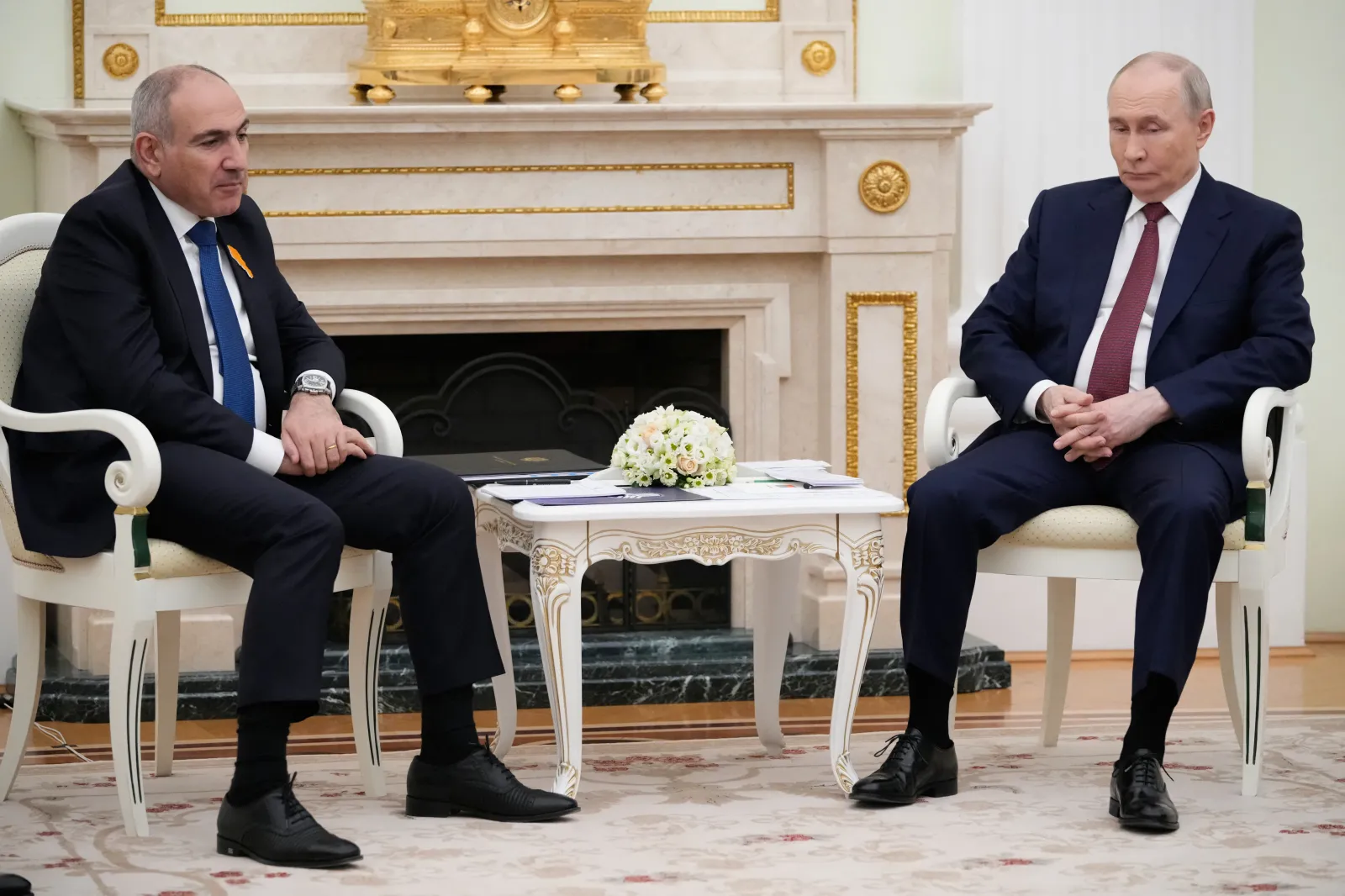
Putin has also called on Armenia to hold a referendum on whether to join the EU or remain in the Russian-led Eurasian Economic Union (EAEU). Yerevan is far from becoming an EU candidate country, and Pashinyan is still trying to maintain ties with Moscow and said, "our relations with Russia are institutional and based on mutual respect."
Russia has threatened to end cheap gas and oil supplies to Armenia and enforce further bans on key Armenian exports to Russia and Putin's threats in which he mentioned his invasion of Ukraine are being taken seriously.
...
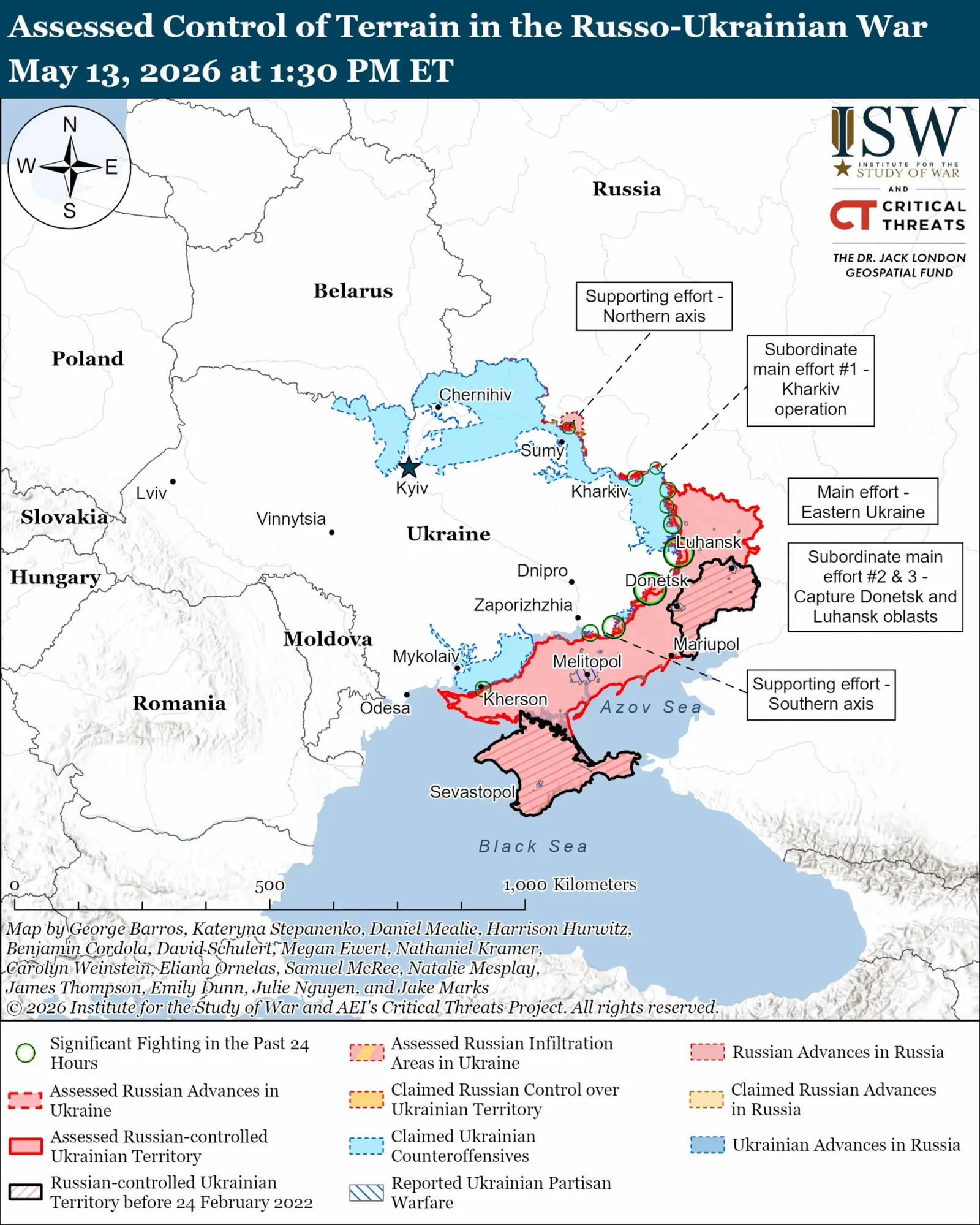
“Armenia is rapidly being forced into the role of the new 'Ukraine' in the South Caucasus where a high-stakes proxy battleground is taking place between Moscow and the West in which ultimately, it’s the Armenian people who are the ones set to lose,” said Pechdimaldji.
“The more Pashinyan pivots to the West, the more likely Putin will force his way back into Armenia’s orbit,” he said, “unlike Ukraine, where worldwide condemnation of Russian aggression has been unconditional, Armenia is being held to a different standard," he said, “Putin will exploit that selective approach to the detriment of preserving democracy in Armenia."
Hara from the Crisis Group, said: "Russia is still important for Armenia," adding, "it's going to be a delicate dance for Pashinyan and he's going to have to be really skilled at not tilting the balance too far."
View 0 Comments
Submit Correction
View Editorial & AI Guidelines