...

By Robert Alexander
Senior Crime & Court Reporter
0
Share
Newsweek is a Trust Project member
See more of our trusted coverage when you search.Prefer Newsweek on Googleto see more of our trusted coverage when you search.
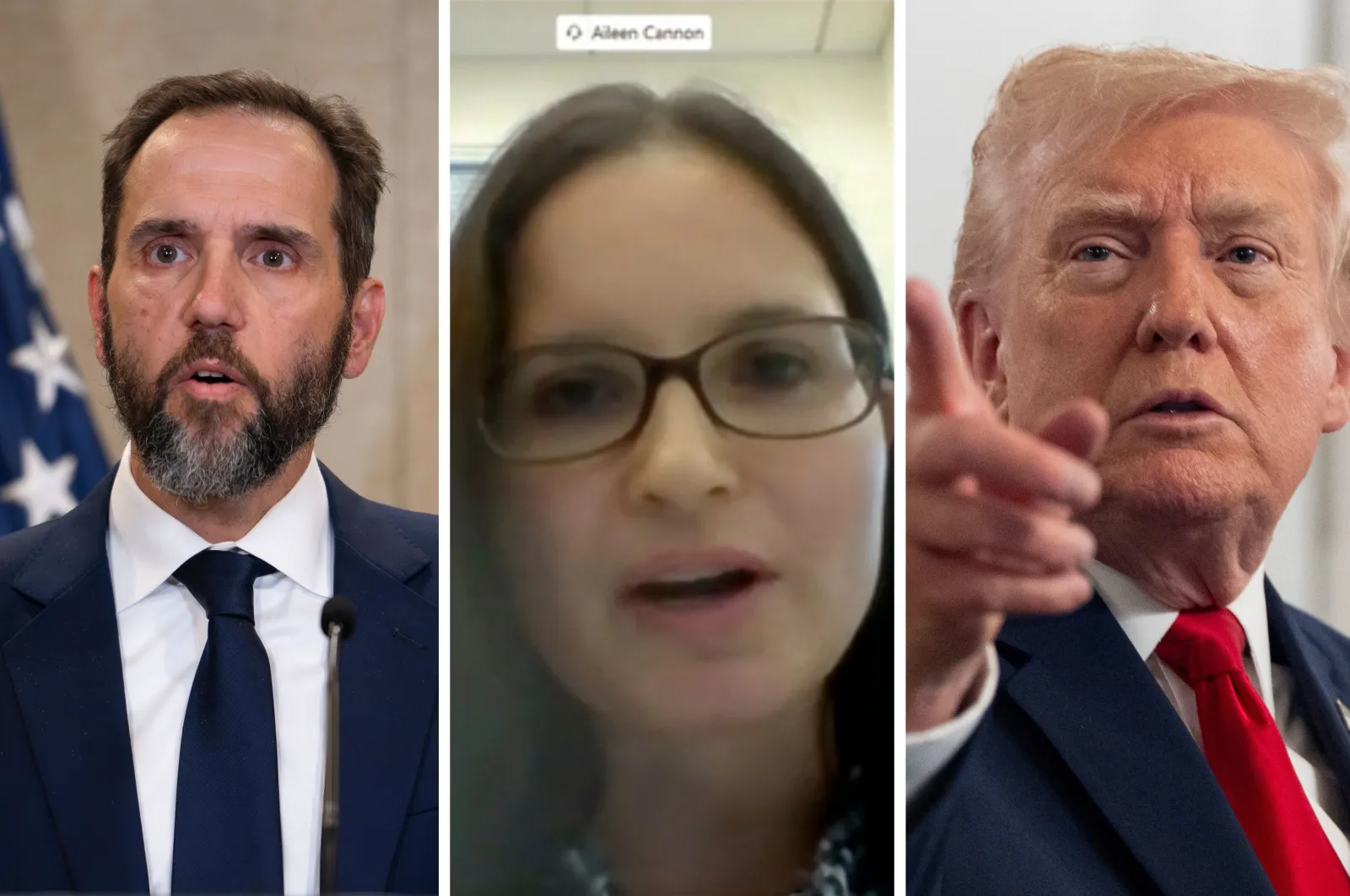
President Donald Trump is urging a federal court to continue blocking publication of former Special Counsel Jack Smith’s final report on the classified-documents investigation—an inquiry that began with an unprecedented federal indictment and ended with dismissal after Trump’s return to the presidency.
In a motion filed December 2, 2025, Trump asked U.S. District Judge Aileen Cannon for permission to participate in litigation over whether Volume II of Smith’s report should be released to the public.
Newsweek contacted the DOJ for comment via email outside of normal office hours on Wednesday.
Read More on U.S.
Why It Matters
The fight over whether to release former Special Counsel Jack Smith’s final report reaches far beyond Donald Trump’s dismissed classified-documents case.
At its core, the dispute will help determine how much authority special counsels have, how transparent the Justice Department must be in politically sensitive investigations, and whether a sitting president can use the courts to keep findings about his own conduct from public view.
With watchdog groups pressing for disclosure and Trump urging Judge Aileen Cannon to keep the report sealed, the ruling will set a precedent shaping government accountability, the balance of executive power, and how future investigations of high-ranking officials are documented and released.
...
What To Know
Why the Report Is Still Secret
Jack Smith is the former special counsel who investigated Donald Trump for allegedly mishandling classified documents, and Volume Two is the part of his final report that explains everything his team found in that classified-documents investigation.
Judge Aileen Cannon has withheld releasing Volume Two because she says making it public could harm the fair-trial rights of Trump’s former co-defendants if the case is ever revived, and Trump doesn’t want it released because he argues it would legitimize what he calls an unlawful investigation into his conduct.
Legal and Political Stakes Intensify
In the December 2, 2025 motion Trump has asked Cannon for permission to participate as amicus curiae [a written legal argument submitted to a court by someone who is not a party to the case but who believes the court’s decision may affect their interests or the public interest] in the litigation over whether Volume II of Smith’s report should be released to the public.
Trump argues that disclosure would "perpetuate Jack Smith’s unlawful criminal investigations and proceedings."
The filing comes nearly 18 months after Judge Cannon dismissed Smith’s superseding indictment against Trump, holding that the special counsel’s appointment was unconstitutional.
Following Trump’s victory in the 2024 presidential election, the Justice Department abandoned its appeal of that ruling as it related to Trump.
Two watchdog groups—American Oversight and the Knight First Amendment Institute—are seeking access to the report, prompting a new round of legal arguments.
An 11th Circuit panel has already set a 60-day deadline, beginning November 3, for Judge Cannon to respond to the groups’ requests, according to ABC News reporting included in the notes.
Inside the Original Case Against Trump
Smith originally brought 40 federal charges against Trump connected to his retention of classified documents at Mar-a-Lago after leaving office in January 2021.
The indictment alleged that Trump stored highly sensitive national security records in unsecured areas—including "a ballroom, a bathroom and shower, an office space, his bedroom, and a storage room" at the Florida club.
Prosecutors further asserted that Trump showed classified materials on two occasions in 2021, telling one group of visitors that the document he displayed was "highly confidential" and "secret," adding: "As president I could have declassified it…Now I can’t, you know, but this is still a secret."
In a rare interview, Smith rejected claims that political bias influenced his work. Calling such allegations "ludicrous," he defended his team as "good people" who "want to do the best for the country."
He emphasized that the Trump investigation differed from the Biden classified-document matter because of "the willfulness…the intent to keep the documents."
Smith added that he believed the case "would have made it all the way to trial" had the election outcome not intervened.
Trump, however, continues to characterize Smith’s actions as improper.
In his recent court filing, he reiterated earlier arguments that Smith’s appointment and investigative conduct were unlawful, asserting that the report should remain sealed.
The Justice Department, Trump’s co-defendants Walt Nauta and Carlos De Oliveira, and the watchdog groups remain divided on whether the report should be released.
According to the December 1 joint status update referenced in the filing, the government and defendants do not oppose Trump’s participation, while the watchdog organizations argue the motion is untimely.
With the deadline imposed by the appeals court approaching, Judge Cannon must now determine whether the public has a right to view Smith’s findings—or whether the document will remain sealed, extending one of the most contentious legal battles of the past decade.
Chioma Chukwu, executive director of American Oversight told Newsweek via email on Wednesday: "We strongly oppose the president’s latest attempt to keep critical information—including matters that may implicate national security—from the American people. The public has a right to see Special Counsel Jack Smith’s findings, and no amount of legal maneuvering by the president or Judge Cannon changes that.
"It shouldn’t take years to release a report about the president’s own handling of classified documents—especially while he demands full transparency from the very people he accuses of the same conduct. It raises an obvious question: why keep information about himself buried that he insists must be exposed when it involves his political opponents? Every day this report stays hidden shields those in power and undermines accountability."
What People Are Saying
Donald Trump on June 14, 2023, during his first public remarks after being arraigned, claiming that the classified-documents prosecution was illegitimate—the same argument he is now invoking to keep Jack Smith’s final report sealed, said: "Today we witnessed the most evil and heinous abuse of power in the history of our country. Very sad thing to watch."
Judge Aileen Cannon in her constitutional rationale for striking down Jack Smith’s appointment—the foundation of her order blocking release of the Smith report and the central legal argument now at issue, said: "The Framers gave Congress a pivotal role in the appointment of principal and inferior officers. That role cannot be usurped by the Executive Branch or diffused elsewhere—whether in this case or in another case, whether in times of heightened national need or not."
What Happens Next
Judge Aileen Cannon must now issue a ruling—under a 60-day deadline from the 11th Circuit—on whether to release Volume II of Jack Smith’s final report, deciding both whether watchdog groups may intervene and whether her prior order blocking disclosure should stand.
Trump, allowed to participate as amicus curiae, is urging her to keep the report sealed, while the groups are pressing for immediate public release.
Whatever Cannon decides is likely to trigger swift appeals: if she blocks disclosure, the watchdogs will return to the 11th Circuit, and if she orders release, Trump is expected to seek an emergency stay. The dispute is almost certain to move beyond the district court once her ruling is issued.
Update 12/03/2025, 11:01 a.m. ET: This article has been updated with comment from Chioma Chukwu, Executive Director of American Oversight
View 0 Comments
Submit Correction
View Editorial & AI Guidelines