10
Loading video...

By Gabe Whisnant
News Editor
0
Share
Newsweek is a Trust Project member
See more of our trusted coverage when you search.Prefer Newsweek on Googleto see more of our trusted coverage when you search.
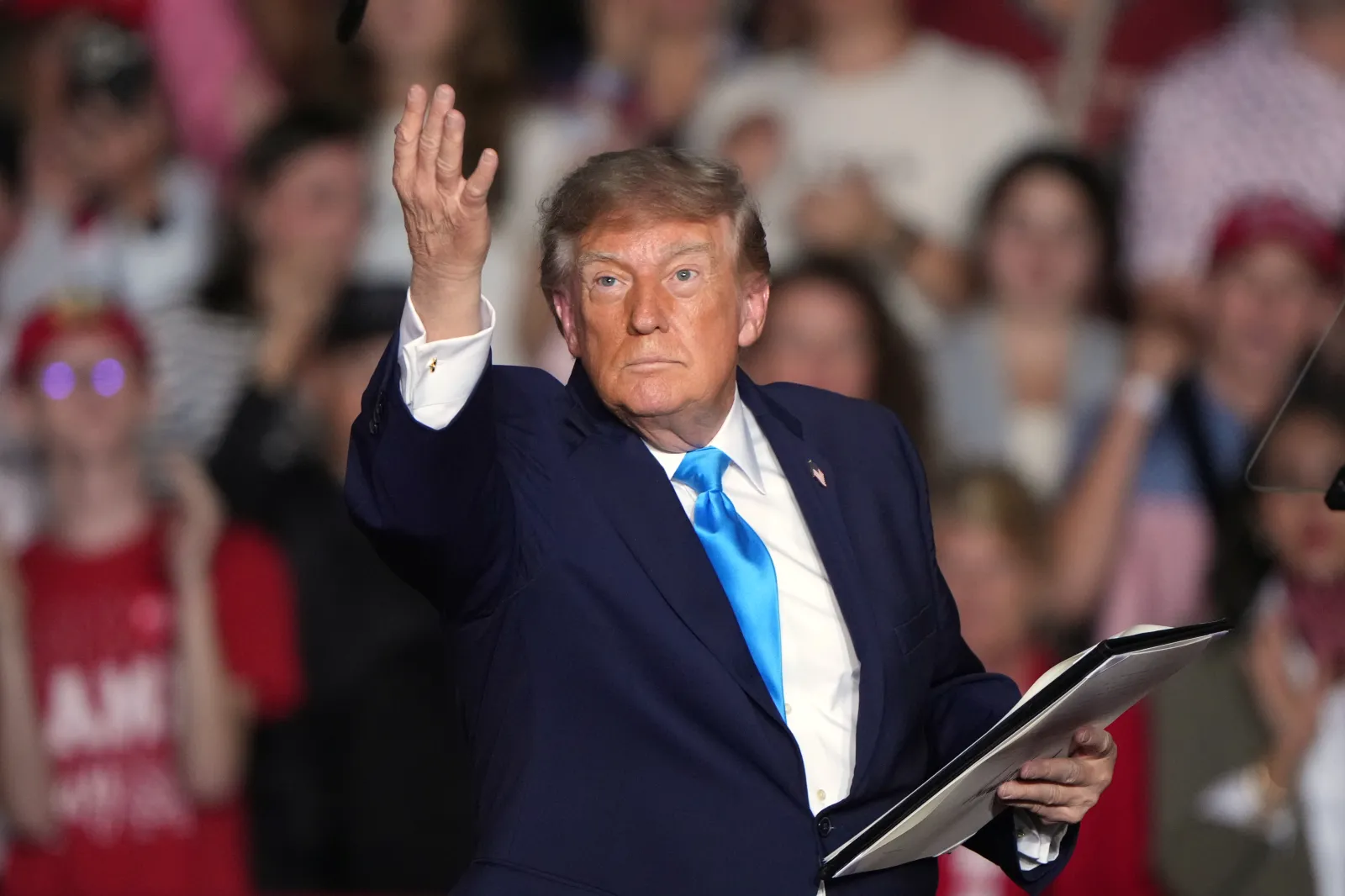
President Donald Trump sparked speculation on Tuesday after telling supporters to "Watch for the 'Midterm Surprise!'" in a Truth Social post celebrating what he described as large rally crowds, strong enthusiasm and Republican momentum ahead of next month's midterm elections.
"My Rally crowds and enthusiasm are unbelievable!" Trump wrote, adding that Republicans are "flipping races all over the place" and accusing the media of underplaying the party's strength.
The president did not elaborate on what he meant by a "midterm surprise," leaving supporters and political observers to wonder whether he was hinting at a specific development or simply projecting confidence about GOP prospects.
Read More on Politics
Later Tuesday, during an event in Maryland announcing a new defense project, Trump hinted that additional initiatives could be on the way as he praised Office of Management and Budget Director Russ Vought.
"We have some big surprises coming up in a few weeks, right Russ?" Trump said. "He's going to be one of the important people in the history of our country."
The president did not elaborate on what those "surprises" might entail, and it was not immediately clear whether the remarks were connected to his earlier Truth Social post.
...
Can Republicans Defy the Midterm Forecasts?
Trump’s remarks come as both parties battle for who will control Congress in the final two years of his second term as president. On November 3, voters will head to the polls to decide all 435 House seats and 35 Senate contests. Republicans currently hold narrow margins in both the House and Senate, and recent polling indicates that Democrats are set to flip several seats.
Election simulations from RacetotheWH—which combine voting patterns, polling and other indicators—give Democrats an 88 percent chance of retaking the House as of Tuesday, with 234 projected seats to the GOP's 201. While the Senate is more competitive, Democrats are projected to win 53 seats to Republicans' 47, with a 73 percent chance of securing a majority.
Despite Trump's claims of surging Republican momentum, some election forecasters have shifted key races toward Democrats in recent weeks. While many contests remain closely contested, analysts have pointed to a political environment that increasingly favors Democratic gains.
Early voting has already begun in several states, and Trump continues to face political headwinds. His approval rating is hovering near record lows, while polls show voters remain concerned about the economy and the overall direction of the country.
The Republican National Committee (RNC) pushed back on the notion that recent polling accurately reflects the political environment.
"National polls always underestimate support for Republicans and liberal rags like Newsweek always take the bait," RNC National Press Secretary Natalie Baldassarre told Newsweek via email. "Republicans are united in exposing the far-left's extreme agenda and will leave it all on the table to defy history in November."
Newsweek has reached out to the White House and the Democratic National Committee via email on Tuesday afternoon for comment.
Trump's 'Midterm Surprise' Sparks October Surprise Comparisons
Gunther Eagleman, a Trump ally and social media influencer, wrote on X: “Trump keeps teasing a ‘midterm surprise,’ and Democrats are already nervous. Nobody knows exactly what he has planned, but the reaction alone tells you they’re paying attention. Whatever is coming, Trump clearly wants maximum impact right when the midterms heat up.”
Conservative commentator Eric Daugherty posted on X: “JUST IN: President Trump announces a "MIDTERM SURPRISE" is surging for Republicans soon as he continues to pack his rallies 2024 MODE IS WORKING. Here we go! October is Trump's month! Time to prove the polls wrong. VOTE.”
Not everyone sees Trump's comment as a sign that a major development is imminent.
Matt Klink, a Republican strategist and president of Klink Campaigns, told Newsweek that Trump's reference to a "midterm surprise" was more likely a message aimed at energizing voters than a hint at a specific event.
"Trump's remarks about a 'Midterm Surprise' are spin, and the spin is the point," Klink said via email. "Trump tied the line to his Nebraska rally crowds and enthusiasm. That's a turnout message, not a classified briefing."
Klink argued that the president is seeking to boost Republican enthusiasm despite a difficult electoral environment reflected in many public polls and election forecasts. But he cautioned against assuming the outcome is settled, noting that campaign dynamics can change rapidly in the final weeks before Election Day.
"Bottom line: Lots more fun in the remaining four weeks of the campaign," he said.
Trump's use of the phrase "midterm surprise" also evokes a long-standing tradition in American politics: the "October surprise," a term used to describe late-breaking developments that can alter the trajectory of an election in its final weeks. From major investigations and damaging disclosures to foreign policy crises and unexpected campaign shakeups, such moments have periodically reshaped the political landscape just before voters head to the polls.
5 October Surprises That Shook Modern U.S. Elections
1980: Iran Hostage Crisis Dominates Final Stretch
The term "October surprise" became associated with the 1980 election as President Jimmy Carter sought the release of 52 Americans held hostage in Iran before Election Day. While the hostages remained captive through the campaign, the crisis overshadowed the race and reinforced concerns about Carter's leadership ahead of Ronald Reagan's victory.
2000: George W. Bush's DUI Arrest Revealed
Less than a week before Election Day, reports emerged that Republican nominee George W. Bush had been arrested for drunk driving in Maine in 1976. The revelation generated wall-to-wall coverage in one of the closest presidential contests in modern history and was widely viewed as a potential factor among undecided voters.
2004: Bin Laden Reemerges Before Election Day
Four days before Americans went to the polls, Al-Qaeda leader Osama bin Laden released a video message addressing the United States. The unexpected appearance thrust terrorism and national security back to the forefront of the presidential race between George W. Bush and Democratic challenger John Kerry, becoming one of the most closely watched developments of the campaign's final week before Bush's reelection victory.

...
2016: Comey's Clinton Letter
Many political observers consider FBI Director James Comey's October 28 letter to Congress one of the most consequential October surprises in recent history. The announcement that the FBI was reviewing newly discovered emails potentially connected to Hillary Clinton's private email server dominated headlines during the campaign's final days. Analysts remain divided over how much it influenced the result, but it remains a central part of debates over Trump's 2016 victory.
2020: The Hunter Biden Laptop Story
Weeks before the election, reporting by the New York Post on a laptop allegedly belonging to Hunter Biden sparked a political firestorm. The story fueled disputes over social media moderation, questions about the authenticity and sourcing of the material, and broader debates about media coverage in the closing days of the campaign.
Newsweek’s reporters and editors used Martyn, our AI assistant, to produce this story. Learn more about Martyn here.
Contact Newsweek editors on this story: Gabe Whisnant and Cristina Diciu.
View 0 Comments
Submit Correction
View Editorial & AI Guidelines