...

By Billal Rahman
Immigration Reporter
0
Share
Newsweek is a Trust Project member
See more of our trusted coverage when you search.Prefer Newsweek on Googleto see more of our trusted coverage when you search.
President Donald Trump warned in an interview that restricting international students could bankrupt some U.S. universities, adding that if they are "good" students and want to "stay in America," they are not offered green cards.
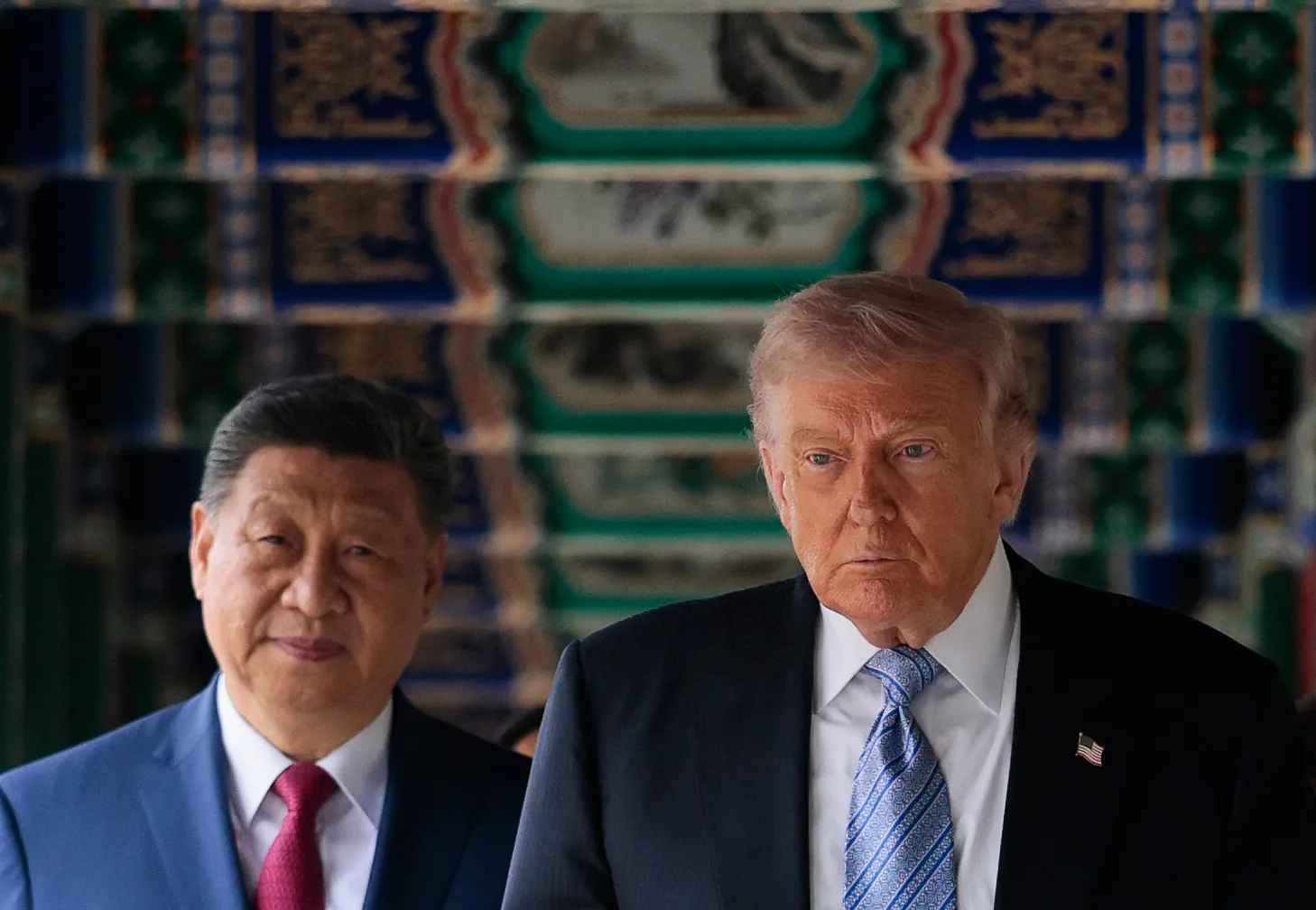
In an interview with Fox News host Sean Hannity during a state visit to China, the president said it was "a very insulting thing to tell a country 'we don't want your people in our schools,' " implying that it could push other countries to expand their own university systems to retain young talent.
"And we do another thing if they are good and they want to stay in America, we won't give them a green card and things like that," he added.
Read More on News
"If you want to see a university system die, take a half-a-million people out of it," Trump said. "The ones that won't be hurt are the top schools...but your lower schools, the ones that don't do quite as well, they'll be dying all over the place."
The president's comments come as more than 1 million international students studied in the U.S. last year, 266,000 of which were Chinese, according to data from the Institute of International Education (IIE).
"I frankly think it's good that people come from other countries and they learn our culture, and many of them want to stay here, I think it's good," Trump said in the interview which aired Thursday evening. "Not everybody agrees with me, and it doesn't sound like a very conservative position and I'm a conservative guy; I'm more of a common sense guy."
...
Why It Matters
The remarks from Trump represent a softer tone when compared to earlier administration policies that placed stricter limits on immigration processing as part of a wider goal of reducing the number of people coming to the U.S.
Last year, the federal government effectively blocked Harvard's ability to enroll international students and threatened to expand the crackdown to other colleges. The move came after the university refused to hand over records about foreign students, including any video or audio of protest activity in the past five years. The move by the administration was later halted by a federal judge.
The president's comments about international students come as they contributed nearly $55 billion to the U.S. economy in 2024, according to the IIE, citing U.S. Department of Commerce data. That figure includes spending on tuition, housing, and day-to-day expenses, much of it funded by sources outside the U.S.
According to the College Board, international students at U.S. public four-year universities typically pay about $25,000 to $45,000 per year in tuition, while private universities often range from $35,000 to $65,000 or more annually. Community colleges generally cost about $8,000 to $15,000 per year.
What To Know
International students in the U.S. usually come on an F-1 visa for university study or a J-1 visa for exchange programs. These visas are temporary and allow them to stay for studying. There is no automatic path to permanent residency simply by being a student.
A hallmark of the Trump administration has been tightened legal immigration enforcement, including the increased scrutiny of green card applications and expanding efforts to detect fraud. Those measures have contributed to delays in some cases, particularly where applications were affected by travel-ban restrictions.
In response, a federal judge has ordered immigration authorities to resume processing certain green card applications that had been delayed under these policies, ruling that indefinite suspensions were unlawful in some circumstances. The decision affects applicants from countries previously subject to travel restrictions—a list which does not include China.
After graduation, some students may stay in the U.S. for a limited time through Optional Practical Training, which lets them work in their field for up to one year or up to three years for certain STEM degrees.
The most common way for those hopeful to get a green card is to get a job in the U.S, then progress to a work visa such as the H-1B visa, and later an employer may sponsor them for permanent residency. Other possible routes include marriage to a U.S. citizen or special categories for highly skilled individuals.
Corrected 5/15/2026 12:15 p.m. ET: This article and headline have been corrected to clarify President Donald Trump's comments to Sean Hannity.
View 0 Comments
Submit Correction
View Editorial & AI Guidelines