Newsweek/AP/Getty

By Newsweek Editors
0
Share
Newsweek is a Trust Project member
See more of our trusted coverage when you search.Prefer Newsweek on Googleto see more of our trusted coverage when you search.
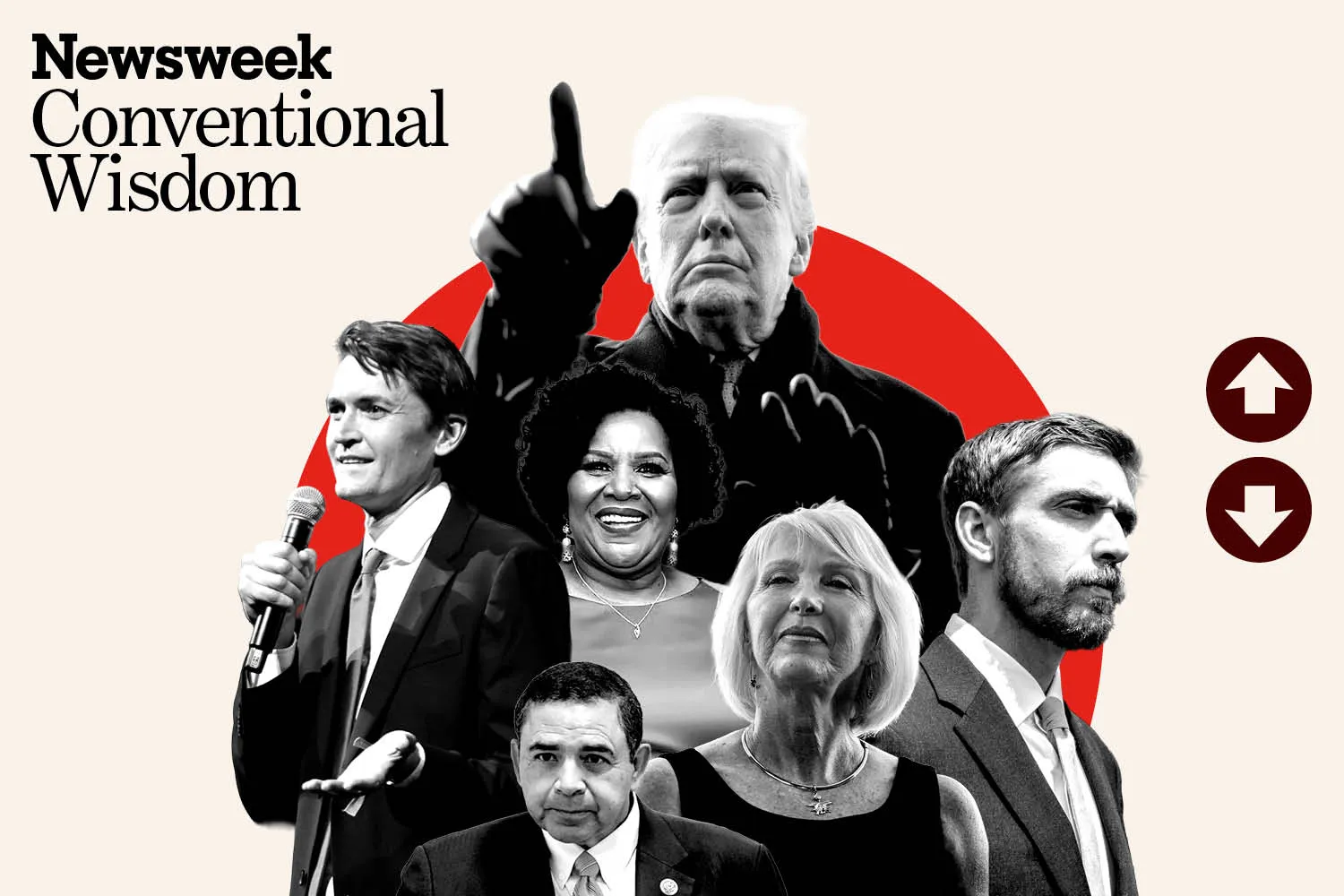
President Donald Trump announced four new pardons late last week, including former Puerto Rico Governor Wanda Vazquez Garced, who had been indicted for allegedly accepting bribes from a Venezuelan-Italian banker and pleaded guilty to a misdemeanor campaign finance violation last August, after the banker's daughter donated $3.5 million to a pro-Trump PAC. A White House official said the pardons were issued because they were seen as "political prosecution." But the latest batch continues a pattern that has defined Trump's second term: wielding the pardon power with unprecedented aggression and little concern for traditional Justice Department vetting processes. Since his second inauguration last January, Trump has pardoned more than 1,600 people—the vast majority came on his first day back in office when he pardoned approximately 1,500 people who had been prosecuted for taking part in storming the U.S. Capitol on January 6, 2021—which in addition to wiping records clean has also wiped out restitution owed to fraud victims, police officers, and taxpayers. One year into Trump's pardon spree, let's check in on how some of the recipients are faring.
Adriana Camberos ⬆
Trump originally commuted the sentence of the Southern California businesswoman in 2021 on his way out of office when she was serving 26 months in federal prison for a scheme involving counterfeit 5-Hour Energy drinks. In 2024, she and her brother were convicted of an entirely different fraudulent scheme involving food distribution and she received a new one-year sentence. As of Thursday, she and her brother are free again.
Read More on Opinion
Alice Marie Johnson ⬆
Served 21 years for nonviolent drug trafficking before Kim Kardashian lobbied Trump for her 2018 commutation and 2020 pardon. Now she's Trump's Pardon Czar, the first person to hold the position, identifying clemency candidates and submitting more than 100 petitions to the White House. It takes a Trump pardonee to know one.
Ross Ulbricht ⬆
He was serving a life sentence for running the dark web drug marketplace known as Silk Road until he was pardoned shortly after Trump was sworn in in January. Since, he's received $31 million in crypto donations, toured the country giving speeches, posted vacation snaps on Instagram, and is reported to be working on a memoir. Crime may not pay, but presidential pardons sure do.
Michelino Sunseri ⬆
The trail runner was cited for cutting a quarter-mile switchback during his Grand Teton speed record attempt, convicted in September on a misdemeanor for leaving the trail. Trump pardoned him in November after Republican Representative Harriet Hageman and the Pacific Legal Foundation framed it as overcriminalization. His Fastest Known Time record hasn't been restored, but at least he's not facing six months in jail for taking a shortcut.
Tina Peters ⬅➡
The Colorado county clerk is serving nine years for breaching voting machines to expose purported "voter fraud" in the 2020 presidential election. Trump pardoned her in December. One problem: she was convicted in state court, where presidents have zero authority. She's still in prison, an appeal pending, as long as the Constitution's separation of federal and state powers holds.
Henry Cuellar ⬅➡
The Democratic Congressman from Texas was indicted in 2024 by the DOJ for allegedly accepting $600,000 from an Azerbaijani company and a Mexican bank to influence legislation and received a Trump pardon in December. But when he filed for re-election as a Democrat anyway, Trump blasted him on Truth Social for a "lack of LOYALTY" and warned "next time, no more Mr. Nice guy!" Who knew presidential mercy came with strings attached?
Originally a staple of Newsweek's print edition, Conventional Wisdom used arrows to track whose stock was rising or falling in the political circus. We're reviving it in the digital age because the problem it lampooned—hyperbole and partisan certainty masquerading as insight—has only intensified.
CW assigns arrows—up, down, or sideways—to the figures and forces shaping current events. The arrows don't predict the future or claim special insight. They capture the prevailing winds of the moment, uncluttered by tribal howling. In an era when partisan media reinforces rather than questions assumptions, CW operates from the center—skeptical of left and right alike, committed to puncturing inflated reputations and recognizing overlooked truths.
View 0 Comments
Submit Correction
View Editorial & AI Guidelines