...

By Khaleda Rahman
National Correspondent
0
Share
Newsweek is a Trust Project member
See more of our trusted coverage when you search.Prefer Newsweek on Googleto see more of our trusted coverage when you search.
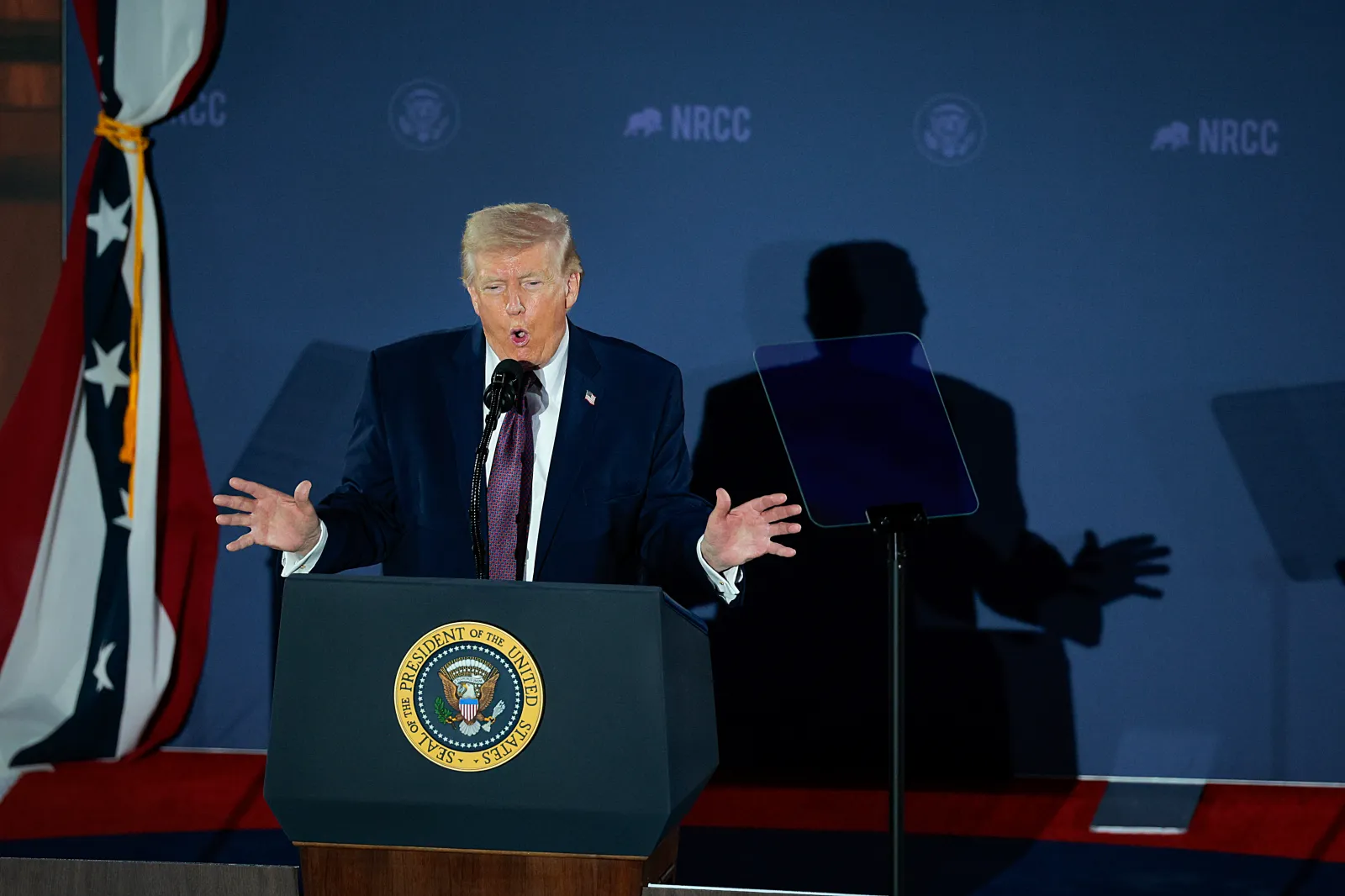
President Donald Trump has raged at two of the Supreme Court justices he appointed, saying that they "sicken" him.
The president made the comments during a speech at the National Republican Congressional Committee fundraising dinner on Wednesday, slamming the high court for striking down the tariffs he had imposed on nearly every country using an emergency powers law.
"Bad courts in this country are costing us a tremendous amount of money and the Supreme Court, that's right, of the United States cost our country– all they needed was a sentence– our country hundreds of billions of dollars, and they couldn't care less,” Trump said.
Read More on News
Singling out Justices Neil Gorsuch and Amy Coney Barrett, who voted with the majority in the tariff ruling, Trump said: "Not that it matters – doesn't matter at all – but two of the people that voted for that, I appointed, and they sicken me.
"They sicken me cause they are bad for our country."
...
What To Know
In February, the Supreme Court voted in a 6-3 decision to strike down the sweeping tariffs Trump had imposed under the International Emergency Economic Powers Act (IEEPA) in April 2025. The court's majority found that it was unconstitutional for the president to unilaterally set and change tariffs because the power to tax lies with Congress.
Justice Brett Kavanaugh, Trump's other appointee, dissented, along with Justices Samuel Alito and Clarence Thomas.
Tariffs were the first major piece of Trump's broad agenda to come squarely before the Supreme Court for a final ruling, after lower courts had also sided against the president.
Since the tariff ruling, Trump has repeatedly lashed out at the high court. At a news conference on the day the decision came down, he called the justices who sided against him a "disgrace to our nation."
Asked if he regretted nominating Gorsuch and Barrett, he declined to answer but said they were "an embarrassment to their families."
He also told reporters that he believes the Supreme Court was swayed by "foreign interests."
Earlier this month, Trump criticized the court in a lengthy post on social media, calling it "completely inept" and claiming it had "unnecessarily RANSACKED" the country.
In that post, Trump thanked the justices who sided with him in the tariff case, but claimed others "openly disrespect the Presidents who nominate them to the highest position in the Land."
Two days later, Justice John Roberts warned that personal criticism of federal judges was dangerous, adding: "it's got to stop."
What People Are Saying
Roberts said at Rice University's Baker Institute for Public Policy in Houston last week: "We don't believe that we're, you know, flawless in any way. And it's important that our decisions are subjected to scrutiny and and they are. The problem, sometimes, is that the criticism can move from a focus on legal analysis to personalities… from all over, I mean, not just any one political perspective on it. That it's more directed in a personal way and that frankly can be actually quite dangerous.
"Judges around the country work very hard to get it right and if they don't, their opinions are subject to criticism. But personally directed hostility is dangerous and it's got to stop."
Senator Amy Klobuchar criticized Trump's attacks on the Supreme Court, writing on X in February: "These reckless attacks on an independent judiciary undermine the rule of law."
What Happens Next
The Trump administration is seeking to replace the billions of dollars in lost revenues after the court's tariff ruling. Earlier this month, the administration opened trade investigations into dozens of countries under Section 301 of the Trade Act, paving the way for higher duties on those whose practices are found to be "unreasonable or discriminatory."
Meanwhile, the Supreme Court will deliver judgements on some of the president's policies this term, including his desired restrictions on birthright citizenship.
View 0 Comments
Submit Correction
View Editorial & AI Guidelines