...

By Jenni Fink
Senior Editor
0
Share
Newsweek is a Trust Project member
See more of our trusted coverage when you search.Prefer Newsweek on Googleto see more of our trusted coverage when you search.
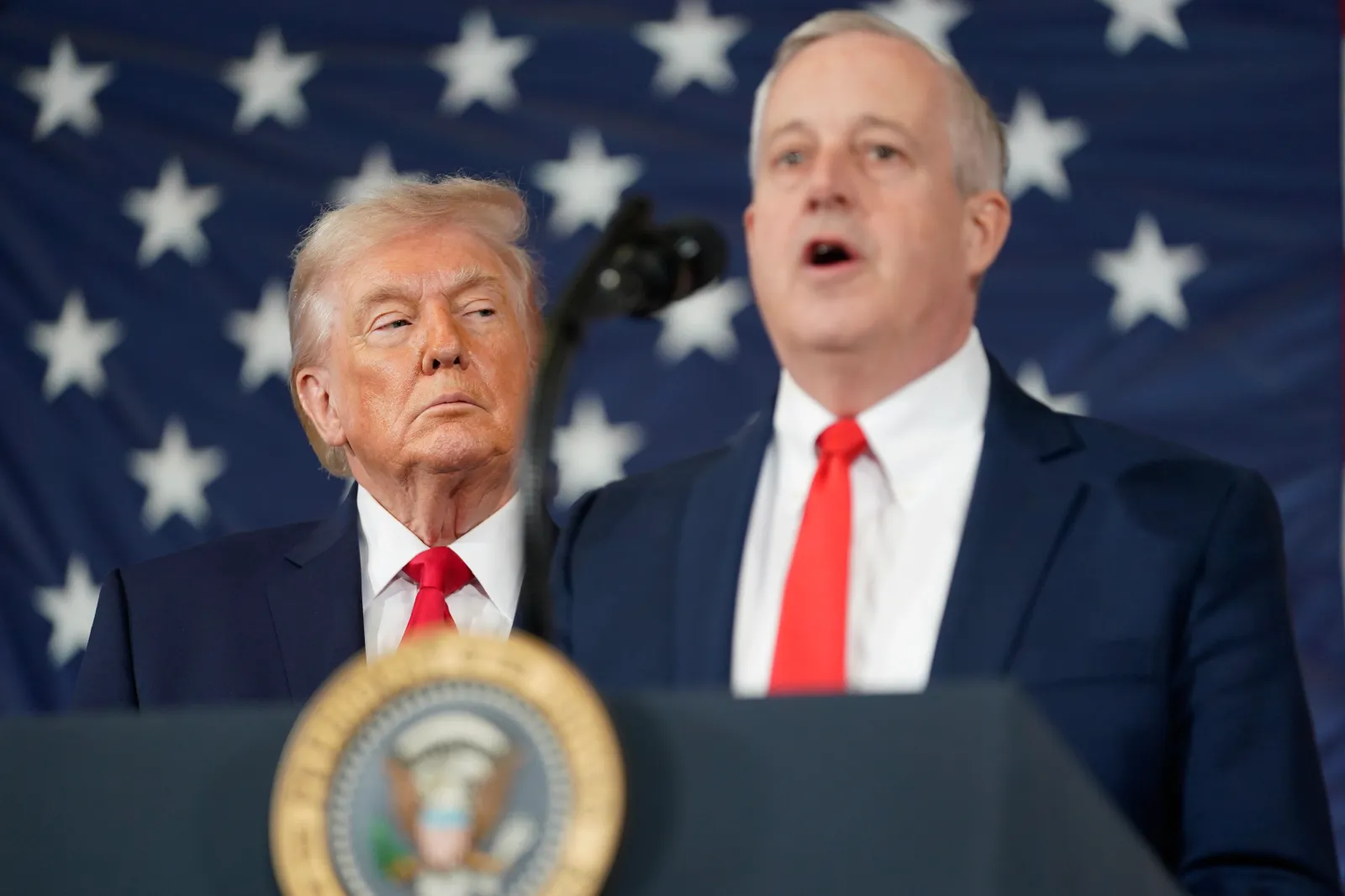
President Donald Trump has thrown his full weight behind Michael Whatley in one of potentially the most consequential Senate contests of the 2026 midterm cycle, endorsing the former Republican National Committee chair as Republicans fight to defend a fragile Senate majority.
Trump’s endorsement of Whatley, delivered via Truth Social and echoed by GOP-aligned groups, positioned the North Carolina Republican primary as an early test of the president’s continued dominance within the party—and of how far his influence can carry candidates into competitive general elections. Whatley won the primary on Tuesday night with 64.4 percent of the vote, according to the Associated Press.
With the primaries over, the general election race is unfolding in a state that has narrowly backed Republicans at the federal level in recent years while simultaneously electing Democrats statewide, making North Carolina one of the most closely watched battlegrounds of the 2026 cycle.
Read More on Politics
In a post to Truth Social Tuesday night, President Trump posted a graphic that said, "Republican Nominee For U.S. Senator From North Carolina Michael Whatley Wins! Endorsed By President Trump!"
President Trump posted similar graphics for other candidates he endorsed.
Did Donald Trump Endorse Michael Whatley?
In his endorsement, Trump praised Whatley as an “America First Patriot” and credited him with delivering Republican victories during his time as co-chair of the Republican National Committee. Trump also framed Whatley as a reliable ally who would advance his second-term agenda in Washington.
The endorsement came after Senator Thom Tillis announced he would not seek reelection, creating an open-seat race that immediately drew national attention from both parties. Democrats quickly consolidated behind former North Carolina Governor Roy Cooper, while Republicans looked to Trump to shape their primary field.
Within weeks, Trump made his choice clear, backing Whatley and effectively signaling to GOP donors and activists that the former party chair was the preferred standard-bearer.
...
"Michael is a wonderful man, has ALWAYS delivered for North Carolina, especially after the terrible floods, where the Biden Administration did nothing, and will continue doing so as your next U.S. Senator, where he will fight tirelessly to Grow our Economy, Cut Taxes and Regulations, Promote MADE IN THE U.S.A., Champion American Energy DOMINANCE, Keep our now very Secure Border, SECURE, Stop Migrant Crime, Strengthen our Incredible Military/Veterans, and Protect our always under siege Second Amendment," Trump said in his endorsement.
A poll from The Carolina Journal/Harper ahead of the election showed that Trump’s approval among Republican primary voters stood at 80.9 percent, underscoring the president’s continued popularity within the party. Voters who approved of Trump were significantly more likely to support Whatley than his rivals.
Michael Whatley’s Chances of Beating Governor Roy Cooper
While Trump’s endorsement appears to have boosted Whatley’s prospects in the primary, general election polling paints a more challenging picture.
Multiple surveys show Democrat Roy Cooper entering the general election as the favorite, often leading Whatley by high single digits or more. A recent poll from Change Research found Cooper ahead by approximately 10 points, benefiting from higher name recognition and a long track record of winning statewide races.
Whatley, by contrast, remains relatively unknown to a significant portion of the electorate. In some polls, more than a third of voters reported having no opinion of him—a gap his campaign has acknowledged as a central challenge heading into November.
Republicans have held the Senate seat for over 50 years, but Tillis vacating the seat gives Democrats an opening to win. Incumbents are significantly more likely to win re-election, with about 80-90 percent of Senate incumbents winning re-election in a typical election cycle. With the seat open, Democrats are eyeing the election as an opportunity to flip the seat, which will help determine control of the Senate.
Republicans currently hold a narrow 53–47 majority in the U.S. Senate, meaning Democrats need to flip just a handful of seats to reclaim control.
Trump’s Endorsement Record
Trump has long touted his endorsement record as a winning referendum on his influence on voters, with the person he endorsed usually winning their election. According to Ballotpedia, Trump had issued 196 endorsements in 2026 primary races as of December 2025, with 94 percent of those endorsements going to incumbent Republicans and a strong majority of endorsed candidates historically winning their primaries.
In North Carolina, Trump endorsed 12 candidates across federal and state races ahead of the March 3 primary, with most of those candidates considered heavy favorites.
While Trump's endorsement may have helped Whatley in the primary, his endorsement might hurt Whatley in the general election. Recent polling shows Trump’s approval in North Carolina hovering below 50 percent among the general electorate. So, Trump’s brand, while powerful in GOP primaries, may be less effective in a general election where swing voters and moderate Republicans could be wary of nationalized partisan battles.
What Happens Next
If Whatley narrows the gap against Cooper, it would reinforce Trump’s status as the Republican Party’s central power broker and suggest a viable path for GOP candidates in competitive states. If he struggles, it may raise new questions about the limits of Trump’s influence beyond the primary electorate and see Republican candidates in tight races distance themselves from the president.
View 0 Comments
Submit Correction
View Editorial & AI Guidelines