


+1
By Amanda Castro, Hannah Parry, Joshua Rhett Miller, and Robert Birsel
0
Share
Newsweek is a Trust Project member
See more of our trusted coverage when you search.Prefer Newsweek on Googleto see more of our trusted coverage when you search.
Mark Kelly, the Democratic senator for Arizona, warned that the United States reactivating its nuclear weapons program was likely to spark an international arms race which would only benefit other nations like China. "If we resume testing our weapons (which we have no reason to do) China will likely begin a test program. This only helps them advance their technology and start an arms race. Read your briefing materials, Mr. President," he wrote on X, addressing President Donald Trump. Meanwhile, Vice President JD Vance has defended Trump’s directive to resume nuclear weapons testing, calling it essential to ensuring the U.S. arsenal “functions properly.” His comments came amid rising international criticism, including a warning from senior Russian lawmaker Leonid Slutsky that such tests could destabilize global strategic stability. "The Chinese and the Russians HAVEN’T conducted a recent test of a nuclear warhead. It’s been decades," he said.
What to Know
- Trump announced the directive via social media, citing other countries’ actions.
- Russia’s Leonid Slutsky warned that U.S. testing could trigger a “chain response.”
- Multiple experts have warned that U.S. nuclear testing is likely to trigger testing in Russia and China.
- Nevada Democrats have also pledged to block the tests. Nevada was where the last nuclear detonations in the U.S. occurred underground.
- The U.S. has not conducted full-scale nuclear tests since 1992.
- Both the U.S. and Russia remain signatories to the Comprehensive Nuclear-Test-Ban Treaty, though neither currently enforces it through ratification.
This live blog is now closed.
Oct 30, 2025 at 09:54 PM EDT
More reaction to Trump’s announcement on nuclear testing
Melissa Parke, executive director of the International Campaign to Abolish Nuclear Weapons, said in a post on X: “While President Trump’s intent is unclear, the threat on social media that the US will resume nuclear testing is a needless escalation in these dangerous times.”
Beatrice Fihn, international law, security and weapons expert at Lex International, said on X: “This isn’t actually geopolitics. Our focus shouldn’t be on how Russia and China would react or how balance of power and all that theoretical stuff will be dealt with. Our focus needs to be on what this actually means in reality. This would have real, devastating impact for Americans. It will harm, kill and poison people…Nuclear testing is literally detonating nuclear weapons on your own people and land. It is incredibly stupid and there’s a reason why nuclear testing was banned globally in the 1990s.”
Daryl G Kimball, director of Arms Control Association said in a post: “Trump is misinformed and out of touch. The U.S. has no technical, military, or political reason to resume nuclear explosive testing for the first time since 1992. It would take at least 36 months to resume contained nuclear tests underground at the former test site in Nevada. By foolishly announcing his intention to resume nuclear testing, Trump will trigger strong public opposition in Nevada, from all U.S. allies, and it could trigger a chain reaction of nuclear testing by U.S. adversaries, and blow apart the nuclear Nonproliferation Treaty.”
Heather Williams, director of the Project on Nuclear Issues and a senior fellow at the CSIS Project on Nuclear Issues, said in a CSIS paper: “If one country returns to nuclear testing, others are likely to follow. In which case, China would stand to gain the most in terms of weapons design and warhead information, further contributing to its nuclear buildup.”
James Acton, co-director of the Carnegie Nuclear Policy Program, said in a post: “As we wait for clarification on the meaning of Trump's testing announcement, note the distinction between testing (i) nuclear warheads; (ii) nuclear-powered delivery systems for such warheads; and (iii) non-nuclear-powered delivery systems.”
Oct 30, 2025 at 09:25 PM EDT
Research found huge U.S. death rate from past nuclear testing
A 2017 study by Keith Meyers of the University of Arizona argued that U.S. nuclear testing in Nevada in the 1950s and early 1960s killed as many Americans as the two nuclear bombs that the U.S. dropped on Japan in 1945.
“Fallout from nuclear testing led to persistent and substantial increases in overall mortality for large portions of the country. The cumulative number of excess deaths attributable to these tests is comparable to the bombings of Hiroshima and Nagasaki,” the study said.
“These nuclear tests exposed millions of Americans to harmful radioactive material and many people are still living with the consequences of this pollution today.”
Oct 30, 2025 at 08:42 PM EDT
Iran reacts to Trump’s decision on nuclear testing
Iran’s foreign minister denounced Trump’s decision to resume nuclear tests as a “regressive and irresponsible move and a serious threat to international peace and security.”
“Having rebranded its ‘Department of Defense’ as the ‘Department of War’, a nuclear-armed bully is resuming testing of atomic weapons,” Foreign Minister Abbas Araqchi said in a post on X.
The United States and Israel have for years accused Iran of trying to acquire nuclear weapons and they both bombed Iran’s nuclear sites in June. Iran has always said its nuclear program is for peaceful purposes.
Having rebranded its “Department of Defense” as the “Department of War”, a nuclear-armed bully is resuming testing of atomic weapons. The same bully has been demonizing Iran's peaceful nuclear program and threatening further strikes on our safeguarded nuclear facilities, all in… pic.twitter.com/ft4ZGWnFiw
— Seyed Abbas Araghchi (@araghchi) October 30, 2025
Oct 30, 2025 at 07:57 PM EDT
What is the Doomsday Clock? What to know
The Doomsday Clock is a symbolic timepiece created to represent how close humanity is to a global catastrophe—most notably nuclear war, but also other existential threats such as climate change, emerging technologies, and disinformation.
It was first introduced in 1947 by the Bulletin of the Atomic Scientists, a group founded by researchers who had worked on the Manhattan Project, the secret U.S. program that developed the first atomic bombs.
On the clock, midnight represents the apocalypse—the end of civilization as we know it. The number of “minutes to midnight” indicates how near or far humanity is from that potential catastrophe. The closer the hands move to midnight, the greater the perceived danger. The Bulletin’s Science and Security Board, in consultation with a group of Nobel laureates, updates the clock annually based on current global events and scientific assessments.
When the clock debuted in 1947, it was set at seven minutes to midnight, reflecting early concerns about the nuclear arms race between the United States and the Soviet Union. Over the decades, the time has shifted back and forth, mirroring the state of global security: it moved back to 17 minutes in 1991 after the end of the Cold War—the safest moment recorded—and has since crept closer as new threats have emerged.
In recent years, the Bulletin has emphasized not just nuclear dangers but also climate change, biotechnology risks, cyber warfare, and geopolitical instability. As of 2024, the clock stands at 90 seconds to midnight, the closest it has ever been, reflecting growing concern about nuclear tensions, the climate crisis, and the rapid spread of artificial intelligence without sufficient safeguards.
Oct 30, 2025 at 07:49 PM EDT
Doomsday Clock set to 89 seconds to midnight – the closest it’s been to ‘catastrophe’ in its 78-year history
The Doomsday Clock has moved one second closer to midnight, the closest it's been to catastrophe in the clock's 78-year history, after President Donald Trump announced that the United States would be resuming nuclear weapons testing.
“That is the kind of reckless imprecision we should not have to tolerate from the person who has the sole authority to launch U.S. nuclear weapons,” according Alexandra Bell, president of the Bulletin of the Atomic Scientists, which sets the time of the clock.
The clock represents global existential threats and looks at factors including nuclear weapons, climate crisis, artificial intelligence, infectious diseases, and conflicts in Ukraine and the Middle East.
Daniel Holz, PhD, SASB Chair, Bulletin of the Atomic Scientists, and professor at the University of Chicago said: “The purpose of the Doomsday Clock is to start a global conversation about the very real existential threats that keep the world’s top scientists awake at night. National leaders must commence discussions about these global risks before it’s too late. Reflecting on these life-and-death issues and starting a dialogue are the first steps to turning back the Clock and moving away from midnight."
The 2025 Doomsday Clock official statement warns, "In 2024, humanity edged ever closer to catastrophe. Trends that have deeply concerned the Science and Security Board continued, and despite unmistakable signs of danger, national leaders and their societies have failed to do what is needed to change course. Consequently, we now move the Doomsday Clock from 90 seconds to 89 seconds to midnight—the closest it has ever been to catastrophe. Our fervent hope is that leaders will recognize the world’s existential predicament and take bold action to reduce the threats posed by nuclear weapons, climate change, and the potential misuse of biological science and a variety of emerging technologies."
Oct 30, 2025 at 07:39 PM EDT
WATCH: Mike Johnson defends Trump restarting nuclear testing, says it’s ‘logical’ to check weapons systems work
Mike Johnson defends Trump restarting nuclear testing: "I think it is an obvious and logical thing to ensure that our weapons systems work." pic.twitter.com/kmkgZW9HrM
— Aaron Rupar (@atrupar) October 30, 2025
Oct 30, 2025 at 07:21 PM EDT
Senate candidate calls nuclear testing announcement reckless
Amy McGrath, the Democrat candidate for U.S. Senate in Kentucky, slammed Trump's directive to restart nuclear weapons testing in America.
"It’s been 33 years since the U.S. last conducted a nuclear test. That decision made the world safer," the former Marine fighter pilot said on X.
"Now, Trump is moving to restart nuclear weapons testing. There’s no reason for this. It’s reckless, unnecessary, and dangerously irresponsible. Where is Congress? This is a big deal."
Oct 30, 2025 at 06:46 PM EDT
Nuclear testing in Nevada: What to know
Nuclear testing in Nevada began in the tense early years of the Cold War. In December 1950, President Harry S. Truman authorized the establishment of the Nevada Proving Ground—later renamed the Nevada Test Site—located about 65 miles northwest of Las Vegas. Chosen for its remote desert landscape and relative isolation, the site soon became the epicenter of America’s atomic weapons program. The first test, codenamed Able, took place on January 27, 1951, marking the start of an era that would profoundly shape both the region and the nation’s relationship with nuclear power.
Throughout the 1950s and early 1960s, the Nevada desert became a stage for more than 100 atmospheric nuclear explosions. Many of these were conducted above ground, producing massive mushroom clouds that could be seen from Las Vegas. Tourists and locals gathered on hotel rooftops to watch the tests, often unaware of the radioactive fallout drifting across communities in Nevada, Utah, and beyond. The spectacle, at first embraced as a symbol of American strength and technological prowess, soon gave way to growing fears about the long-term health and environmental consequences.
Mounting public concern over radiation exposure led to a turning point in 1963, when the United States, the Soviet Union, and the United Kingdom signed the Partial Test Ban Treaty, which prohibited nuclear tests in the atmosphere, underwater, and in space. From then until 1992, testing at the Nevada site continued underground, with more than 800 subterranean detonations carried out to refine and evaluate nuclear weapons designs. These underground tests reduced airborne contamination but caused other problems—seismic tremors, vented radioactive gases, and contamination of groundwater.
In 1992, after more than four decades of nearly continuous testing, the U.S. government declared a moratorium on nuclear explosions, effectively ending full-scale nuclear testing at the Nevada Test Site. The facility was later renamed the Nevada National Security Site (NNSS) and repurposed for subcritical tests, training, and research related to nuclear security and emergency response.
Today, the NNSS stands as both a symbol of Cold War ambition and a reminder of the human and environmental costs of the nuclear age. The legacy of testing still resonates in the stories of “downwinders”—residents who suffered from radiation-related illnesses—and in ongoing debates about transparency, responsibility, and the future of nuclear weapons policy in the United States.
Oct 30, 2025 at 06:36 PM EDT
Cold War expert says China and Russia are ready to follow suit if US begins nuclear testing
Defense Priorities director of Asia studies Lyle Goldstein, the co-author of new book The New Cold War at Sea: Maritime Implications of the China-Russia Quasi-Alliance, said Thursday that there was no nuclear expert in the world who believed U.S. nuclear weapons test would benefit the United States.
“I have no doubt in my mind that both Beijing and Moscow, Moscow in particular, are ready to start up nuclear testing," Goldstein told Fox Baltimore. “The nature of nuclear arms racing we ought to know from before and that previous Cold War showed us that whatever one side did, the other side quickly followed."
“The logic of nuclear rivalry is there. It’s terrible. It doesn’t serve anyone and it will make us all much poorer at a minimum, but of course, it could be the end of the planet," Goldstein continued.
Goldstein added that while many people considered the nuclear age a bygone era, that was no longer the case.
Oct 30, 2025 at 06:19 PM EDT
Sen. Shaheen calls Trump’s nuclear testing announcement ‘very dangerous and reckless’
Ranking Member of the Senate Foreign Relations Committee Jeanne Shaheen warned that Donald Trump's announcement on nuclear weapons testing was "very dangerous and reckless."
"The harmful toll that nuclear testing has wrought on Americans and our environment is the product of a chapter of history that should remain in the past," Shaheen said.
Oct 30, 2025 at 06:02 PM EDT
Experts say nuclear weapons tests may not have to involve nuclear explosions
John Erath, the senior policy director of the Center for Arms Control and Non-Proliferation, told Fox Baltimore that there are a series if different types of nuclear weapons test that don't necessarily involve nuclear explosions.
“If you’re talking about the testing of nuclear weapons, there are tests that are conducted called sub-critical tests, where you would make sure everything worked without actually setting off a nuclear explosion," he explained. "It’s more like testing to make sure that the car ignition system works without turning over the engine.
Erath added that even the weapon delivery systems tests can be done through computer simulation as well as in real life, although he warned that any tests would likely be viewed as " escalatory and dangerous" by Russia and China.
Erath said that the testing would actually be carried out by the Department of Energy, not the Pentagon, as Trump said in his Truth Social post.
Oct 30, 2025 at 05:40 PM EDT
WATCH: Trump says US discussing nuclearization with Russia, even as he announces America to resume nuclear tests
Oct 30, 2025 at 05:30 PM EDT
Sen. Rosen pledges to do ‘anything I can’ to stop US from testing nuclear weapons
Sen. Jacky Rosen, a senator for Nevadans, said that many people in her state still remember the nuclear tests in Nevada, and the fallout that left "lasting radioactive contamination across millions of acres of land."
"Our nuclear stockpile is annually certified to be both safe and effective, and there’s no evidence that resuming explosive testing is necessary," she said.
"Trump’s directive is reckless and dangerous and I’ll do anything I can to stop it."
Oct 30, 2025 at 05:11 PM EDT
Sen. Kelly calls nuclear testing announcement an ‘unnecessary escalation’
Senator Mark Kelly called the nuclear testing announcement an "unnecessary escalation by a President who doesn’t seem to be paying attention."
"The Chinese and the Russians HAVEN’T conducted a recent test of a nuclear warhead. It’s been decades," he said.
Russia and China have not carried out nuclear weapons testing since the 1990s.
"If we resume testing our weapons (which we have no reason to do) China will likely begin a test program. This only helps them advance their technology and start an arms race. Read your briefing materials, Mr. President."
Oct 30, 2025 at 04:39 PM EDT
Jeffries warns Trump nuclear tests a ‘massive breach’ of international treaties
House Minority Leader Hakeem Jeffries has slammed Donald Trump's decision to order the immediate reactivation of nuclear weapon testing in the U.S.
“It appears the resumption of nuclear testing would be a massive breach of international treaties that have been in place for decades,” Jeffries told reporters on Thursday.
“And it’s just another example of Donald Trump and Republican policies going too far [and] being divorced from reality.”
Jeffries also pointed towards the policy as proof that Trump and his administration were not focused on the issues everyday Americans cared about.
“Which is why, as Democrats, we’re going to continue to relentlessly focus on driving down the high cost of living in this country, and fixing the health care system that Republicans have broken,” Jeffries said.
Oct 30, 2025 at 04:25 PM EDT
Sen. King grills vice admiral over Trump’s plans to resume nuclear testing
U.S. Senator Angus King (I-ME), in a hearing of the Senate Armed Services Committee (SASC), grilled Vice Admiral Richard Correll, the Commander of United States Strategic Command, about President Donald Trump's decision to resume nuclear weapons testing.
Trump announced that he was planning to resume nuclear tests "because of countries’ testing programs" and said he planned "to start testing our nuclear weapons on an equal basis." However, neither Russia nor China are testing nuclear weapons. Russia has confirmed testing of a nuclear-powered cruise missile, but a nuclear weapon itself has not been tested.
The only country to hold any nuclear weapon test since the de factor moratorium in the 1990s is South Korea.
"Are any other countries doing explosive testing of nuclear warheads?” King asked Vice Admiral Correll on Thursday.
"To my knowledge, the explosive testing, the last explosive nuclear testing was by North Korea, or DPRK (Democratic People’s Republic of Korea), and that was in 2017 to be publicly confirmed,” Correll responded.
“But Russia and China have not done explosives that we know of, is that correct,?” asked Sen. King.
“No, for China, the last publicly acknowledged test was in 1996,” replied Correll.
King then asked about Trump's pledge to start the testing "immediately."
"I’m sorry, ‘We are testing our nuclear weapons on an equal basis.’ It could be that what he is talking about is delivery systems. Is that not correct? Just recently we learned about the new Sky Fall Russian missile. Is that a reasonable interpretation of what he is saying, rather than explosive testing of weapons,” questioned Sen. King.
Correll responded that he doesn't "have insight into the president's intent" but agreed that could be an interpretation.
Senn. King concluded, “We hope that is clarified in the coming days.”
Oct 30, 2025 at 04:01 PM EDT
Expert urges U.S.-Russia talks amid nuclear testing tensions
Peter Kuznick, director of the Nuclear Studies Institute at American University, has criticized President Donald Trump’s recent call to resume nuclear testing, suggesting it reflects a misunderstanding of the distinction between testing delivery systems and nuclear warheads. Kuznick emphasized that only North Korea has conducted nuclear tests in the 21st century and warned that such rhetoric undermines global stability.
He called for renewed U.S.-Russia negotiations on strategic security, noting that recent Russian weapons tests—including the Burevestnik missile and Poseidon torpedo—were likely responses to Trump’s remarks and the cancellation of a planned meeting with President Vladimir Putin. Kuznick also referenced Russia’s Oreshnik system, which Moscow claims can evade U.S. missile defenses.
The expert stressed that escalating threats risk destabilizing arms control efforts and urged both nations to return to the negotiating table.
Oct 30, 2025 at 03:48 PM EDT
Trump’s nuclear testing order draws scrutiny amid treaty concerns
Trump directed the Department of War to resume nuclear weapons testing, citing unspecified actions by other countries. The move has reignited global debate over arms control and treaty obligations.
The United States has not conducted a full-scale nuclear test since 1992, though it remains a signatory to the Comprehensive Nuclear-Test-Ban Treaty (CTBT), which prohibits all nuclear explosions. While the U.S. never ratified the treaty, international law obliges signatories to avoid undermining its purpose.
Trump’s announcement comes amid rising geopolitical tensions and follows Russia’s withdrawal from the CTBT in 2023. Critics argue the decision could erode decades of nonproliferation efforts and provoke a new arms race. The U.S. has conducted subcritical tests in recent years, but a return to full-scale detonations would mark a significant policy shift.
With over 2,000 nuclear tests conducted globally since 1945, the renewed push for testing raises questions about strategic stability and the future of international arms agreements.
Oct 30, 2025 at 03:25 PM EDT
WATCH: JD Vance speaks on nuclear testing
Vance said today about nuclear testing: "Sometimes you've got to test it to make sure that it's functioning and working properly."
NEW!! @VP Vance was just asked about nuclear testing.
Says ensuring the proper functionality of the nuclear arsenal is a key component of Trump's announcement. 👇🏻 pic.twitter.com/x9P8UfySoT
— Alex Raufoglu (@ralakbar) October 30, 2025
Oct 30, 2025 at 03:12 PM EDT
Russia criticizes U.S. nuclear testing order, citing treaty violations
Russian Federation Council Vice Speaker Konstantin Kosachev has condemned President Donald Trump’s directive to resume U.S. nuclear weapons testing, arguing it violates longstanding international agreements. Though the United States signed the Comprehensive Nuclear-Test-Ban Treaty (CTBT) in 1996, it never ratified it. Kosachev emphasized that under the Vienna Convention, signatories must avoid actions that undermine a treaty’s purpose.
The U.S. has observed a moratorium on nuclear testing since 1992, following the Soviet Union’s halt in 1990. Kosachev accused the U.S. and NATO of seeking unilateral military advantages by dismantling arms control frameworks, prompting Russia to advance its own strategic systems.
Russia recently completed tests of the Burevestnik cruise missile, which flew for 15 hours over 14,000 kilometers, and the Poseidon underwater drone, described by officials as a “Doomsday weapon.” Moscow maintains these developments are defensive responses to Western provocations.
Oct 30, 2025 at 02:59 PM EDT
Which countries are in NATO?
NATO comprises 32 member countries, marking its largest membership since the alliance was founded in 1949 by 12 nations from Europe and North America. Over the decades, NATO has undergone 10 rounds of enlargement, with the most recent additions—Finland in 2023 and Sweden in 2024—reflecting growing interest in collective security amid global tensions.
Membership is governed by Article 10 of the North Atlantic Treaty, which allows any European state committed to the alliance’s principles and capable of contributing to regional security to join. New members are admitted through consensus by the North Atlantic Council, NATO’s top decision-making body.
Today, NATO Allies collaborate on political and defense matters, reinforcing the alliance’s role as a cornerstone of international stability. The flags of all 32 nations now fly at NATO headquarters in Brussels, symbolizing a unified commitment to shared values and mutual defense.
Oct 30, 2025 at 02:48 PM EDT
Russia cites NATO tensions in justifying Burevestnik missile development
Russia has defended its development of the Burevestnik nuclear-powered cruise missile as a necessary response to what it calls NATO’s “destabilizing actions.” Foreign Ministry spokeswoman Maria Zakharova said the system is part of efforts to maintain strategic balance amid growing concerns over Western missile defense initiatives.
On October 26, Russia’s top military official, Valery Gerasimov, informed President Vladimir Putin that Burevestnik had completed a successful test flight. The missile reportedly remained airborne for 15 hours and traveled 14,000 kilometers, executing complex maneuvers designed to evade detection and interception.
Russian officials maintain that the missile’s capabilities are still being explored, while Western analysts view the development as a sign of escalating military posturing between Moscow and NATO.
Oct 30, 2025 at 02:44 PM EDT
WATCH: China shows off nuclear missiles at military parade
Oct 30, 2025 at 02:35 PM EDT
China more than doubled nuclear stockpile within five years
China has more than doubled its nuclear stockpile in recent years, although is still has just over a tenth of the nuclear capability of the United States.
It now has around 600 nuclear weapons in 2025, up from 300 weapons in 2020, according to the Center for Strategic and International Studies, a Washington-based think tank.
U.S. military officials believe that China would have more than 1,000 nuclear weapons by 2030, just under a fifth of the American stockpile, if the U.S. numbers do not also increase.
The United States has a stockpile of 5,225 nuclear warheads and Russia has 5,580, Washington-based Arms Control Association said.
Oct 30, 2025 at 02:18 PM EDT
Graphic reveals country stockpiles of nuclear warheads – and the nation who is outpacing the US
Oct 30, 2025 at 02:08 PM EDT
Donald Trump’s nuclear announcement sparks alarm: ‘He is misinformed’
The resumption of nuclear weapons testing by the United States will undermine national security, arms control advocates told Newsweek.
Daryl Kimball, executive director of the Arms Control Association, denounced President Trump’s directive for the Department of War to immediately restart nuclear weapons testing for the first time in more than 30 years as reckless and unclear.
“Somebody needs to talk to an adult at the White House and find out what the heck he’s talking about,” Kimball told Newsweek early Thursday. “I can’t discern his grumblings beyond what you can. If he’s talking about resuming weapons test explosions for the first time since 1992, he is misinformed about what that’s for and whether it’s necessary.”
Kimball said Trump’s announcement on Truth Social on Wednesday was likely to spark strong opposition in Nevada, where the last nuclear detonations in the U.S. occurred underground, as well as potential ramifications abroad.
Read in full from Joshua Rhett Miller on Newsweek.
Oct 30, 2025 at 01:58 PM EDT
UN slams US plans to restart nuclear weapons testing
The U.N. Secretary General slammed President Donald Trump’s announcement that the United States will begin testing its nuclear weapons again for the first time in more than 30 years.
Secretary General Antonio Guterres warned on Thursday that “current nuclear risks are already alarmingly high” for other countries that follow the U.S.'s example.
“We must never forget the disastrous legacy of over 2,000 nuclear weapons tests carried out over the last 80 years,” he said, according to his deputy spokesperson, Farhan Haqq. “Nuclear testing can never be permitted under any circumstances.”
Oct 30, 2025 at 01:37 PM EDT
When was the last time nations tested nuclear weapons?
Most countries have maintained a moratorium on nuclear testing since the late 1990s, shortly after the Comprehensive Nuclear-Test-Ban Treaty (CTBT) was adopted by the UN in 1996, aiming to create a permanent, legally binding global ban on all nuclear test explosions.
- The United States last tested a nuclear weapon in 1992 and has maintained a moratorium since then.
- The Soviet Union/Russia stopped testing in 1990.
- Other nuclear powers like the UK, France, and China followed suit by 1996.
- North Korea is the only country to have conducted nuclear tests in the 21st century (most recently in 2017).
Oct 30, 2025 at 01:31 PM EDT
What is the Comprehensive Nuclear-Test-Ban Treaty?
The Comprehensive Nuclear-Test-Ban Treaty (CTBT) is an international agreement that prohibits all nuclear explosions for any purpose, whether military or civilian. Adopted by the United Nations General Assembly on September 10, 1996, and opened for signature later that month, the treaty seeks to halt the development of new nuclear weapons and limit the advancement of existing arsenals.
Although widely supported, the CTBT has not entered into force. For it to become legally binding, 44 nuclear-capable states listed in Annex 2 of the treaty must ratify it. Eight of those countries have yet to do so. The United States, China, Egypt, Iran, and Israel have signed but not ratified the treaty, while India, Pakistan, and North Korea have not signed at all.
The treaty established the Comprehensive Nuclear-Test-Ban Treaty Organization (CTBTO) in Vienna to oversee compliance. Its International Monitoring System uses a network of more than 300 seismic, hydroacoustic, infrasound, and radionuclide stations to detect possible nuclear explosions worldwide.
Despite its pending status, the CTBT has had a significant practical effect. Since the late 1990s, nearly all countries have observed a de factor moratorium on nuclear testing. North Korea remains the only state to have conducted nuclear tests in the 21st century, most recently in 2017.
Oct 30, 2025 at 01:24 PM EDT
China calls for US to abide by moratorium on nuclear testing
China's Foreign Ministry has urged the U.S. to abide by its commitment to a de facto international moratorium on nuclear testing.
Ministry spokesman Guo Jiakun also called on the U.S. to take concrete actions to safeguard global strategic stability.
It is not yet clear if Trump meant the U.S. will resume nuclear-explosive testing, which would be carried out by the National Nuclear Security Administration, or flight testing of nuclear-capable missiles.
Oct 30, 2025 at 12:19 PM EDT
Trump’s nuclear testing order sparks global concerns over arms race
President Donald Trump has announced the immediate resumption of U.S. nuclear weapons testing, ending a 33-year pause and raising alarms about renewed proliferation between the world’s two most considerable nuclear powers.
The decision comes amid escalating tensions with Russia, which recently withdrew from key arms control agreements and tested nuclear-capable systems. Together, the U.S. and Russia hold roughly 87% of the world’s nuclear arsenal, with thousands of warheads still intact despite disarmament efforts.
Experts warn that restarting tests could undermine decades of nonproliferation progress and provoke reciprocal actions from other nuclear states. While the U.S. has not conducted a nuclear detonation since 1992, Trump’s directive signals a shift in strategic posture that may reignite Cold War-era dynamics.
Oct 30, 2025 at 12:06 PM EDT
Trump’s nuclear testing order rekindles debate over global arms policy
President Donald Trump has ordered the U.S. military to resume nuclear weapons testing after a 33-year pause, sparking renewed scrutiny of global arms control efforts. The directive came just minutes before he met with Chinese President Xi Jinping, raising questions about its timing and intent.
The United States last conducted a nuclear test in 1992. Since then, most nuclear powers have observed a moratorium, reinforced by the 1996 Comprehensive Nuclear Test-Ban Treaty (CTBT). While the U.S. signed the treaty, it has never ratified it. Russia ratified the CTBT in 2000 but formally withdrew in 2023.
Over 2,000 nuclear tests were conducted globally before the CTBT, with the U.S. and Soviet Union responsible for the majority. Health and environmental concerns, especially in regions such as the Pacific and Kazakhstan, were key drivers of the halt.
Some see Trump’s move as a signal of strategic strength amid rising tensions with Russia and China. Experts warn it could provoke reciprocal testing and further destabilize the fragile global nonproliferation framework.
Oct 30, 2025 at 11:53 AM EDT
Kremlin responds to Trump’s nuclear testing threat, cites moratorium
The Kremlin has stated that Russia has not recently conducted nuclear weapon tests but would reconsider its position if the United States breaks the global moratorium. The response came after President Donald Trump ordered the Pentagon to resume nuclear testing “on an equal basis” with other powers.
Trump’s directive followed Russian President Vladimir Putin’s announcement of successful trials involving a nuclear-powered drone and a nuclear-capable missile—neither of which involved explosive testing. Kremlin spokesman Dmitry Peskov emphasized that these trials do not qualify as nuclear tests and expressed hope that Trump had been accurately briefed.
Russia’s last confirmed nuclear test occurred in 1990. While the U.S. routinely conducts non-explosive missile tests, Trump’s use of the term “testing” has raised questions about whether he intends to resume underground detonations. Moscow warned it would respond in kind if the moratorium is breached.
Oct 30, 2025 at 11:40 AM EDT
Trump defends nuclear testing order amid global pushback
President Donald Trump has ordered the Pentagon to resume nuclear weapons testing for the first time since 1992, citing the need to match programs in Russia and China. In a Truth Social post, Trump said the U.S. must test “on an equal basis” with other nuclear powers, claiming the country holds the largest arsenal.
The announcement came ahead of Trump’s meeting with Chinese President Xi Jinping during his Asia tour. Speaking to reporters afterward aboard Air Force One, Trump said, “With others doing testing, I think it’s appropriate that we do also,” but did not specify when or where tests would begin.
The move has drawn sharp criticism from lawmakers and international officials. Rep. Dina Titus of Nevada vowed to introduce legislation to block testing, while Sen. Ed Markey called the decision “reckless.” China urged the U.S. to honor its commitment to the Comprehensive Nuclear-Test-Ban Treaty and maintain global stability.
Russia, which revoked its CTBT ratification in 2023, recently tested a nuclear-powered missile. Kremlin officials warned they would respond in kind if the U.S. breaks the moratorium. The last U.S. nuclear test occurred in Nevada in 1992.
Oct 30, 2025 at 11:27 AM EDT
Arms control expert warns Trump’s nuclear testing plan risks global fallout
Daryl G. Kimball, executive director of the Arms Control Association, has sharply criticized President Donald Trump’s call to resume U.S. nuclear weapons testing, warning it could unravel decades of nonproliferation efforts and provoke international backlash.
In a series of posts on X, Kimball argued that the U.S. has no technical, military, or political justification for restarting explosive testing, which has been paused since 1992. He noted it would take at least three years to prepare the Nevada Test Site for underground detonations.
Kimball emphasized that nearly every nation has joined the Comprehensive Nuclear-Test-Ban Treaty (CTBT) and that the U.S., as a signatory, is expected to honor its moratorium. He cautioned that Trump’s announcement could trigger reciprocal testing by adversaries and erode global arms control norms.
He also criticized the ambiguity of Trump’s messaging, saying it was unclear whether the president was referring to explosive tests or missile trials, and called the policy “incoherent.”
Oct 30, 2025 at 11:14 AM EDT
Rep. Dina Titus vows to block U.S. nuclear testing plans
Representative Dina Titus of Nevada has publicly opposed President Donald Trump’s directive to resume U.S. nuclear weapons testing, pledging swift legislative action to halt the effort.
“Absolutely not. I’ll be introducing legislation to put a stop to this,” Titus wrote on X.
Oct 30, 2025 at 11:01 AM EDT
Russia signals it may match U.S. nuclear tests if moratorium ends
The Kremlin has issued a measured response to President Donald Trump’s directive to resume U.S. nuclear weapons testing, stating that Russia has not conducted such tests but would reconsider its position if Washington proceeds.
Kremlin spokesman Dmitry Peskov told reporters that Moscow had received no prior notice of a shift in U.S. policy and was unaware of any current nuclear testing by other nations. He downplayed the notion of a renewed arms race but reiterated Russia’s longstanding stance: if another country breaks the moratorium, Russia will respond in kind.
Trump’s order came just minutes before he met with Chinese President Xi Jinping, marking a potential turning point in global nuclear policy after a 33-year U.S. testing hiatus. President Vladimir Putin has previously warned that Russia would resume testing if others did, underscoring the fragile state of international arms control.
Oct 30, 2025 at 10:48 AM EDT
Trump defends nuclear testing order, citing global parity
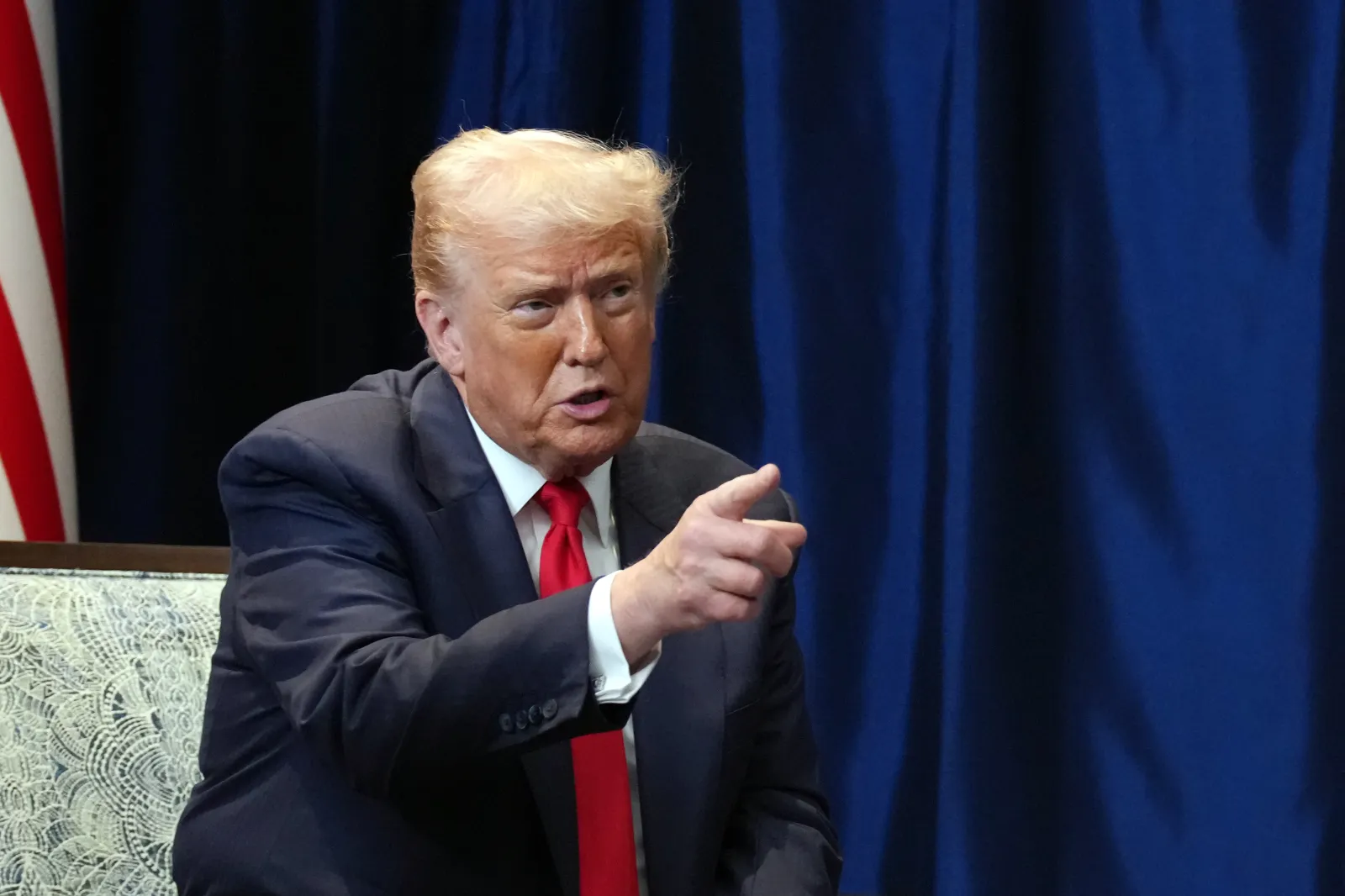
President Donald Trump has defended his directive to resume U.S. nuclear weapons testing, framing the move as a necessary response to similar actions by other nuclear powers. In a Truth Social post, Trump said he ordered the Pentagon to begin testing “on an equal basis” with countries like Russia and China.
The announcement came just ahead of Trump’s meeting with Chinese President Xi Jinping in South Korea. Speaking to reporters aboard Air Force One after the talks, Trump reiterated his stance, saying, “With others doing testing, I think it’s appropriate that we do also.”
The United States last conducted a nuclear test in 1992. Trump did not specify when new testing would begin, stating only that the timing would be announced. The decision marks a significant shift in U.S. nuclear policy and has sparked debate over its implications for global arms control.
...
Oct 30, 2025 at 10:35 AM EDT
Who has the most nuclear weapons in the world right now?
Amid heightened rhetoric from Presidents Donald Trump and Vladimir Putin, international attention is once again focused on the size and distribution of nuclear arsenals worldwide.
Nine countries are known to possess nuclear weapons, though exact figures remain classified. Independent estimates suggest Russia holds the largest stockpile, followed closely by the United States. Trump has claimed U.S. supremacy in warhead numbers, but analysts point to Russia’s edge, despite limited transparency from Moscow.
China ranks third and is rapidly expanding its arsenal, while other nuclear powers—including France, the United Kingdom, India, Pakistan, Israel, and North Korea—maintain smaller inventories. The renewed focus comes as arms control treaties face uncertainty and global security dynamics shift.
Oct 30, 2025 at 10:22 AM EDT
Russian lawmaker warns West to show humility over Poseidon nuclear drone
Russian State Duma Chairman Vyacheslav Volodin has urged Western nations to approach President Vladimir Putin with humility to avoid the deployment of the Poseidon nuclear-powered underwater drone, which he described as unmatched in capability.
Speaking during a plenary session, Volodin credited Putin with overseeing the development of the Poseidon and the Burevestnik missile, calling them the most advanced weapons ever created. He warned that foreign powers seeking to harm Russia should recognize the scale of its strategic deterrence.
"The creation of the Burevestnik missile made it possible to test the Poseidon vehicle, which has no equal. The president oversaw the implementation of this project from start to finish, and we can see the result. Today, those abroad who seek to harm us must be ready to approach our supreme commander-in-chief humbly, just so that this weapon is not used," he said.
Putin recently confirmed successful testing of the Poseidon, claiming it surpasses the Sarmat intercontinental missile in destructive power. Deputy Security Council Chairman Dmitry Medvedev later referred to Poseidon as a potential “doomsday weapon,” capable of triggering catastrophic radioactive ocean swells.
Oct 30, 2025 at 10:09 AM EDT
China reacts to Trump’s nuclear weapons tests order
China has responded to President Donald Trump ordering the Pentagon to resume nuclear weapons testing "on an equal basis" with Russia and China.
The president made the announcement on Truth Social ahead of his highly anticipated talks with Chinese President Xi Jinping in Busan, South Korea.
Russia and the United States possess the largest and second-largest nuclear stockpiles, respectively, each with over 5,000 warheads. China, which has been rapidly expanding its own arsenal, ranks third with roughly 600 warheads, according to the Stockholm International Peace Research Institute.
If the U.S. were to detonate an atomic bomb during a test, it would become the first country other than North Korea to do so since 1996—the year Washington and four other officially recognized nuclear weapons states signed the Comprehensive Nuclear-Test-Ban Treaty (CTBT).

...
Read the full story by Micah McCartney on Newsweek.
Oct 30, 2025 at 09:56 AM EDT
When was the last time nuclear weapons were tested in the US?
The United States last conducted a nuclear weapons test on September 23, 1992, at the Nevada Test Site. Known as "Divider," the underground detonation was part of Operation Julin and marked the conclusion of a 47-year era of U.S. nuclear testing.
The test was the 1,054th in the nation’s history and came just before a moratorium was issued amid post-Cold War arms control efforts. Since then, the U.S. has relied on simulations and subcritical experiments to maintain its arsenal, without detonating live warheads.
Oct 30, 2025 at 09:49 AM EDT
Why did Trump order nuclear weapons testing?
Trump cited recent weapons developments in Russia and China as justification, arguing that the U.S. must test its arsenal “on an equal basis” to maintain deterrence and credibility.
His announcement came just after Russia showcased new nuclear-capable systems and amid reports that China has rapidly expanded its stockpile, doubling in five years and projected to exceed 1,000 warheads by 2030.
Oct 30, 2025 at 09:43 AM EDT
Did Trump order nuclear weapon testing?
President Donald Trump has directed the U.S. military to resume nuclear weapons testing, citing the need to match programs in Russia and China. The announcement, made via social media ahead of a meeting with Chinese President Xi Jinping, signals a potential reversal of a decades-long moratorium in place since 1992.
Trump argued that renewed testing is necessary to maintain parity with other nations, referencing recent Russian weapons trials and China’s expanding nuclear arsenal. While the nature of the proposed tests remains unclear, Trump emphasized the importance of updating the U.S. stockpile and said test site locations would be determined later.
The move drew swift criticism from arms control experts and lawmakers, who warned it could undermine international treaties and provoke a new wave of global testing. Russia and China both responded with calls for the U.S. to honor its commitments under the Comprehensive Nuclear-Test-Ban Treaty, which Washington has signed but not ratified.
The announcement comes as the New START treaty—limiting deployed strategic warheads between the U.S. and Russia—approaches its expiration in early 2026.
Oct 30, 2025 at 09:38 AM EDT
Russian lawmaker warns U.S. nuclear test plans could destabilize global security
A senior Russian official has condemned reported plans by the United States to resume nuclear weapons testing, warning the move could unravel decades of strategic stability. Leonid Slutsky, chairman of the State Duma Committee on International Affairs, said such tests—halted since 1992—would trigger a “chain response” and lead to “chaos” in global security.
In a Telegram post, Slutsky emphasized that the U.S. remains bound by the Comprehensive Nuclear-Test-Ban Treaty (CTBT), despite never ratifying it. He noted that Russia continues to honor a voluntary moratorium on testing, but only under “equal and parity conditions,” echoing President Vladimir Putin’s 2023 warning.
Slutsky’s remarks follow reports that President Donald Trump instructed the Pentagon to resume nuclear testing, though details remain unclear. The move has sparked concern among arms control advocates and international observers.
View 0 Comments
Submit Correction
View Editorial & AI Guidelines