...

By Hollie Silverman
News Editor
0
Share
Newsweek is a Trust Project member
See more of our trusted coverage when you search.Prefer Newsweek on Googleto see more of our trusted coverage when you search.
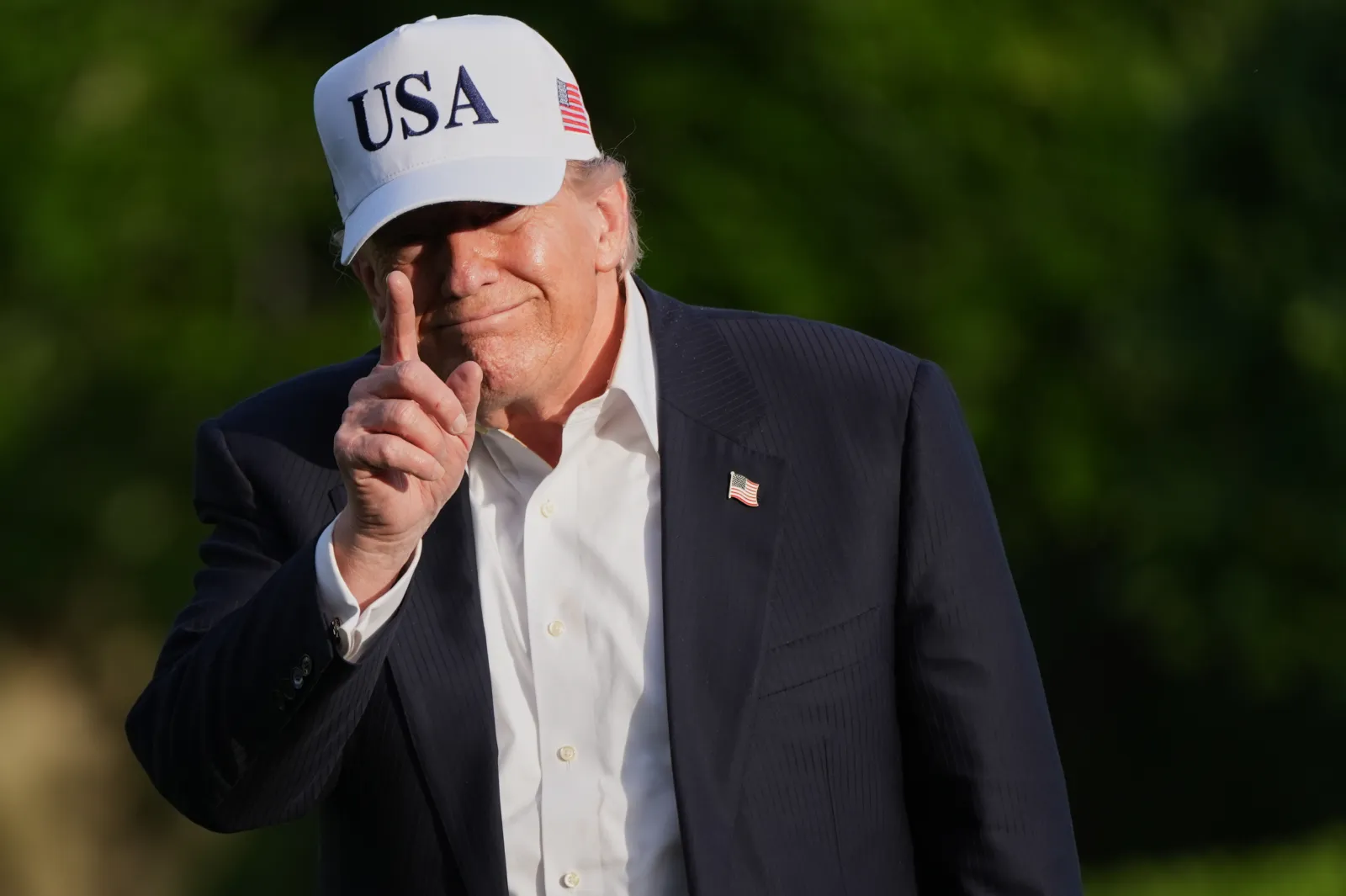
President Donald Trump announced Monday that he has postponed a planned U.S. military strike on Iran after leaders from Qatar, Saudi Arabia, and the United Arab Emirates urged him to allow ongoing negotiations to continue.
The U.S. president in recent days had repeatedly warned Tehran that “the clock is ticking” on a deal to end the war, and that Iran must move quickly or face devastating consequences.
Negotiations on an end to the war have stalled for five weeks now after a fragile ceasefire was announced by the U.S. and Israel in early April.
Read More on World
Both sides have rejected peace proposals with the main divsions relating to Iran's nuclear program and control over the Strait of Hormuz where shipping traffic has been controlled by Iran, a major disruption that has sent up the price of oil and caused commodity shortages worldwide.
Iran reacted dismissively to Trump's stepdown late on Monday, saying they retained the upper hand in the war.
Mohsen Rezaei, a top Iranian adviser, said Trump had canceled his own military strike, and Iran's "iron fist" would force the U.S. "to retreat and surrender."
...
Trump had flooded his Truth Social social media platform on the weekend with AI‑generated images depicting U.S. military action against Iran soon after returning from a trip to Beijing where Chinese leader Xi Jinping warned against a resumption of active fighting.
Regional diplomacy has intensified to resolve the conflict, with efforts led by mediator Pakistan and the Gulf Arab states allied with the U.S. that have been consistently attacked by Iranian drones and missiles during the war.
Iranian officials have rejected recent U.S. conditions for renewed talks, while Washington has continued to demand limits on Iran’s nuclear enrichment and missile capabilities.
The news comes as Iran announced the creation of a new body to manage the Strait of Hormuz, escalating a standoff over the vital shipping corridor while peace talks with the United States remain deadlocked.
Iran’s Supreme National Security Council said on X that it has established the Persian Gulf Strait Authority, a move widely seen as an attempt to formalize Tehran’s control over the waterway it has effectively blockaded for months. The announcement signals that Iran is preparing to institutionalize its grip on the strait even as Washington and Tehran struggle to revive negotiations aimed at easing regional tensions.
Why Did Trump Delay the Attack?
In a lengthy Truth Social post, Trump said the Emir of Qatar, the Saudi crown prince, and the UAE president asked him to “hold off” on the attack scheduled for Tuesday, arguing that talks were progressing and a deal was within reach. The president said the proposed agreement would include a key U.S. demand: that Iran possess no nuclear weapons.
He indicated his delay on strikes could be reversed instantly if negotiations collapse.
In his post, Trump said he instructed Secretary of Defense Pete Hegseth, Joint Chiefs Chairman General Daniel Caine, and U.S. forces to stand down from the scheduled strike but remain ready to launch a “full, large scale assault…on a moment’s notice” if talks fail.
When Did the Iran War Start?
The conflict began on February 28, when the United States and Israel launched coordinated strikes on Iranian missile sites, drone facilities, and IRGC command centers following a series of Iranian attacks on U.S. positions in Iraq and Syria. The war quickly expanded into air, naval, and cyber operations across the region.
Does Iran Have Nuclear Weapons?
Authoritative international assessments, including from the International Atomic Energy Agency (IAEA), have consistently stated that Iran does not possess nuclear weapons.
Iran has enriched uranium beyond limits set in the 2015 nuclear deal, but U.S. and allied intelligence agencies have not publicly concluded that Tehran has built or deployed a nuclear device.
Trump’s statement that any deal must include “NO NUCLEAR WEAPONS FOR IRAN” reflects a long‑standing U.S. demand to cap enrichment and restrict Iran’s nuclear program.
When Did the U.S.–Iran Ceasefire Begin?
A limited ceasefire took effect in early April, following weeks of heavy U.S. airstrikes and Iranian missile launches. The truce reduced large‑scale attacks but did not halt naval clashes, cyber operations, or militia activity in Iraq, Syria, and Yemen. Negotiations to expand the ceasefire have since stalled.
How Many U.S. Troops Have Died in the Iran War?
At least 13 U.S. service members have been killed since the conflict began, according to the U.S. military. The Pentagon has not released a comprehensive casualty report in several weeks, and figures may change as additional information becomes available.
Crude Oil: How Prices Have Changed Due to the War
Oil prices surged immediately after the war began, with crude jumping above $100 per barrel amid fears of a prolonged disruption to Gulf shipping.
Prices have since fluctuated sharply as tanker traffic through the Strait of Hormuz remains restricted and global markets react to each new military or diplomatic development. Analysts warn that any renewed fighting or a collapse of negotiations could trigger another rapid spike.
What Happens Next
U.S. officials say military forces remain on high alert in the region, and Trump has made clear the pause could be lifted instantly if negotiations falter. Iran’s move to institutionalize control over the strait may complicate any diplomatic breakthrough, raising the risk of further maritime confrontations. Energy analysts warn that even minor escalations could trigger new price spikes as tanker traffic remains constrained.
View 0 Comments
Submit Correction
View Editorial & AI Guidelines