...

By Kate Plummer
Senior US News Reporter
0
Share
Newsweek is a Trust Project member
See more of our trusted coverage when you search.Prefer Newsweek on Googleto see more of our trusted coverage when you search.
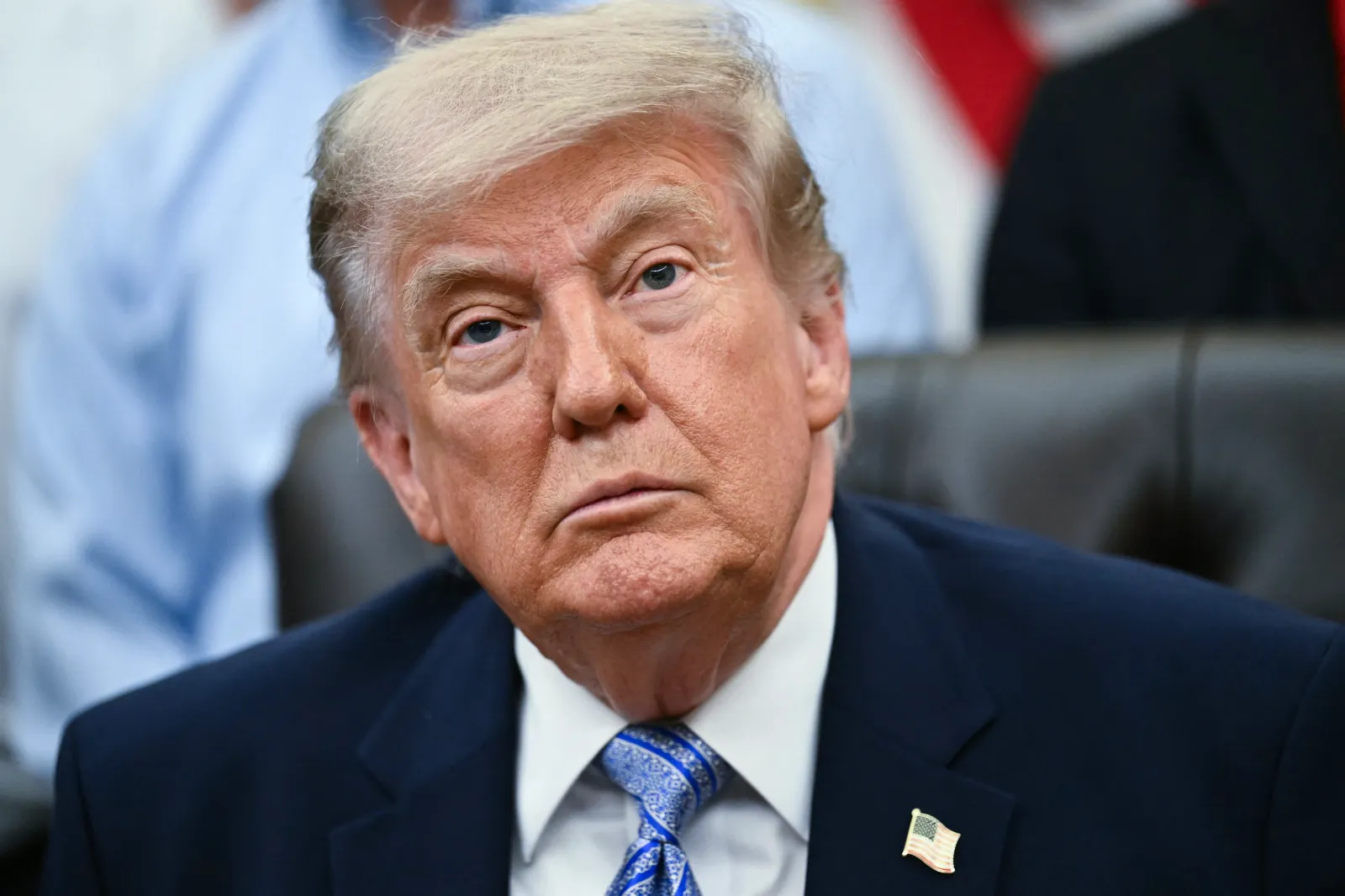
President Donald Trump said it would be “a disgrace” if the Supreme Court allows birthright citizenship to remain in place, as the administration awaits a major ruling that could redefine immigration law and presidential authority in the United States.
Speaking to reporters at the White House on Thursday, Trump argued that birthright citizenship encourages immigration into the United States.
“It would be a disgrace if the Supreme Court of the United States allows that to happen,” the president said. “Remember what I said, 20 to 25 percent of the people coming into our country will come in through birthright citizenship.”
Read More on Politics
"They'll become citizens through birthright citizenship, and it will cost us numbers that are, I don't even think they're doable," he added.
The Supreme Court’s eventual ruling could redefine a core constitutional principle tied to immigration and citizenship. Legal experts also say the outcome may help determine how far presidents can go in using executive authority to reinterpret existing law and constitutional protections.
Supreme Court Weighs Trump Birthright Citizenship Order
In April, the Supreme Court heard oral arguments in a case that centers around whether Trump's January 2025 executive order seeking to limit automatic citizenship for certain children born in the U.S. complies with the citizenship clause of the 14th Amendment.
Trump's order was met with multiple lawsuits, and courts have prevented it from taking effect so far.
More than a quarter of a million babies born in the U.S. each year would be affected by the order, according to research by the Migration Policy Institute and Penn State University's Population Research Institute.
...
Trump’s remarks come after a May poll found that roughly two-thirds of U.S. adults support automatic citizenship for all children born in the country.
An Associated Press-NORC Center for Public Affairs Research poll released on May 6 also found that 75 percent said children born in the U.S. to parents who are in the country legally on work visas should be granted automatic citizenship.
The poll of 2,596 adults was conducted April 16-20, with a margin of error of plus or minus 2.6 percentage points.
Court Also Considering Major Trump Power Cases
The Supreme Court is also expected to rule on several other major disputes involving Trump’s authority over elections, immigration, federal agencies and trade policy.
Mail Ballot Case Could Affect Future Elections
Another key case before the Supreme Court concerns whether states can count mail-in ballots that arrive after Election Day.
Currently, around 14 states, along with Washington, D.C., and several U.S. territories, count mailed ballots received after Election Day so long as they are postmarked on or before that date, according to the National Conference of State Legislatures.
If the Supreme Court rules ballots must physically arrive by Election Day, thousands of votes that are currently counted under state law could be rejected in future elections.
The justices heard arguments earlier this year and are expected to issue a decision before the end of the term in late June or early July.
Federal Reserve Case
Trump attempted to fire Federal Reserve Governor Lisa Cook ahead of the September 2025 meeting of the Fed's interest rate-setting committee.
The president cited concerns about potential mortgage fraud, alleging Cook claimed two properties as "primary residences" in July 2021, before she joined the central bank, to potentially secure more favorable loan terms. Cook has denied the allegations and has not been charged with any crime.
The Supreme Court said Cook could remain in her position while the case proceeds.
In January, during arguments, several Supreme Court justices questioned whether Trump has the authority to remove a sitting Fed governor.
Justice Brett Kavanaugh warned that allowing Cook’s dismissal could “weaken, if not shatter,” the Federal Reserve’s insulation from political pressure.
The Supreme Court has not set a date for a decision in Trump vs. Cook, but rulings in cases argued in January are typically issued by late June, before the end of the term.
Separately, a case known as Trump vs. Slaughter case is also before the Supreme Court, which, if approved, could give the president the power to dismiss the heads of independent agencies at will.

...
TPS Case Could Affect Hundreds of Thousands of Migrants
On April 29, the Supreme Court heard arguments over the Trump administration’s effort to revoke Temporary Protected Status (TPS) for hundreds of thousands of migrants, including about 350,000 people from Haiti and more than 6,000 from Syria.
The TPS program, enacted by Congress in 1990, allows people from countries affected by war, natural disasters or other conditions to live and work legally in the U.S. temporarily. Applicants must already be in the country and undergo background checks and vetting by the Department of Homeland Security.
The Trump administration has sought to roll back several TPS designations, a move that could strip protections from hundreds of thousands of migrants. The case comes as the court weighs the extent of presidential authority over immigration and foreign policy—areas where it has historically granted the executive branch significant deference.
Supreme Court Already Struck Down Major Trump Tariffs
Earlier this year, the Supreme Court struck down most of Trump’s sweeping tariffs, ruling that a key emergency law did not give the president authority to impose them.
While the ruling invalidated major portions of Trump’s trade agenda, it left unresolved questions over refunds and did not affect tariffs imposed through other laws. The administration has since moved to reimpose tariffs through alternative legal avenues, triggering a fresh wave of litigation.
Trump addressed the decision Thursday, telling reporters: “We had a terrible tariff decision; they cost our country a fortune. They said ‘do it a different way,’ we’re doing it a different way, but we’re going to most likely have to pay back $149 billion.”
He added: “It’s not going to affect because we do the tariffs a different way. The tariffs are what’s bringing in all this money. It’s really made our country rich.”
View 0 Comments
Submit Correction
View Editorial & AI Guidelines