
...

By Jesus Mesa
Reporter
0
Share
Newsweek is a Trust Project member
See more of our trusted coverage when you search.Prefer Newsweek on Googleto see more of our trusted coverage when you search.
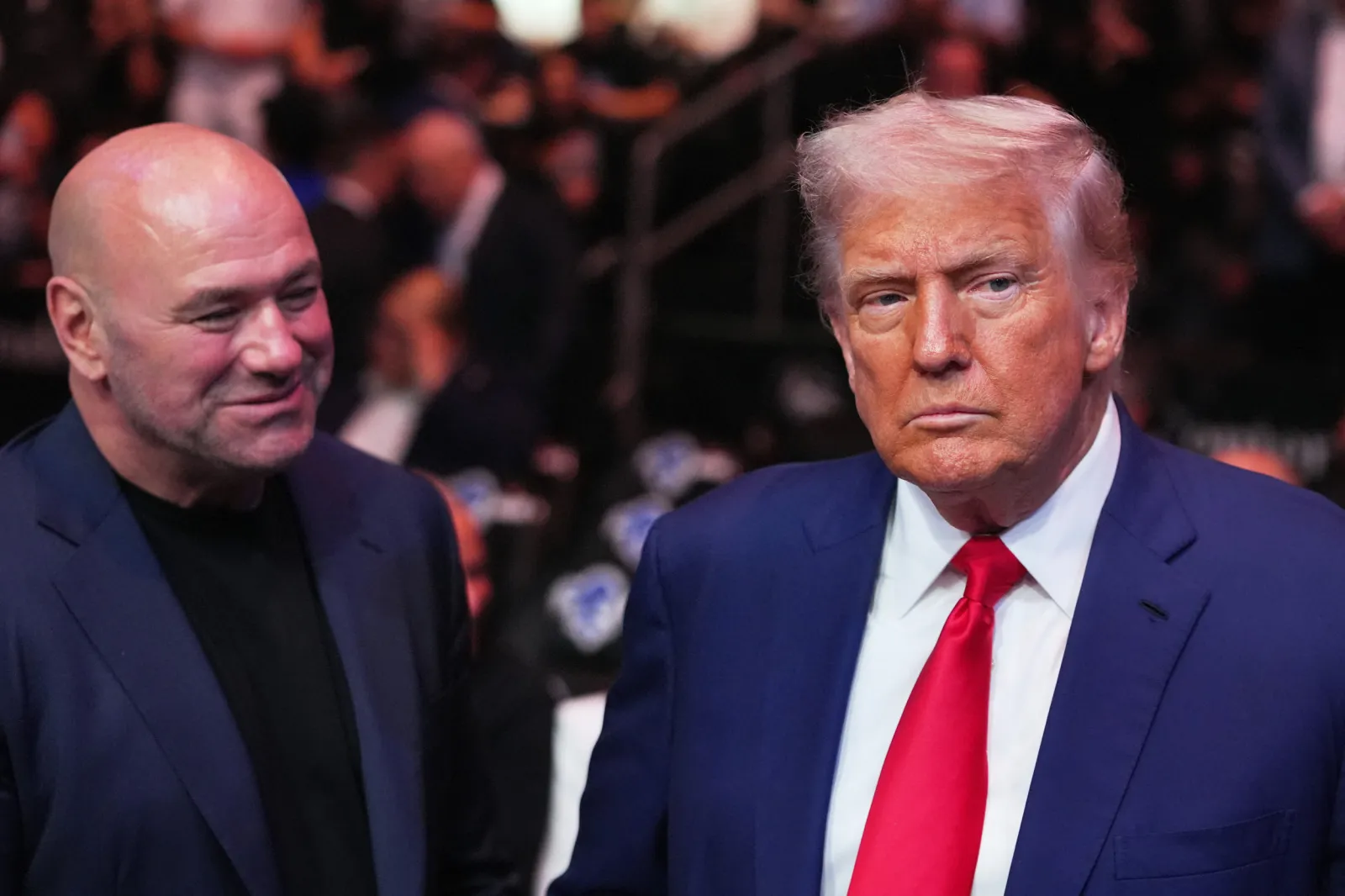
The Ultimate Fighting Championship has served as one of Donald Trump’s most reliable cultural allies — a roaring arena of walkouts, endorsements and loyal fighters. But cracks are forming in that alliance.
As the president prepares to host a UFC fight card next summer at the White House—once envisioned as the crowning moment of Trump’s partnership with the mixed-martial arts league—some of the very fighters who once embraced him are now pushing back, disappointed by the administration's handling of the Jeffrey Epstein files and calling the event a “Hunger Games” spectacle built for elites, not fans.
“If there was some kind of inclusion for fans I’d be more inclined,” former middleweight champion Sean Strickland said in a video posted on X. “But just to go hang out with the f---ing Epstein list? I'm good, dog.”
Read More on Politics
Strickland had previously posed with Trump and declared support for his re-election, but began breaking with the MAGA movement earlier this year over foreign policy and ties to pro-Israel lobbying groups. “I can't believe I'm saying this but I will vote for a Democrat over an AIPAC Republican candidate,” he wrote in August.
...
The backlash is growing. Once-loyal UFC stars are rejecting the White House event, questioning Trump’s politics, and disavowing the alliance that helped him tap into the coveted “bro” vote during his 2024 campaign.
“I don’t give a f--- about fighting at the f---ing White House,” UFC flyweight Brandon Royval said on the In the Arena MMA podcast, comparing the event to The Hunger Games, the popular book series written by Suzanne Collins that depicts a dystopian United States divided into “districts” that must each send a male and a female competitor to fight to the death.
“To fight in front of them seems like some f---ing Hunger Games-type s---. I don’t give a f--- about fighting in front of some f---ing billionaires and rich people who could give a s--- less about me.”
The fighter’s criticisms underscore broader, simmering unease among UFC athletes over the nature of the White House event, which will feature an invite-only crowd of fewer than 5,000 due to Secret Service restrictions. UFC President Dana White, long one of Trump's closest public supporters in sports, is organizing the event as a centerpiece of America’s 250th birthday celebration.
Even Joe Rogan — host of the most-listened-to podcast in America, a major influence among young male voters and perhaps the most important voice in the UFC’s media orbit — has begun to distance himself from some of the president’s policies, particularly on immigration. On a recent show, Rogan criticized Trump’s handling of ICE raids, calling them “horrific” and saying they targeted “hardworking people with families,” not just violent offenders.
Cage Fights for the Elite
While the UFC has stated that about 85,000 are expected to watch on screens from a nearby park, and the fight will likely be broadcast on CBS, none of the seats will be sold. All attendance will be complimentary, reserved for VIPs, donors and guests cleared through federal background checks.
Dana White and the UFC are spending an estimated $700,000 to re-sod the South Lawn after placing a 15,000-pound Octagon for the event, with millions more expected in production and security costs. White has described it as the most expensive and complex production in UFC history.
But for some fighters, what was initially framed as a patriotic celebration has become a flashpoint for criticism, with athletes openly questioning both the political motivations and exclusivity of the event — just as polls also show the broader public growing increasingly exasperated with the president.
...
“I want to fight in front of people that are Raw Dawg fans, are fans of MMA... not billionaires who don’t even know our names,” Royval said, adding that he'd rather fight in front of fans who can relate to his background.
“History repeats itself,” said MMA commentator Ariel Helwani on “The Fighting Business,” a popular MMA podcast on YouTube last week. “This isn't about rankings. It's about making a show for people who wouldn't watch prelims if their lives depended on it.”
Arkansas featherweight Bryce Mitchell has also distanced himself from Trump. In October, he called the president “the Antichrist,” just a year after pledging to “take a bullet” for him during the 2024 campaign. “He talked a good game. He tricked me. I was fooled. I admit it,” Mitchell said in a video on Instagram, citing Trump’s refusal to release the Epstein files and his foreign spending priorities.
Power, Payoffs, and the Bro Vote
Trump’s alliance with the UFC has never been just about sport. It has functioned as a mutual marketing engine. When mainstream leagues kept their distance after January 6, the UFC gave Trump the welcome mat. When UFC needed legitimacy in its early days, Trump gave them a stage. Two decades later, both are profiting.
“The UFC offers Trump a way to align himself with an especially macho subculture,” said Michael Serazio, a communications professor at Boston College and author of the book The Power of Sports: Media and Spectacle in American Culture, in an interview with Newsweek. “It gives him the toughness he wants his public image to project and helps offset concerns about his health and virility.”
Louis Moore, a historian at Michigan State University who studies race, culture and sports, framed the partnership as cultural as much as political. “Trump and UFC are both mainstream, but they have built themselves as outsiders willing to challenge norms,” he said. “They tap into a base that feels disillusioned by changes in American society — people who see themselves as victims.”
The payoff was measurable. In 2024, Trump won men under 50 by 12 points, a sharp swing from a near tie in 2020. That shift was helped by the UFC’s ecosystem of podcasts, influencers, and fight-night theatrics, according to Pew Research data. Dana White plugged Trump directly into that pipeline. He helped coordinate appearances on shows hosted by Rogan, the Nelk Boys, Theo Von and Adin Ross.
For young men in particular, Moore said, the UFC and Trump tap into a narrative of reclaiming “lost manhood,” one that resonates in online spaces where masculinity, grievance and cultural power are frequently debated. That dynamic, he argued, has helped introduce Trump to a network of modern media influencers who amplify those themes.
The point was echoed by Jules Boykoff, professor and department chair of political science at Pacific University, who said Trump’s embrace of mixed martial arts allowed him to blur the gap between elite wealth and populist identity. “Talking about mixed martial arts allowed Trump, a billionaire, to come across more as an everyday guy—as fallacious, indeed ridiculous, as that idea is.”
...
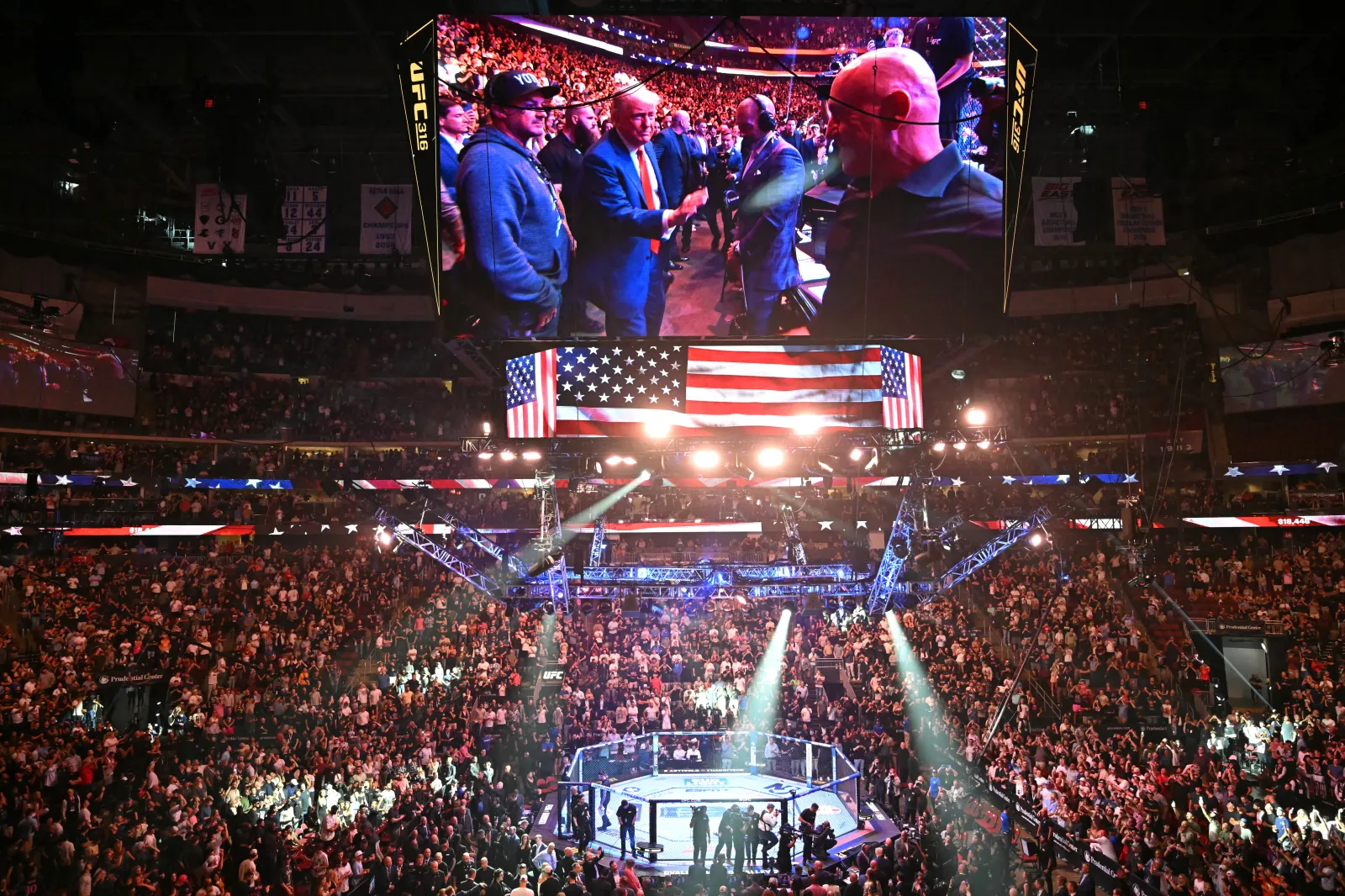
The UFC got plenty in return. White stood next to Trump at rallies, launched his TikTok account live at UFC 302, and received a prime-time shoutout at the victory party in Mar-a-Lago. Fighters appeared on campaign podcasts. Trump’s sons joined MMA-related ventures. The UFC brand kept surging. Google Trends showed searches peaking in June, and Sports Business Journal reported that the UFC’s next U.S. media rights deal is expected to be worth roughly double its current $300-plus-million-per-year agreement.
Is there a risk for the UFC, as a business, in leaning so overtly into politics—or does the consolidation of a specific audience outweigh that downside? Experts say the risk is minimal, at least in the short term. “The UFC is a niche product,” said David Niven, a professor of political science at the University of Cincinnati who studies the intersection of sports and politics.
“Not a lot of constitutional scholars are consuming the product. For the UFC, Trump is relatively risk-free because the violent product they are selling appeals more to Trump's base than to his detractors.”
That calculation has only grown clearer over time. After Trump’s 2024 win, White told The New Yorker he was finished with politics. “I want nothing to do with this s---. It’s gross. It’s disgusting,” he said. But the break never came. By early 2025, Trump was back cage-side, walking into UFC events to standing ovations, and calling the planned White House card “one of the greatest and most historic sports events in history.”
View 0 Comments
Submit Correction
View Editorial & AI Guidelines