10
Loading video...

By Billal Rahman
Immigration Reporter
0
Share
Newsweek is a Trust Project member
See more of our trusted coverage when you search.Prefer Newsweek on Googleto see more of our trusted coverage when you search.
The killing of Iran’s supreme leader in a joint United States-Israeli operation has pushed American foreign policy beyond what is explicitly outlined in Project 2025, the conservative blueprint that urged intense pressure on Tehran but stopped short of calling for military strikes or regime change.
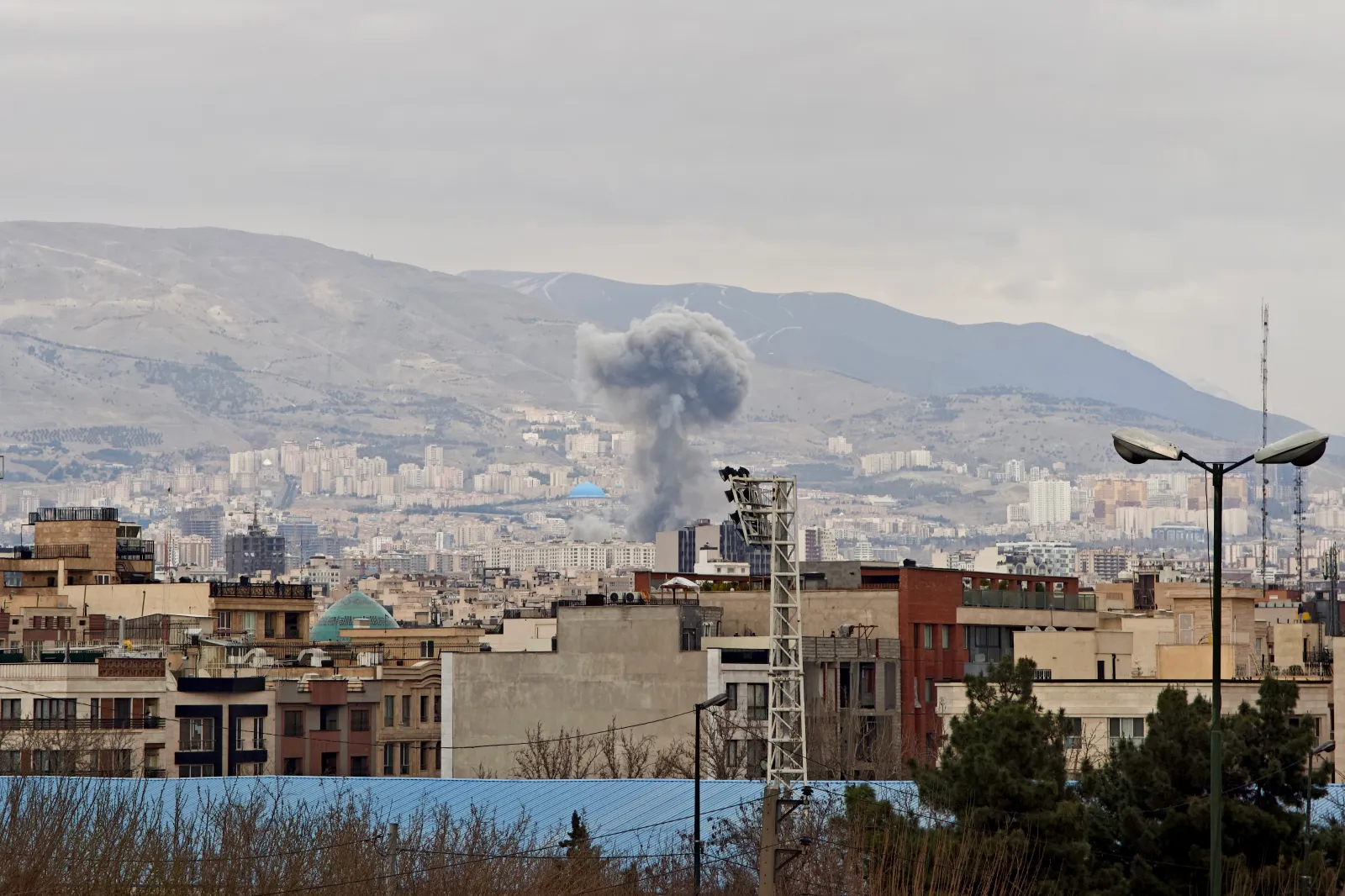
On Saturday, U.S. and Israeli forces struck multiple targets across Iran in the opening salvo of an expanding conflict, targeting command centers, missile facilities, and sites linked to senior leadership. The strikes culminated in the killing of Iran’s Supreme Leader, Ayatollah Ali Khamenei. Iran launched a series of retaliatory strikes in response in several countries, including bases in Kuwait, Qatar, the United Arab Emirates, and Bahrain.
During the 2024 election campaign, President Donald Trump sought to distance himself from Project 2025, even as many elements of the blueprint have informed the approach of his second-term administration.
Read More on News
...
What Project 2025 Actually Calls For
Project 2025, the sweeping transition and policy agenda developed under the auspices of the Heritage Foundation, lays out an adversarial posture toward Iran.
"The U.S. must prevent Iran from acquiring nuclear technology and delivery capabilities and more broadly block Iranian ambitions," the document reads.
In its foreign policy chapters, the document labels Iran the world’s leading state sponsor of terrorism, opposes any return to the 2015 nuclear deal, and urges the next administration to reestablish and intensify maximum pressure sanctions. It also recommends deepening security cooperation with Israel and other regional partners.
"The Obama and Biden Administrations have propped up the brutal Islamist theocracy that has hurt the Iranian people and threatened nuclear war," the document reads.
Where Trump Has Gone Further
The Trump administration’s February 2026 operation marked a major shift from pressure to direct force.
Since the launch of joint U.S.-Israeli operations early on Saturday, four U.S. service members have died in the initial phase of the campaign, U.S. Central Command said. Following the killing of Khamenei, Iran announced a three-member interim leadership council to oversee the government. Trump described the strike as having “knocked out most of the candidates” for the country’s next leadership and indicated that the U.S.-Israeli campaign could continue for up to four weeks.
Meanwhile, the Iranian Red Crescent Society said on Monday that 555 people have died within Iran as a result of the ongoing operations. Iranian state media separately reported that at least 148 people were killed when a strike hit an elementary school for girls in the southern city of Minab.
Trump publicly framed the military action as necessary to eliminate Iran's nuclear threat and to reestablish deterrence after what he described as years of Iranian regional aggression.
Trump’s second term has largely aligned with Project 2025’s hardline policy agenda, which advocates intense political, diplomatic, and economic pressure on Iran.
By authorizing direct strikes and the killing of Iran’s supreme leader, the administration has moved beyond the pressure-based framework laid out in Project 2025, signaling a more force-driven approach with potentially far-reaching consequences.
In a polarized era, the center is dismissed as bland. At Newsweek, ours is different: The Courageous Center—it's not "both sides," it's sharp, challenging and alive with ideas. We follow facts, not factions. If that sounds like the kind of journalism you want to see thrive, we need you.
When you become a Newsweek Member, you support a mission to keep the center strong and vibrant. Members enjoy: Ad-free browsing, exclusive content and editor conversations. Help keep the center courageous. Join today.


View 0 Comments
Submit Correction
View Editorial & AI Guidelines