...

By Lucy Notarantonio
Senior Reporter
0
Share
Newsweek is a Trust Project member
See more of our trusted coverage when you search.Prefer Newsweek on Googleto see more of our trusted coverage when you search.
The aftermath of a cat fight has gone viral—fortunately, there's no blood, and none of them are injured. However, one cat can't help but play the sympathy card.
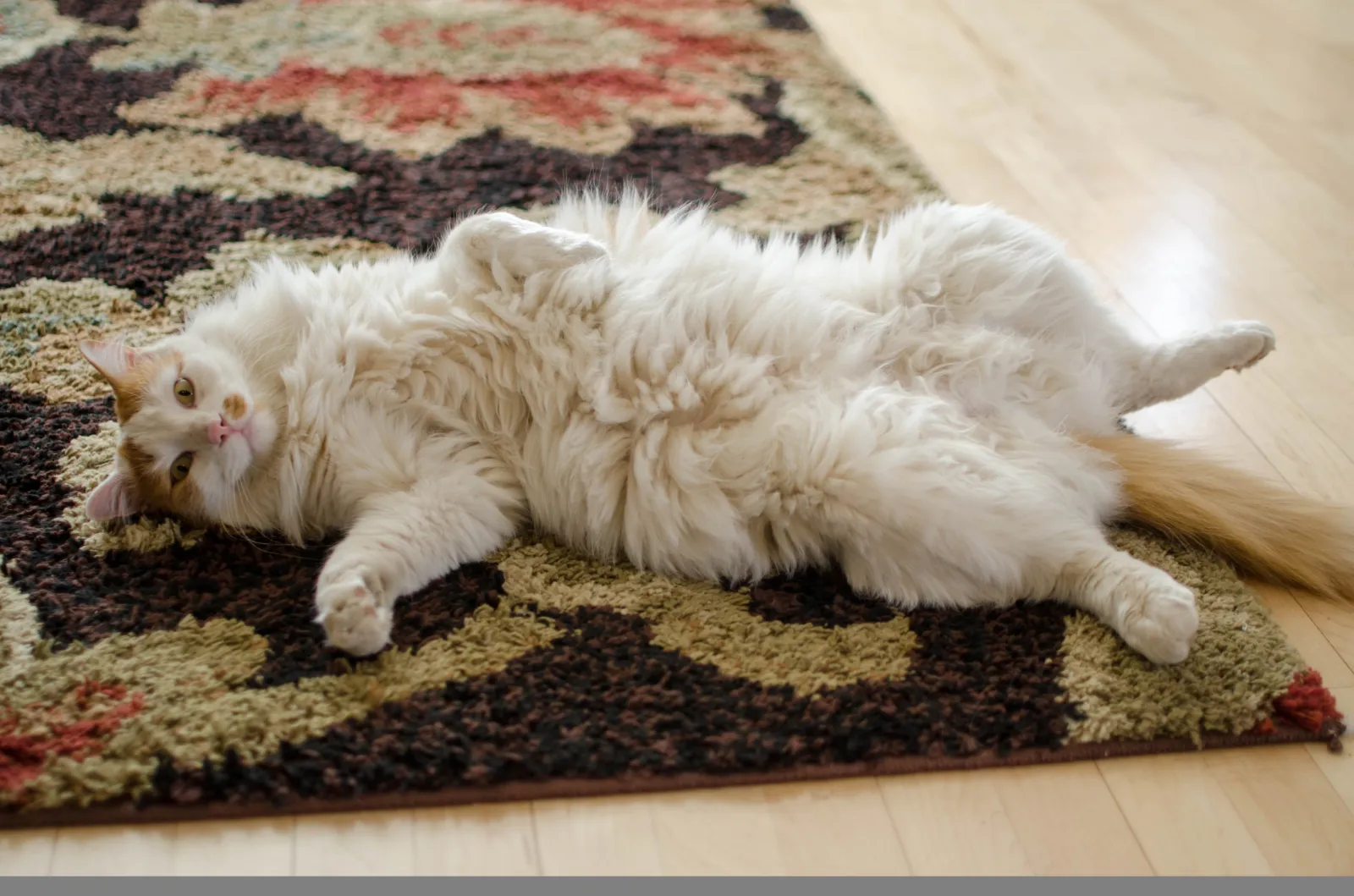
In the video, captioned "she's so dramatic," a fluffy cat is seen lying on her back, patiently waiting to be discovered by her owner.
A few steps ahead, a tabby named Saffron sits with her back turned, while another feline perches on a step. The owner can be heard from behind the camera asking, "Saffron, what did you do?" then pointing the camera back to the cat, who is still in the same position. The hilarious scene has racked up 4.2 million views and over 823,000 likes.
Read More on Pets
The accompanying text reads, "POV: You hear your sister's cat fighting with the family cats and walk into this."
Users are blown away by one cat's acting skills—one even referred to the scene as a "crime scene."
Another comment, with over 116,000 likes, described the cats as "the victim, the attacker, and the witness."
A third user chimed in, "She purposely didn't move to show you what just happened," while a fourth agreed: "The commitment to continuously lie in that position so you could capture the evidence is unmatched."
Newsweek reached out to pet expert Axel Lagercrantz to find out how to introduce a new cat to your other felines and how to stop them from fighting.
Lagercrantz, the CEO of Pets4homes, a U.K. based pet rehoming site, said: "Restoring harmony in the home when cats decide they no longer want to get along can be a little challenging. Cats have an inbuilt wild streak, despite their domestication. One of the most common causes of a fight between cats is resource conflict.
"They see all resources—food, water, spaces to sleep, and access to the toilet—as their own, and any competition for these resources from another cat can be seen as a threat, potentially leading to fights. A solution to this is to provide plenty for both. There is a general rule of thumb: 'one each, plus one.'
"So, if you have two cats, make sure there are three bowls of water. The same goes for food, beds, and litter trays. This will make your cats less likely to fight over what they perceive as scarce resources. It's also important that these resources are not in the same place. Spread them out to allow your cats to have their own space and to choose the places they favor."
...
Lagercrantz added that routine is key for cats, so trying to force them to spend time together is never a good idea.
He said: "That independent routine is why, when a new cat is introduced, it is often met with hostility by the existing occupant. However, this is often just a phase as both cats learn each other's routines and adjust to one another.
"Again, having multiple resource choices for eating, sleeping, and going to the toilet means your cats can spend as much—or as little—time with each other as they want. Sometimes, the reason your cats are fighting is that one of them just wants to be left alone!"
He adds that calming products may help if the fighting doesn't subside over time, and he encourages owners to ensure their cats have adequate outdoor enrichment. "Having a rich outdoor space for cats makes them less likely to fight, especially when they're outdoors," he said.
Lagercrantz concluded his email to Newsweek by stating that cat fighting is just part and parcel of the process in the beginning. Most of the time, they will eventually bond.
Newsweek reached out to @asmanotasthma for comment via email. We could not verify the details of the case.
Do you have funny and adorable videos or pictures of your pet you want to share? Send them to life@newsweek.com with some details about your best friend and they could appear in our Pet of the Week lineup.
View 0 Comments
Submit Correction
View Editorial & AI Guidelines