
...

By Anna Rahmanan
0
Share
Newsweek is a Trust Project member
See more of our trusted coverage when you search.Prefer Newsweek on Googleto see more of our trusted coverage when you search.
When Pamela Anderson appeared at Paris Fashion Week in 2023 without makeup at the age of 56, her face became an international news story. Going without cosmetics had apparently become an act of courage.
Her decision was widely celebrated as an act of rebellion. Yet some of the praise came at the implicit expense of women who take pleasure in making themselves up. The enthusiasm for Anderson's bare face exposed an abiding cultural prejudice: we confer a certain moral superiority on women whose beauty appears unassisted.
Three years later, the arrival of Atlas Atelier, a cosmetics brand embracing dramatic lipstick and eyeliner, suggests an appetite for something different. The pleasure of wearing makeup is central to its appeal.
Read More on Analysis
From the exaggerated femininity associated with MAGA to the renewed interest in theatrical cosmetics, there are signs that artifice itself is becoming desirable. What may be losing its cultural currency is the peculiar expectation that women invest considerable resources in their appearance while maintaining the fiction that beauty comes easily to them.
The Virtue of Looking Natural
Anderson was willing to be photographed with wrinkles; the "clean girl" aesthetic aspired to the appearance of skin that had scarcely lived. There was an almost puritanical quality to the terminology. If understated makeup was clean, what did that make a woman wearing scarlet lipstick?
Related Story

Mamdani’s Mustache Is Carrying the Weight of History
Related Story

What Does MAGA Even Mean Anymore?
Related Story

God Bless the Turkeys: America Needs to Calm Down
In a research paper published last December, marketing professors Rosanna K. Smith, Linyun W. Yang and Adriana Samper examined what they call the double bind of beauty work: the social obligation to improve one's appearance and the reputational penalty for doing so too obviously.
"People have the tendency to believe that a person's natural, unaltered physical appearance is a reflection of who they truly are inside," Yang, an associate professor of marketing at the University of South Carolina, told Newsweek. "When a woman puts a lot of effort into altering her physical appearance, she can be perceived as misrepresenting herself."
Heather Widdows, a professor of philosophy at the University of Warwick and the author of Perfect Me, sees this as part of a broader moralization of appearance, intensified by an increasingly visual and virtual culture.
"Looking good has become a moral duty, such that to fail is not to look bad but to be bad," she told Newsweek.
Effortless beauty, in this sense, operates as a form of social distinction: the woman who appears naturally beautiful enjoys a prestige unavailable to the woman whose attractiveness is visibly manufactured. Maintaining that distinction can itself be an expensive undertaking.
The Politics of Artifice
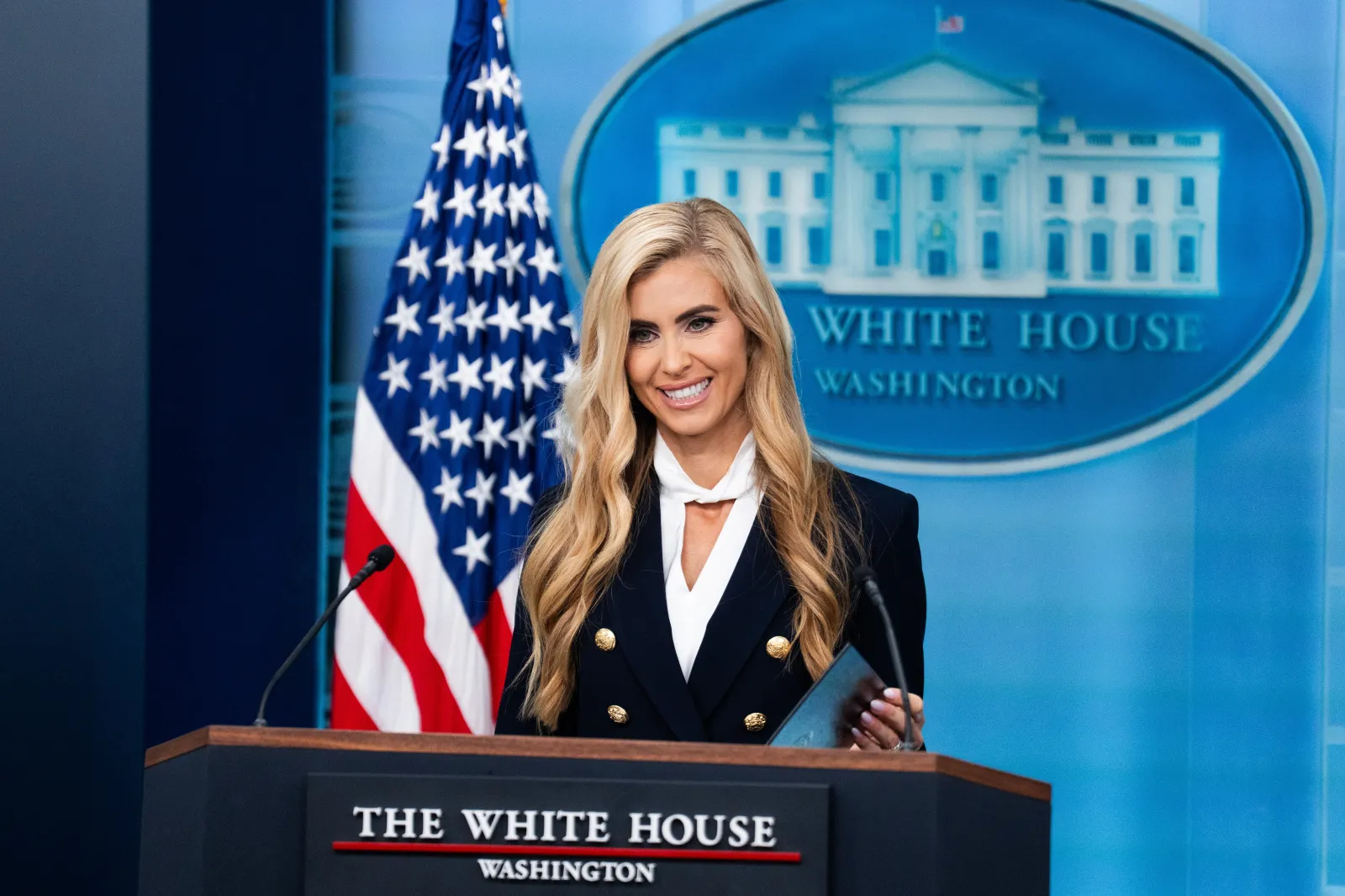
One of the more interesting aesthetic developments of the Trump era has been the emergence of a recognizable conservative glamour. The conspicuously enhanced features associated with so-called "Mar-a-Lago face" have become a subject of fascination and derision.
...
Within certain Republican circles, this aesthetic appears compatible with status. Its cultural significance lies partly in its apparent indifference to the fashionable premium placed on understatement.
The emergence of Atlas Atelier, which launched in the United States this fall, suggests that a taste for more ostentatious glamour extends well beyond conservative politics. Its founder, Michelle Duncan, has deliberately excluded foundation from the range, concentrating instead on color cosmetics intended to be seen.
The young woman experimenting with extravagant eye makeup need have nothing politically in common with a Republican television personality. What their esthetics share is a departure from the convention that the most successful cosmetic intervention is an undetectable one.
Yang's research suggests there may be particular freedom in wearing makeup whose decorative purpose is unmistakable.
"Research finds that when beauty work is reframed as self-expression rather than physical enhancement (i.e., to appear more attractive), high effort is no longer penalized as severely," she said.
In simpler words: a woman painting her eyelids blue is making a much less ambiguous claim about her natural appearance than one using expensive cosmetics to simulate perfect skin.
The Limits of Liberation
Greater candor about beauty work, however, could make it more socially obligatory.
Smith, an associate professor of marketing at the University of Illinois Urbana-Champaign, points to changing attitudes toward Botox as an example. As a procedure becomes commonplace, it can lose its reputation as an excessive intervention while becoming something women increasingly feel expected to undertake.

...
"I also think we are constantly renegotiating as a society what is ‘acceptable fake’ versus unacceptable," Smith told Newsweek.
Women could acquire greater freedom to decorate their faces without acquiring any greater freedom to look ordinary.
For Widdows, celebrating particular beauty practices as inherently emancipatory risks perpetuating the very preoccupation with appearance from which women supposedly seek relief.
"To say some practices are ‘good’ or ‘liberating’ only makes us focus on the face and body even more," she said.
Which brings us back to Anderson. In an interview with Vogue following her appearances in Paris, she explained that she would rather have gone walking around the city admiring its architecture than spent three hours in a makeup chair.
Perhaps the most compelling aspect of Anderson's rebellion was how little it had to do with beauty at all. She simply had something else she wanted to do with her afternoon.
View 0 Comments
Submit Correction
View Editorial & AI Guidelines