...


By Gabe Whisnant and John Feng
0
Share
Newsweek is a Trust Project member
See more of our trusted coverage when you search.Prefer Newsweek on Googleto see more of our trusted coverage when you search.
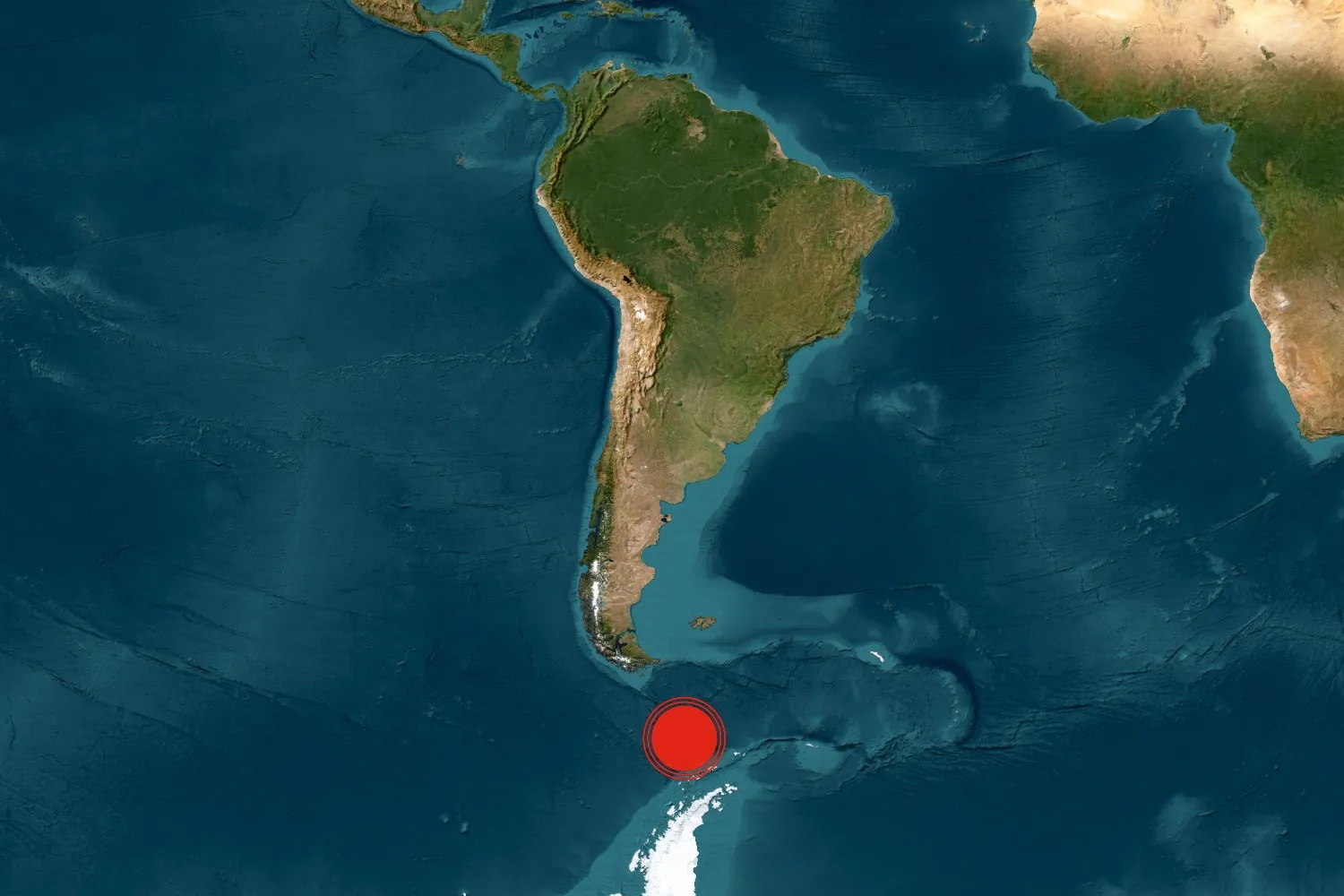
A powerful 7.8 magnitude earthquake struck in the Drake Passage on Friday, according to the U.S. Geological Survey.
The quake’s epicenter lies in the remote waters between South America and Antarctica.
At this time, there are no confirmed reports of damage or casualties due to the quake’s isolated location.
Read More on World
Authorities are monitoring for possible tsunamis and aftershocks and will issue alerts as needed.
The Drake Passage tremor comes on the same day that a powerful 6.7 earthquake struck off the coast of the Philippines, triggering a tsunami warning and prompting evacuations across multiple provinces. The epicenter was located roughly 14 miles east-southeast of Santiago, Mindanao. The tremor is part of a series of seismic events that have shaken the region in recent days.
Where is the Drake Passage?
The Drake Passage is the body of water between the southern tip of South America, known as Cape Horn, and the northernmost reaches of Antarctica’s South Shetland Islands. Spanning roughly 600 miles across, it connects the Atlantic and Pacific oceans and is considered one of the most treacherous sea routes in the world. The passage is notorious for its powerful winds, strong currents, and towering waves, conditions created by the unimpeded flow of the Antarctic Circumpolar Current.
Named after the English explorer Sir Francis Drake, the passage has long been a vital route for explorers, scientists, and vessels traveling to Antarctica. Before the Panama Canal opened in 1914, it was the primary maritime path linking the world’s major oceans. Today, it remains a key region for oceanographic research and climate studies, offering valuable insights into global ocean circulation and the health of the planet’s polar ecosystems.
Drake Passage Earthquakes: What to Know
The Drake Passage experiences occasional moderate to strong earthquakes due to its position along the complex boundary between the Scotia Plate and the Antarctic Plate. Though sparsely populated and largely beneath the ocean, the region is seismically active, with quakes often ranging between magnitudes 5 and 7. Major events are rare but not unprecedented — the shifting tectonic plates and deep ocean trenches make it an area of ongoing geological movement. Because of its remote location, earthquakes in the Drake Passage rarely cause damage or trigger tsunamis affecting nearby continents.
Updates: 10/10/25, 7:15 p.m. ET: This article was updated with new information.
...
View 0 Comments
Submit Correction
View Editorial & AI Guidelines