10
Loading video...



+4
By Gabe Whisnant, Hannah Parry, Anna Commander, John Feng, Khaleda Rahman, Ellie Cook, and Steve Mollman
0
Share
Newsweek is a Trust Project member
See more of our trusted coverage when you search.Prefer Newsweek on Googleto see more of our trusted coverage when you search.
The death toll from the Venezuela earthquakes reached 920 on Friday and is expected to rise sharply, with thousands of people reported missing. Rescue crews were searching through collapsed buildings across northern Venezuela, where many were believed trapped.
In Caracas and nearby coastal areas, at least eight hospitals, the Venezuelan Red Cross headquarters, and the French Embassy were among the buildings reported badly damaged.

...

...

...

...

...

...

...
1 of 7
Read More on World
The U.S. Geological Survey said the quakes measured 7.2 and 7.5 in magnitude and struck roughly 100 miles west of Caracas. Early USGS modeling indicated casualties could climb into the thousands, with a substantial risk of more than 10,000 deaths, though such models are based on historical averages and do not capture every event-specific factor.
The first quake struck just after 6 p.m. local time, followed less than a minute later by a stronger tremor. The two major pulses have been described by some seismologists as a possible “doublet,” though scientists are still analyzing whether they were separate earthquakes or part of one complex event.
The quakes were among the most powerful to strike Venezuela in more than a century.
More than 200 aftershocks have been recorded, raising fears of further collapses as residents and emergency crews continue searching unstable buildings. Authorities declared a state of emergency soon after the quakes.

...
Residents poured into the streets across northern Venezuela, picking their way through debris as they searched for the missing, with firsthand accounts from survivors in Caracas describing chaos as buildings collapsed.
La Guaira Worst Hit
Acting President Rodríguez described La Guaira state as the area hardest hit and a "disaster zone." The coastal state, north of Caracas, is home to Venezuela’s main international airport and has seen some of the heaviest reported damage.
Interior Minister Diosdado Cabello said around 70,000 families had been affected in La Guaira state. More than 100 buildings have collapsed there, according to a U.N. humanitarian agency early Thursday.
La Guaira state hosts Venezuela’s main international airport, Simón Bolívar International Airport, which serves the capital Caracas and was damaged and closed following the quakes. Dramatic footage showed ceilings disintegrating at the airport, with travelers running through a smoke-filled area. Flights were suspended as authorities assessed structural damage. The coastal state serves as a key gateway to the capital and is densely populated compared with other affected areas.
Authorities have not confirmed when the airport will reopen as damage assessments continue.
The disaster is an early test for Rodríguez’s government, which is trying to coordinate emergency aid in a country already strained by years of economic turmoil and fragile infrastructure.
President Donald Trump said the quakes were "massive in scale and have left a devastating number of deaths." He added that the U.S. "stands ready, willing, and able to help."
Trump said America supported its "new and great friends" in Venezuela. The U.S. response comes months after longtime leader Nicolás Maduro was removed from power in a U.S. military operation, reshaping Washington’s relationship with Caracas.
Secretary of State Marco Rubio said the U.S. would “immediately” send support to Venezuela.
US Fast-Tracks Resources
U.S. officials said Washington was mobilizing a disaster assistance team, urban search-and-rescue teams, humanitarian aid and medical supplies as part of the response.
The State Department announced $150 million in funding for aid groups and international partners, describing the effort as a “robust response” coordinated with other governments, U.N. agencies and nongovernmental organizations.
The U.S. Treasury also moved to waive some sanctions through Oct. 23 to allow earthquake-relief transactions that would otherwise be prohibited.
U.S. Southern Command said it is surging military aircraft, ships and personnel to support the humanitarian response, assisting search-and-rescue teams and U.S. partners involved in critical, life-saving operations. The command said it is coordinating with interim Venezuelan authorities to provide logistical support and accelerate the delivery of aid.
Internet Access, Restrictions
Internet access has emerged as a critical issue in the disaster response.
U.N. experts urged Venezuela’s telecommunications regulator to fully unblock social media and media outlets, saying access to information after the quakes could be “a matter of life and death.”
Reports said some internet users in Venezuela had regained access to X, though the government had not commented. The platform had long been restricted in the country, and communication outages after the quakes have complicated efforts by families and rescue crews to locate missing people.
Authorities have urged residents to use a government app to report damage and missing persons, a tool critics say has previously been used to monitor dissent.
Rescue Efforts Intensify
The subway system has been shut down and natural gas services in the capital have been suspended, authorities said. Schools and universities have been suspended, while public buildings like classrooms will be used as shelters and donation centers.
"Dozens of buildings have collapsed, and we are currently carrying out very intense rescue efforts to save as many lives as God allows us to save," Rodríguez said, appealing for health care professionals to help take care of the injured pouring into medical centers. She also urged businesses to make heavy construction equipment available for rescue operations and said search-and-rescue teams certified by the United Nations were on their way to assist. She said rescue crews were coming from several countries as she thanked world leaders, including Trump.
Emergency crews have been searching through rubble by hand in some areas, with heavy equipment still arriving in the hardest-hit zones.
Officials warned it could take days to assess the full scale of casualties and damage, particularly in areas still difficult to access.
Early assessments suggest key infrastructure has remained largely intact. Near the epicenter, workers were restarting Venezuela’s Morón Petrochemical Complex, the country’s second largest in operation, after it was shut down as a precaution following the quakes, according to a local fire official. The earthquakes left much of Venezuela’s oil and gas infrastructure largely intact, including the 146,000-barrel-per-day El Palito refinery in Carabobo state, based on preliminary reports from workers, though assessments are ongoing as repairs continue. Chevron, a key foreign partner of state oil company PDVSA, said all employees were accounted for and operations were continuing.
US Deploys Rescue Teams
Secretary of State Marco Rubio said early Thursday that the U.S. was sending humanitarian aid and medical supplies to Venezuela and would deploy search and rescue teams to support local emergency efforts.
The State Department also announced $150 million in funding for aid groups, including the United Nations Office for the Coordination of Humanitarian Affairs, as part of its broader response. It described the effort as a “robust response,” working with international partners to coordinate relief efforts.
Jeremy Lewin, the U.S. undersecretary of state for foreign assistance, said the department had mobilized a disaster assistance team and task force to “deliver and coordinate critical assistance to the Venezuelan people.”
Virginia Task Force 1, a Fairfax‑based search-and-rescue team preparing to deploy to Venezuela, has not yet left, with a spokesman citing uncertainty over whether large aircraft can land at Caracas’ quake‑damaged airport.
A second U.S. team from Los Angeles County has also been activated as part of the federal response, as aid offers have also come from countries including Argentina, Bolivia, Brazil, Chile, Ecuador, Panama and Uruguay.

...
Rodríguez said Thursday that Qatar had already sent rescuers who were expected in Venezuela the next day, along with rescue personnel from Mexico and El Salvador.
El Salvador's President Nayib Bukele, once diametrically opposed to Venezuela’s government, said in a post on X that the country's offer of assistance includes "300 rescuers and paramedics, along with 50 tons of equipment, medicines, and essential supplies."
In a translated post to X on Thursday, Bukele posted a video of a plane, saying, "The first of three planes transporting personnel, equipment, and supplies that will provide aid to our Venezuelan brothers and sisters is already on its way. May God guide and protect them during this mission."

...
History of Major Earthquakes
Venezuela sits along a complex and active tectonic boundary of two continental plates. The Caribbean Plate interacts with the South American Plate, creating a zone of frequent earthquakes across the country’s northern region.
Major fault systems include the Boconó, El Pilar and San Sebastián faults, which together form a network capable of producing moderate to large earthquakes.
Historically, the region has experienced several damaging events, including the devastating 1812 Caracas earthquake, estimated at 7.5 magnitude or higher, which killed thousands, and more recent events such as the 2018 7.3 magnitude quake along the country’s northern coast.
The latest quakes struck in northern Venezuela’s seismically active coastal region, with shaking felt across a wide area that includes large population centers such as Caracas and Valencia.
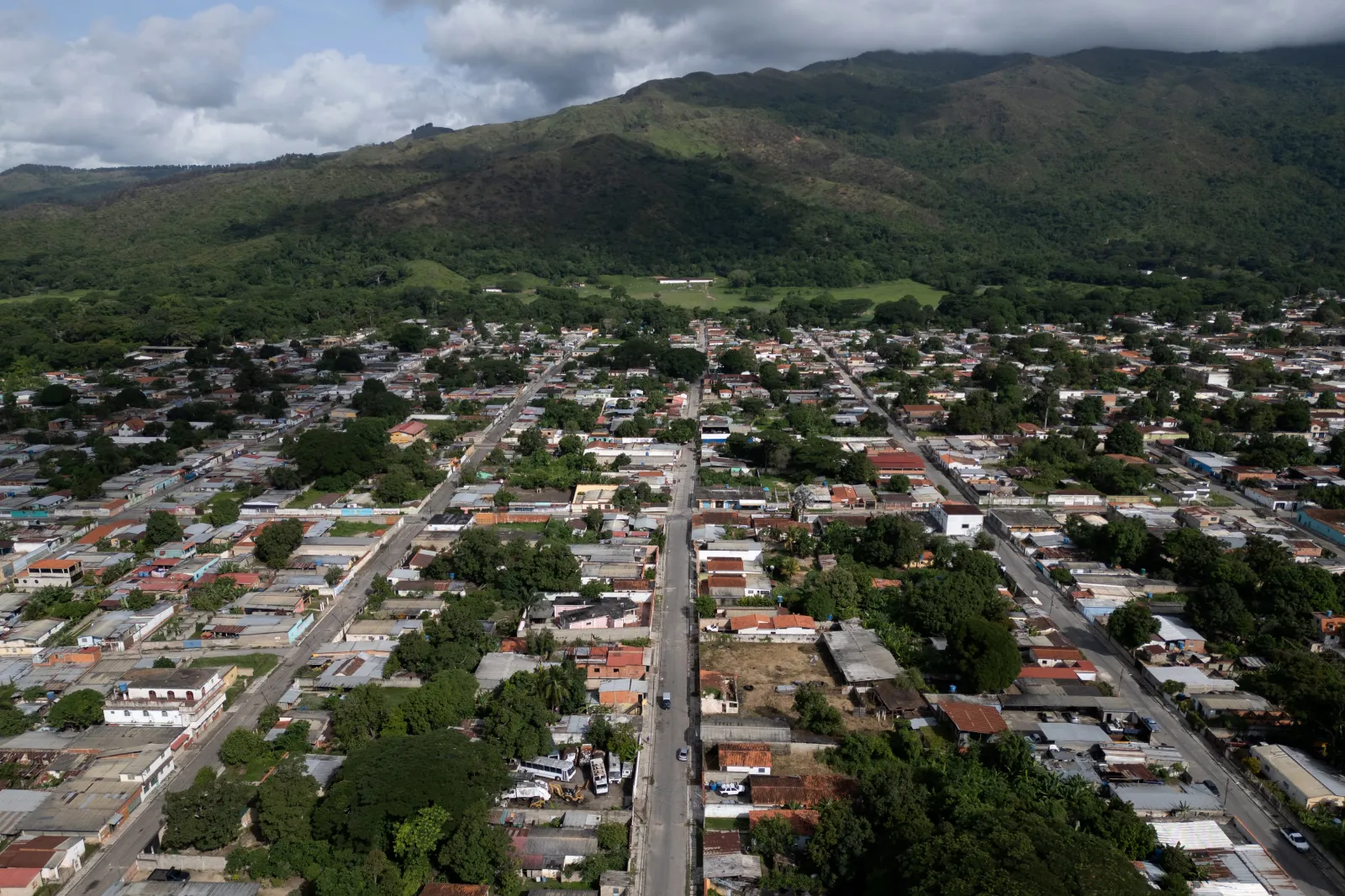
Montalbán, one of the areas near the reported seismic activity, is largely rural, with a modest population and an economy based on agriculture and regional commerce.
...
Despite its smaller size, its location within a seismically active part of northern Venezuela means earthquakes there can be felt across a wider region—including in larger nearby cities such as Valencia and, in some cases, Caracas.
Contact Newsweek editors on this story: Frances Mao, Tobias Meyjes, Tony Phillips and Edward Cummins.
View 0 Comments
Submit Correction
View Editorial & AI Guidelines